
Home » Posts tagged 'Matt Bevin' (Page 5)
Tag Archives: Matt Bevin

Republican Matt Bevin wins Kentucky governor’s race
Bevin’s victory over Attorney General Jack Conway is another takeaway for the GOP in the South
♦By Rich Shumate, Chickenfriedpolitics.com editor
 LOUISVILLE (CFP) — Just a year after losing a bruising primary battle against U.S. Senate Majority Leader Mitch McConnell, Louisville businessman and Tea Party favorite Matt Bevin has won the Kentucky governorship, taking away one of the Democrats’ three remaining governor’s seats in the South.

Kentucky Governor-elect Matt Bevin
Unofficial results from the Secretary of State’s office showed Bevin with 53 percent to 44 percent for Democratic Attorney General Jack Conway in the November 3 vote.
The win marks a remarkable feat for Bevin, 48, who jumped into the race right before the filing deadline, won the Republican primary by less than 100 votes and trailed Conway in the polls throughout the general election.
“What an extraordinary night this is,” Bevin told cheering supporters in Louisville. “This is a chance for a fresh start, it truly is, and we desperately need it.”
Bevin also issued a call for unity, saying, “We are one Kentucky–black, white, rural, urban, at both ends of the socio-economic spectrum.”
A turning point in the race may have come in September, when Rowan County Clerk Kim Davis was jailed for refusing to issue marriage licenses for same-sex couples on religious grounds.
Bevin embraced Davis’s fight, meeting with her and calling on Democratic Governor Steve Beshear to issue an executive order relieving Davis of the responsibility for signing marriage licenses.
Republicans had a good night across the board in the Bluegrass State, taking five of the seven statewide constitutional offices, with the attorney general’s race too close to call. The only outright Democratic winner was Secretary of State Alison Lundergan Grimes, who also challenged McConnell unsuccessfully in 2014.
Bevin’s running mate for lieutenant governor, Jenean Hampton, a Tea Party activist and former Air Force captain, is the first African-American ever elected to statewide office in Kentucky.
Although the commonwealth has become reliably Republican at the federal level, Bevin is just the second Republican in the last 44 years to be elected governor. Beshear was term limited.
With the GOP’s takeaway in Kentucky, Democrats hold governorships in only two of the 14 Southern states, Virginia and West Virginia, with a race in Louisiana to be decided in a November 21 runoff between Democratic State Rep. John Bel Edwards and Republican U.S. Senator David Vitter.
Matt Bevin holds on to win Kentucky GOP governor’s primary
Failed U.S. Senate candidate defeats State Agriculture Commissioner James Comer by just 83 votes
♦By Rich Shumate, Chickenfriedpolitics.com editor
 LOUISVILLE (CFP) — Just a year after being crushed by U.S. Senate Majority Leader Mitch McConnell in a GOP Senate primary, Louisville businessman and Tea Party favorite Matt Bevin has held on to a razor-thin 83-vote lead to win Kentucky’s GOP gubernatorial primary.

Kentucky gubernatorial candidate Matt Bevin
State Agriculture Commissioner James Comer, who narrowly trailed Bevin in the May 19 vote, had asked for a recanvas. But after the recanvas didn’t change the outcome, Comer conceded on May 29, opting not to ask for a recount.
Bevin will now face the Democratic nominee for governor, Attorney General Jack Conway, in November.
Bevin and Comer both took 33 percent of the vote to 27 percent for former Louisville Councilman Hal Heiner and 7 percent former Supreme Court Justice Will Scott.
Kentucky abolished its primary runoff in 2008, which means Bevin comes out of the primary with just a third of the vote.
Near the end of the race, Comer’s campaign was rocked by abuse allegations from a former college girlfriend, which he denied. Heiner apologized after the blogger who publicized the allegations acknowledged that he had spoken about them with the husband of Heiner’s running mate for lieutenant governor.
The election result was a political comeback for Bevin, 48, who jumped into the governor’s race just hours before the filing deadline.
Bevin, 48, challenged McConnell in 2014 the backing of outside Republican groups critical of the senator’s leadership, including the Senate Conservatives Fund and FreedomWorks. But in the end, McConnell won easily with more than 60 percent of the vote and went on to win a sixth term in November.
Despite the bitterness of that race, McConnell stayed out of Bevin’s primary fight.
Although Kentucky has become a reliably Republican state at the federal level, the party has only won the governorship once in the last 44 years. The current governor, Democrat Steve Beshear, is term limited.
Kentucky and Mississippi are the only two states that have off-year elections for state constitutional offices in 2015.
Southern Politics 2014: The Year In Review
2014 was a much better year for Republicans than for reality stars revamped as politicos
♦By Rich Shumate, Chickenfriedpolitics.com editor
 A congressman man caught kissing. Reality stars trying to remake themselves as politicians. A snowstorm that threatened to torpedo a sitting governor. A top U.S. House leader unceremoniously unseated in a primary. And a flap over a fan during a heated debate.
Those were just some of the strange and unlikely events in Southern politics in 2014, a year that ended with Republicans roaring through the region like Sherman in reverse. Here are some of the memorable moments:
Loose Lips Sink More Than Ships — Republican U.S. Rep. Vance McAllister, a married Christian conservative from northeast Louisiana, was caught on videotape passionately kissing a female staffer who was, ahem, not his wife. He refused to resign but decided not to run for re-election. Then, he changed his mind and ran again, with his wife’s vocal support. But his constituents were less forgiving than the missus, and he finished a distant fourth in the primary.
Snowmageddon — When a January snowstorm paralyzed metro Atlanta, Republican Governor Nathan Deal took the heat for a sluggish state response and his initial attempt to shift the blame elsewhere. But Democratic hopes that this snowy debacle might bury Deal had melted by November, when he was comfortably re-elected.
Taking Aim At Obamacare — Alabama Republican U.S. House candidate Will Brooke posted a YouTube video, entitled “Let’s Do Some Damage,” in which he fired bullets into a copy of the Obamacare bill. The gambit gained him a bit of attention, though, alas, not enough to win the primary in his Birmingham-area district.
Strange Bedfellows — Bill Clinton and Rudy Giuliani both waded into the Florida governor’s race this year, cutting ads for Democrat Charlie Crist and Republican Rick Scott, respectively. However, their shoes were on the other feet in 2006, when Crist was a Republican (before becoming an independent and then a Democrat.) Back then, it was Crist who enjoyed Giuliani’s support, while Clinton backed his Democratic opponent.
Overheated Debate — Speaking of the Florida governor’s race, a televised debate between Crist and Scott came to an abrupt halt when Crist insisted on putting a small fan at his feet under the podium, in apparent violation of the debate rules. Scott first refused to take the stage until the fan was removed, but he eventually relented — after seven awkward minutes of scrambling by the debate moderators. In the end, Scott won a narrow victory.
Real Mean Politics — Three reality TV stars — American Idol Clay Aiken, former Louisiana Governor Edwin Edwards and former South Carolina Treasurer Thomas Ravenel — all vied for political office this year. But political reality proved harsh, as all three lost badly. However, Aiken is turning his unsuccessful U.S. House campaign in North Carolina into — wait for it — a new reality show.
Biggest Upset — In an outcome that shocked the political world, House Majority Leader Eric Cantor of Virginia lost his Richmond-area seat to Dave Brat, a little known college professor who ran at Cantor as a Tea Party insurgent. Weep not for Cantor, though. He bounced back with a job on Wall Street.
Worst Campaign — Texas State Senator Wendy Davis tried to parlay her filibuster against a bill restricting abortions in the Lone Star State into the governor’s mansion. But a series of gaffes — including questions about the veracity of her rags-to-riches story as a single trailer-park mom made good — sunk her chances, and she lost by a staggering 20 points.
Weirdest Campaign Appearance — Matt Bevin, who was challenging Senate Minority Leader Mitch McConnell in a GOP primary in Kentucky, appeared at a rally hosted by a group that supports legalizing cockfighting. While insisting he didn’t condone cockfighting, Bevin didn’t help himself when he told a radio reporter that the Founder Fathers were “very actively involved” in the blood sport. Perhaps not surprisingly, McConnell won rather handily.
Best Don Quixote Impression — Mississippi State Senator Chris McDaniel — peeved that he was defeated in a GOP U.S. Senate runoff by crossover votes from Democrats and independents — launched a three-month court fight to overturn the result. Alas, his windmill tilting came to naught, and U.S. Senator Thad Cochran kept the seat.
Best Houdini Impression — Republican U.S. Rep. Scott DesJarlais of Tennessee faced voters for the first time since lurid details emerged from his bitter 2001 divorce during which he admitted a string of extra-marital affairs and — perhaps even more damaging for an avowed right-to-life lawmaker — encouraging his first wife to have two abortions. However, GOP voters in his district proved surprisingly forgiving, handing DesJarlais a narrow primary victory. He went on to win re-election in November.
If You Can’t Override, Indict — Texas Governor Rick Perry was indicted on charges of abuse of power and coercion over his veto of a funding bill for an Austin prosecutor who refused his demand that she resign after being arrested for driving with a blood alcohol level nearly three times the legal limit. A defiant Perry vowed to fight the charges, noting that in America, “we settle our political differences at the ballot box,” rather than in criminal court.
Double Dipper — Kentucky U.S. Senator Rand Paul announced he would run for re-election in 2016, even as he is also considering a White House bid. One pesky little problem, though: Kentucky law doesn’t allow somebody to be on the ballot for two offices at once. Paul’s supporters are trying to find a way to work around that technicality.
Democrat Dam Breaks in Upper South — While the general election was grim for Democrats across the South, the news was especially depressing in Arkansas and West Virginia, which had been places where the party of Jackson was still competitive. In Arkansas, Republicans took all seven statewide constitutional offices and every congressional seat for the first time since Reconstruction. In West Virginia, the GOP took all three U.S. House seats and captured control of the state legislature for the first time since 1931.
“D” Is The New Scarlet Letter — Three sitting Southern Democratic U.S. senators — Mark Pryor of Arkansas, Kay Hagan of North Carolina and Mary Landrieu of Louisiana — all went down to defeat, paving the way for Republicans to take control of the Senate. Republicans also took away an open seat in West Virginia that they hadn’t won since 1942.
Analysis: Southern Senate races expose fault line that GOP must correct
Incumbents’ weak victories show bitter primaries have become the new normal
♦By Rich Shumate, Chickenfriedpolitics.com editor
 Tea Party-backed insurgents struck out in their quest to unseat sitting Southern Republican U.S. senators this year, with a final tally of 0-for-5.
 But while those results are arguably a significant victory for the powers that be in the GOP, a closer look at the results shows a deep and potentially problematic fault line running right through the party. And the rancor and contention generated by the establishment’s aggressive push back against the Tea Party has made that fault line wider.
Historically, sitting senators rarely face much of a battle for renomination. If they have any opposition at all, it is usually dispatched with an easy majority of 70 or 80 percent. While that is still largely true for Democrats, for Republicans — in the South and elsewhere — bitter primary contests seem to have become the new normal. True, all the incumbents survived this year. But they didn’t exactly set the world on fire.
In Tennessee, Lamar Alexander — a well-respected former Cabinet secretary and university president who has won statewide office four times — could only manage a meager 50 percent, while in Mississippi, Thad Cochran was dragged into a runoff that he only survived with the help of Democrats.
John Cornyn in Texas and Lindsey Graham in South Carolina did a bit better (59 percent and 56 percent, respectively), but they should be thankful that their opposition was as weak as it was. If bigger names had gotten into either of these races, the outcome might have been very different.
The Southern GOP senator who performed the best was Senate Minority Leader Mitch McConnell, who took 60 percent in his race, despite an avalanche of outside help given to his opponent, Matt Bevin. But that brutish primary did nothing to help McConnell’s prospects in a tough race this fall with Democratic Secretary of State Alison Ludergan Grimes.
What these races, collectively, show is that 40 percent or more of the Republican primary electorate is unhappy enough with their own elected leaders that they are prepared to vote them out — even if that means nominating little known candidates who, in many cases, seem less than fit to sit in the Senate.
For the time being, the GOP might be able to ignore this fault line because there is little indication, except perhaps in Kentucky, that Democrats will be able to take advantage of the Republican schism to flip seats in November.
But if Republicans can’t figure out a way to avoid this internal warfare, Democrats are eventually going to figure out a way to use it to their advantage. And that presents a real and present danger to the political hegemony that the GOP has built in the South.
Yes, 2014 was a victory for the establishment. But it was also a danger-Will-Robinson moment. And the bitterness left over from these primary fights has probably made the divisions within the party even worse, particularly in Mississippi.
Few of those Tea Party Republicans who feel scorned by their party are going to vote Democratic in November, but more than a few may stay home. Is this hemorrhage from the base likely to imperil these sitting Southern senators? No, except maybe for McConnell. But if the establishment can’t find a way to bridge this divide, there is certainly potential for trouble ahead.
Senate Minority Leader Mitch McConnell turns back Tea Party primary challenge
In Georgia, David Perdue and Jack Kingston advance to July 22 Republican primary runoff
♦By Rich Shumate, Chickenfriedpolitics.com editor
LOUISVILLE (CFP) — Senate Minority Leader Mitch McConnell easily turned back a Tea Party-inspired challenge Tuesday to win the GOP nomination for a sixth term representing Kentucky.
Meanwhile, in Georgia, St. Simons businessman David Perdue and U.S. Rep. Jack Kingston of Savannah won spots in a July 22 runoff for the Republican nomination for the Peach State’s open U.S. Senate seat.
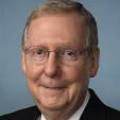
Senate Minority Leader Mitch McConnell
McConnell took 60 percent of the May 20 vote, compared to 36 percent for Louisville businessman Matt Bevin, who had the backing of outside Republican groups critical of McConnell’s leadership, including the Senate Conservatives Fund and FreedomWorks.
However, the commonwealth’s other senator, Rand Paul, bucked his Tea Party supporters to back McConnell.
McConnell will now face Democratic Secretary of State Alison Lundergan Grimes in November.

U.S. Senate hopeful David Perdue
In Georgia, Perdue and Kingston sat atop a seven-candidate field, with Perdue at 31 percent and Kingston at 26. Former Secretary of State Karen Handel of Roswel came in third at 22 percent.
Two other sitting U.S. House members, Phil Gingrey and Paul Broun, trailed the three front-runners. Some establishment figures in the GOP had expressed concern that a victory by either Gingery or Broun would turn the Georgia seat into a Democratic target in November.
Michelle Nunn, the daughter of former U.S. Senator Sam Nunn, easily won the Democratic Senate nomination for the seat current held by U.S. Senator Saxby Chambliss.
Meanwhile, in Arkansas, Democratic U.S. Senator Mark Pryor and Republican U.S. Rep. Tom Cotton both won their Senate primaries and will face off in November.
 Chicken Fried Politics