Rubio, trying to become America’s first Latino president, kicks off 2016 campaign in Miami
MIAMI (CFP) — Charging that “our very identity as an exceptional nation is at stake,” U.S. Senator Marco Rubio of Florida has kicked off his campaign for the 2016 Republican presidential nomination.
U.S. Senator Marco Rubio
During an announcement rally in Miami April 13, the senator — at 43 one of the youngest potential candidates in the White House chase — framed the race as “a generational choice about what kind of country we will be.”
“While our people and economy are pushing the boundaries of the 21st century, too many of our leaders and their ideas are stuck in the 20th century,” he said.
“They are busy looking backward, so they do not see how jobs and prosperity today depend on our ability to compete in a global economy. So our leaders put us at a disadvantage by taxing, borrowing and regulating like it’s 1999.”
Rubio also took a direct swipe at former Secretary of State Hillary Clinton — 24 years his senior — who announced Sunday that she would seek the Democratic presidential nomination.
“Just yesterday, a leader from yesterday began a campaign for president by promising to take us back to yesterday. But yesterday is over, and we are never going back.”
Rubio, the son of refugees from Cuba’s communist dictatorship, began his campaign symbolically at Miami’s iconic Freedom Tower, where Cuban immigrants to the United States were processed after arriving in the 1960s.
“Their story is part of the larger story of the American miracle — how, united by a common faith in their God given right to go as far as their talent and work would take them, a collection of immigrants and exiles, former slaves and refugees, became one people,” he said.
“For almost all of human history, power and wealth belonged only to a select few … But America is different. Here, we are the children and grandchildren of people who refused to accept this.”
If he wins the presidency, Rubio would be the first Latino, and the first Cuban-American, to be elected president. Another Cuban-American, U.S. Senator Ted Cruz of Texas, is also seeking the GOP nomination.
But in deciding to seek the presidency, Rubio will give up what was considered a relatively safe Senate seat, triggering a wide-open race in the Sunshine State in 2016 that will present a possible pickup opportunity for Democrats.
Rubio opted not to try to simultaneously seek the presidency and re-election to the Senate, as one of his GOP presidential rivals, U.S. Senator Rand Paul, is doing in Kentucky.
The Florida senator will also likely be battling a fellow Floridian and political mentor, former Florida Governor Jeb Bush, who is also expected to make a 2016 White House bid.
Rubio the former speaker of the Florida House, rode a wave of conservative and Tea Party support in 2010 to win a Senate seat, besting Florida’s sitting governor at the time, Charlie Crist. He quickly rose to national prominence and was mentioned as a vice presidential pick in 2012.
Rubio has also garnered headlines for his work on immigration reform, which has drawn the ire of the GOP’s small, but noisy, nativist wing. Opponents of immigration reform have also criticized Bush for much the same reason.
Rubio, Cruz, Paul and Bush are among nine Southerners — eight Republicans and one Democrat — considering a White House bid in 2016.
On the Democratic side, former U.S. Senator Jim Webb of Virginia has already launched an exploratory committee for the 2016 Democratic presidential nomination — a race that’s expected to be dominated by former Secretary of State Clinton, a former first lady of Arkansas who went on to be elected to the Senate from New York.
Kentucky senator and Tea Party favorite kicks off with anti-establishment pitch
♦By Rich Shumate, Chickenfriedpolitics.com editor
LOUISVILLE (CFP) — Vowing “to rescue a great country now adrift,” U.S. Senator Rand Paul of Kentucky kicked off his campaign for the 2016 GOP presidential nomination with a call for Republicans not to settle for a nominee who is a “Democrat light.”
U.S. Senator Rand Paul
“We cannot, we must not, dilute our message or give up on our principles,” Paul said at an April 7 kickoff rally at the Galt House Hotel in Louisville. “We need to go boldly forth under the banner of liberty that clutches the Constitution in one hand and the Bill of Rights in the other.”
The crowd at the rally hoisted signs with twin slogans capturing the outside, anti-establishment tenor of Paul’s campaign — “Defeat the Washington Machine” and “Unleash the American Dream.”
Paul, 52, an opthtamologist, was elected to the Senate in the Republican sweep of 2010 with support from Tea Party groups and the GOP’s libertarian wing. Playing to those libertarian voters, Paul said he would end government surveillance programs of phone and computer records that began during the Bush administration and were continued under President Obama.
“Warrantless searches of Americans’ phones and computer records are un-American and a threat to our civil liberties,” he said. “I say that your phone records are yours. I say the phone records of law-abiding citizens are none of their damn business.”
Paul also brought up his skepticism of U.S. intervention overseas — a position that has put him at sharp odds with the defense and foreign policy establishment within the Republican Party.
“I see an America strong enough to deter foreign aggression, yet wise enough to avoid unnecessary intervention,” he said. However, Paul also said American interests are under assault from “radical Islam.”
“Not only will I name the enemy, I will do whatever it takes to defend American from these haters of mankind.”
Paul also made a populist pitch for support on the issue of income inequality, saying “under the watch of both parties, the poor seem to get poorer and the right get richer.”
In addition to seeking the Republican presidential nomination, Paul is also simultaneously seeking re-election to his Senate seat in Kentucky.
Paul is now the second announced GOP presidential candidate, joining U.S. Senator Ted Cruz of Texas, who announced his candidacy March 24. A third candidate, U.S. Senator Marco Rubio of Florida, is expected to announce next week.
The trio are among nine Southerners — eight Republicans and one Democrat — considering a White House bid in 2016.
On the Democratic side, former U.S. Senator Jim Webb of Virginia has already launched an exploratory committee for the 2016 Democratic presidential nomination — a race that’s expected to be dominated by former Secretary of State Hillary Clinton, a former first lady of Arkansas.
Texan kicks off campaign with a pitch aimed at Christian conservatives
♦By Rich Shumate, Chickenfriedpolitics.com editor
LYNCHBURG, Virginia (CFP) — U.S. Senator Ted Cruz of Texas has become the first candidate in either party to announce a run for the White House in 2016, with an exhortation to Christian conservatives to get involved in the political process and vote their “values.”
U.S. Senator Ted Cruz
“What is the promise of America?” Cruz asked students at Liberty University, where he announced his campaign March 23. “The revolutionary idea that this country was founded upon, which is that our rights don’t come from man. They come from Almighty God. And that the purpose of the Constitution, as Thomas Jefferson put it, is to serve as chains to bind the mischief of government.”
Rather than announce his campaign in his home state of Texas, Cruz chose Liberty University, a 13,000-student school in Lynchburg, Virginia, founded by the late Rev. Jerry Falwell, a leader in the Christian conservative political movement who also founded the Moral Majority in 1979.
In his opening campaign salvo, Cruz, who wore a headset microphone and paced across the stage as he spoke, asked the crowd to “imagine millions of courageous conservatives, all across America, rising up together to say in unison, ‘We demand our liberty.'”
“Instead of a federal government that works to undermine our values, imagine a federal government that works to defend the sanctity of human life and to uphold the sacrament of marriage.”
And on the fifth anniversary of the signing of Obamacare into law, Cruz vowed as president to sign legislation “repealing every word” of the health care law.
Cruz, 44, a Harvard Law School graduate and one-time national debating champion, won his Senate seat in 2012 in an upset made possible by Tea Party support. In the Senate, he has been an occasional thorn in the side of GOP leaders and was among the Republicans who helped trigger a government shutdown in 2013 in a dispute with Democrats over repealing Obamacare.
Cruz is one of nine Southerners — eight Republicans and one Democrat — considering a White House bid in 2016.
On the Democratic side, former U.S. Senator Jim Webb of Virginia has already launched an exploratory committee for the 2016 Democratic presidential nomination — a race that’s expected to be dominated by former Secretary of State Hillary Clinton, a former first lady of Arkansas.
Republican voters in Wall Street Journal/NBC News poll had the least favorable view of U.S. Senator Lindsey Graham
WASHINGTON (CFP) — A new poll finds that among the eight Southerners considering a bid for the GOP presidential nomination in 2016, U.S. Senator Marco Rubio is viewed most favorably by Republican voters.
U.S. Senator Marco Rubio
Fifty-six percent of Republican voters surveyed by in a Wall Street Journal/NBC News poll said they could see themselves supporting Rubio, while just 26 percent could not, a favorability gap of 30 points. Fourteen percent were undecided.
Not only was that the best showing among the potential Southern contenders, but it was better than every other expected candidate in the field except Wisconsin Governor Scott Walker, who had a favorability gap of 36 percent.
At the other end of the spectrum, just 26 percent of Republican voters said they could see themselves supporting U.S. Senator Lindsey Graham of South Carolina, while 51 percent — an outright majority — could not, an unfavorability gap of 31 points. However, 29 percent were still undecided about Graham.
The poll showed Republican voters may have largely made up their minds about three of the possible candidates in the race — former Arkansas Governor Mike Huckabee, former Florida Governor Jeb Bush and U.S. Senator Rand Paul of Kentucky. The percentage of undecided for all three was under 12 percent.
But substantial percentages of the GOP voters have not made up their minds about Graham, Louisiana Governor Bobby Jindal and U.S. Senator Ted Cruz of Texas, all of whom had undecided readings above 20 percent.
The margin of error in the poll, released March 11, was plus or minus 6.48 percentage points.
Here is how the other potential Southern candidates fared:
Huckabee: 52 percent could support, 40 percent could not support, 8 percent undecided. Favorability gap of 12 points.
Bush: 49 percent could support, 42 percent could not support, 9 percent undecided. Favorability gap of 7 points.
Paul of Kentucky: 49 percent could support, 40 percent could not support, 11 percent undecided. Favorability gap of 9 points.
Former Texas Governor Rick Perry: 45 percent could support, 40 percent could not support, 15 percent undecided. Favorability gap of 5 points.
Cruz: 40 percent could support, 38 percent could not support, 22 percent undecided. Favorability gap of 2 points.
Jindal: 36 percent could support, 25 percent could not support, 39 percent undecided. Favorability gap of 11 points.
On the Democratic side, former U.S. Senator Jim Webb of Virginia has already launched an exploratory committee for the 2016 Democratic presidential nomination — a race that’s expected to be dominated by former Secretary of State Hillary Clinton, a former first lady of Arkansas.
Winthrop University survey finds little support for a Graham White House bid, even among Republicans
♦By Rich Shumate, Chickenfriedpolitics.com editor
SPARTANBURG, South Carolina (CFP) — Most South Carolinians say they do not want their senior U.S. senator, Lindsey Graham, to seek the Republican presidential nomination in 2016, according a new poll.
U.S. Senator Lindsey Graham
A Winthrop University survey released March 4 found more than 60 percent of state residents opposed to Graham running for the White House, with just 28 percent saying they thought the senator’s candidacy was a good idea.
Among self-identified Republicans and those who lean Republican, 34 percent thought Graham should run, while 57 percent were opposed.
The poll of 1,109 residents of the Palmetto State had a margin of error of plus or minus 3 percentage points.
Graham, 59, elected to his third term in the Senate last November, launched a presidential exploratory committee in January, saying that was seriously considering running for president on a national security platform.
If he runs, he would be a favorite son in the key South Carolina primary, scheduled for February 2016, which is traditionally the first primary held in the South.
Graham is one of nine Southerners — eight Republicans and one Democrat — considering a White House bid in 2016.
On the Democratic side, former U.S. Senator Jim Webb of Virginia has already launched an exploratory committee for the 2016 Democratic presidential nomination — a race that’s expected to be dominated by former Secretary of State Hillary Clinton, a former first lady of Arkansas.


 MIAMI (CFP) — Charging that “our very identity as an exceptional nation is at stake,”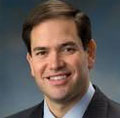
 LOUISVILLE (CFP) — Vowing “to rescue a great country now adrift,”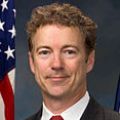
 LYNCHBURG, Virginia (CFP) —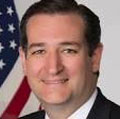
 WASHINGTON (CFP) — A new poll finds that among the eight Southerners considering a bid for the GOP presidential nomination in 2016,
  SPARTANBURG, South Carolina (CFP) — Most South Carolinians say they do not want their senior U.S. senator,
 Chicken Fried Politics