
Home » Posts tagged 'Mitch McConnell' (Page 9)
Tag Archives: Mitch McConnell

Retired Marine Corps general launches write-in campaign in Alabama U.S. Senate race
Report: Democrat Doug Jones outspending Republican Roy Moore 7-to-1 on TV
♦By Rich Shumate, ChickenFriedPolitics.com editor
 BIRMINGHAM (CFP) — Just two weeks before a special election to pick Alabama’s next U.S. Senator, Lee Busby, a retired Marine Corps colonel and one-time aide to White House Chief of Staff John Kelly, has launched a last-minute write-in bid for the seat as an independent.
In another development in the race, Democrat Doug Jones’s campaign has outspent embattled Republican nominee Roy Moore by a whopping 7-to-1 margin on television ads in his quest to become the first Democrat to win a Senate race in Alabama in 25 years, according to a report in Politico.

Alabama U.S. Senate candidate Lee Busby
Busby told MSNBC’s Morning Joe that he got into the race because he was dissatisfied with choosing between Moore, who has been accused of sexually pursuing teenage girls, and Jones, a former federal prosecutor from Birmingham making his first bid for political office.
“I felt like there was a lot of people in Alabama who felt like me,” Busby told the network. “The more I talked to [people], the more sense I got that there was this huge swath in the middle that feels like they’re not represented.”
Since announcing his write-in candidacy on November 27, Busby said he has been the target of a deluge of criticism on social media from Moore supporters angered by his candidacy.
“I’m either a Democratic agent or a lackey of [Senate Majority Leader] Mitch McConnell,” he said.
Busby told MSNBC that he is a registered Republican but did not support Moore during the GOP primary, well before the sexual pursuit allegations surfaced.
“I don’t know Roy Moore. I’ve never met him. But there’s a sense of self-righteousness that comes out of that campaign that bothered me, and I don’t think it represents the majority of Alabama voters,” he said.
Busby, who lives in Tuscaloosa, served 31 years in the Marine Corps and Marine Reserve, reaching the rank of colonel. After leaving the military, he has focused on his work as a sculptor, creating memorial busts of service members killed in Iraq and Afghanistan.
While in the military, Busby served as vice chief of staff to Kelly, the retired Marine general who is now Trump’s chief of staff.
Since allegations against Moore became public on November 9, Trump has refused to condemn him, instead offering pointed criticism of Jones on Twitter. However, the president has so far stopped short of traveling to Alabama to campaign with his party’s nominee.
By contrast, McConnell and most of the Republicans in the Senate have called on Moore to exit the race, even though the deadline had passed to remove his name from the ballot.

Former Alabama Chief Justice Roy Moore
Five women have come forward to say that Moore, now 70, made advances toward them when he was in his 30s and they were teenagers. One of the women, Leigh Corfman, said Moore initiated sexual contact with her back in 1979, when she was just 14.
Moore has denied the allegations and resisted pressure from Republicans to drop out of the race.
The most recent public polls, taken before Busby’s entry, have shown the race between Jones and Moore within the margin of error, which means that the polls can’t offer a conclusion as to which man is ahead. The competitiveness of the race is shocking sight in Alabama, where Republican Richard Shelby won by 28 points in 2016 and Democrats didn’t even run anybody against Republican Jeff Sessions in 2014.
Just as shocking is the disparity on the TV airwaves, with Jones airing more than 10,000 ads since the primary, compared to just 1,000 for Moore, according to figures compiled by Advertising Analytics and reported by Politico.
National Democrats had been wary of putting resources into the long-shot Alabama race, but money began pouring into Jones’s campaign after Moore won the GOP primary and the allegations against him surfaced.
The special election to fill the Senate seat is December 12.
The Alabama seat became vacant in February, when Sessions resigned to become U.S. attorney general. Republican Luther Strange was appointed to fill the seat but failed to hold it when Moore challenged him in the GOP primary to pick a nominee for a special election to elect a permanent replacement.
Moore was a controversial figure even before the allegations about his alleged sexual pursuit of teenage girls surfaced. He was twice elected as chief justice of the Alabama Supreme Court and removed both times, first for defying a federal judge’s order to remove a 10 Commandments display at the state judicial building in Montgomery and then for encouraging local officials to refuse to issue marriage licenses to same-sex couples after the U.S. Supreme Court ruling mandating marriage equality.
In 2006 and 2010, he ran poorly in GOP primaries for governor. But in the special election, he was able to parlay unhappiness with the Republican establishment in Washington into a win over Strange, who was backed by Trump and McConnell.
Watch Busby’s full interview with MSNBC:
McConnell: I believe Roy Moore’s accusers
Head of Senate GOP campaign arm says Moore should be expelled; fifth woman alleges sexual misconduct
♦By Rich Shumate, ChickenFriedPolitics.com
MONTGOMERY (CFP) — Senate Majority Leader Mitch McConnell says he believes the women who have come forward to accuse Alabama Republican U.S. Senate candidate Roy Moore of sexual misconduct, while the head of the Senate GOP’s campaign arm says Moore should be expelled from the Senate if he wins a December special election.
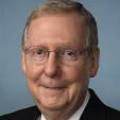
Senate Minority Leader Mitch McConnell
“I believe the women, yes, ” McConnell told reporters after attending a tax reform event November 12 in Louisville. “I think he should step aside.”
McConnell also said Republican leaders are looking into the feasibility of supporting a write-in candidate in the race, although he was non-committal on whether that candidate would be the man Moore defeated in the Republican primary, U.S. Senator Luther Strange.
U.S. Senator Cory Gardner, the chairman of the National Republican Senatorial Committee, took to Twitter to suggest that Republican senators might refuse to let Moore take his seat in the Senate even if he wins.
“I believe the individuals speaking out against Roy Moore spoke with courage and truth, proving he is unfit to serve in the United States Senate and he should not run for office,” Gardner said. “If he refuses to withdraw and wins, the Senate should vote to expel him, because he does not meet the ethical and moral requirements of the United States Senate.”
Former Alabama Chief Justice Roy Moore
Moore fired back on Twitter: “The person who should step aside is @SenateMajLdr Mitch McConnell. He has failed conservatives and must be replaced.”
GOP leaders are in a difficult spot. The deadline has passed for replacing Moore on the ballot, so, if he withdraws, the only option for Republicans to win would be a write-in campaign. However, if he refuses to go, a write-in campaign could split the Republican vote and clear the way for Democrat Doug Jones to win. And that would cut the GOP majority in the Senate to a single vote.
Strange, who has been filling the seat on a temporary basis since February, would be problematic as a write-in candidate because he lost to Moore in September after an acrimonious primary, leaving him an unlikely figure to unify Republicans in a battle against Jones.
Even as Republican leaders grappled over how to deal with Moore, a fifth woman came forward to allege that Moore tried to force himself on her when she was just 16 and he was a local prosecutor in Alabama. Beverly Young Nelson said she managed to fight off Moore’s advances after he offered her a ride home from a restaurant where she worked.
On November 9, The Washington Post published an allegation from another woman, Leigh Corfman, who said Moore initiated sexual contact with her back in 1979, when she was just 14 and he was 32. Three other women also told the Post that Moore pursued them when they were teenagers, although none of those women allege that any sexual contact beyond kissing took place.
Moore has strenuously denied the allegations, insisting that they are a politically motivated attack to keep him out of the Senate.
“We do not intend to let the Democrats, or establishment Republicans or anybody else behind this story stop this campaign.” Moore during an appearance at a Veteran’s Day event where he addressed the allegations. “We fully expect the people of Alabama to see through this charade.”
Suggestions of sexual impropriety pose a special problem for Moore, 70, because his legal and political careers have been built on unapologetic Christian conservatism, which is frequently on display in most of his speeches.
He was twice elected and removed as chief justice of the Alabama Supreme Court after defying federal court orders to stop displaying the Ten Commandments on public property and encouraging local officials not to license same-sex marriages after the U.S. Supreme Court had legalized them.
The allegations have further eroded Moore’s already shaky relationship with fellow Republicans in the Senate, all of whom backed Strange in the primary. Given the current climate of heightened sensitivity to allegations of sexual harassment and sexual misconduct, Republicans have been quick to put daylight between themselves and Moore.
However, Moore — who twice put his job as chief justice on the line to defy federal courts — is unlikely to heed calls to step aside, especially coming from McConnell. Moore has said loudly and often that he would vote against McConnell as Republican leader if he gets to Washington.
The imbroglio surrounding Moore marks the second time in a year that a sex scandal has rocked politics in the Yellowhammer State.
In April, former Governor Robert Bentley resigned under threat of impeachment after pleading guilty to two misdemeanors stemming from his efforts to extricate himself from a scandal over his relationship with former aide.
Strange was appointed to the Senate seat in February by Bentley after Jeff Sessions left to become U.S. attorney general. Although state law mandates that Senate vacancies be filled “forthwith,” Bentley delayed a special election until November 2018, which would have given Strange nearly two years of incumbency before he had to face voters.
But after Bentley resigned, new Alabama Governor Kay Ivey reversed course and ordered a special election this year. Moore went on to defeat Strange in a September primary runoff.
Roy Moore ousts Luther Strange in Alabama U.S. Senate GOP runoff
Victory by insurgent Moore a blow to President Trump and Senate Majority Leader Mitch McConnell
♦By Rich Shumate, ChickenFriedPolitics.com editor
BIRMINGHAM (CNN) — In a rebuke to Senate Republican leaders and President Donald Trump, Alabama Republicans have chosen former Roy Moore, a man twice removed as chief justice of the state’s highest court, for a U.S. Senate seat over incumbent Luther Strange, who failed to secure by election the post he gained by appointment just seven months ago.
Former Alabama Chief Justice Roy Moore
Moore, 70, who became a darling of Christian conservatives by defying federal court orders on displaying the Ten Commandments and same-sex marriage, took 55 percent of the vote in the September 26 runoff to 45 percent for Strange, who had the backing of both Trump and Senate Majority Leader Mitch McConnell.
“I never prayed to win this campaign. I only prayed that God’s will be done,” Moore told his cheering supporters in Montgomery. “We have to return the knowledge of God and the knowledge of the Constitution of the United States to the United States Congress.”
And despite Trump’s conspicuous support for Strange, Moore said, “Don’t let anybody in the press think that because he supported my opponent that I don’t support him and support his agenda … as long as its constitutional.”
After Strange’s defeat became clear, Trump tweeted, “Congratulations to Roy Moore on his Republican Primary win in Alabama. Luther Strange started way back & ran a good race. Roy, WIN in Dec!”
Strange, who gave up being state attorney general to take the Senate appointment, could not hold his seat despite solid establishment support and a huge financial advantage over Moore. Speaking to supporters in Birmingham, he acknowledged that his campaign failed to navigate the anti-establishment waves now coursing through American politics.
“We’re dealing with a political environment that I’ve never had any experience with,” Strange said. “The political winds in the country right now … are very hard to understand.”
Strange also thanked Trump and said the responsibility for his loss lies with him, not the president.
“If this causes him any trouble, it’s not his fault,” Strange said. “The fault always lies in the candidate or the head coach or the guy holding the ball.”
Moore will now face Democrat Doug Jones, a former federal prosecutor from Birmingham, in a general election on December 12. And although Democrats haven’t won a Senate election in Alabama in 25 years, the nomination of the controversial Moore provides at least a glimmer of hope for an upset.
Jones, speaking to supporters in Birmingham as the results of the GOP race were coming in, predicted that he would win in December once voters began focusing on issues.
“We have the wind at our back,” Jones said. “We believe we have the issues people care about which you have not heard any discussions about. People are concerned about health care and the economy. People want to see this state moving forward. I believe that we can do that.”
Moore’s nomination also means that McConnell faces the unpleasant prospect of having a new member in his caucus who has castigated McConnell on the campaign trail and called for his ouster — no small consideration given that Republicans have a thin majority of just 52 seats in the 100-member Senate.
McConnell went all in for Strange during the primary. The Senate Leadership Fund, a PAC affiliated with the majority leader, poured more than $5 million into the race, the bulk of it for attack ads against Moore.
Both Strange and Moore cast themselves as champions of Trump’s agenda, in a state where he remains popular. But the president put his personal power and prestige on the line for Strange, formally endorsing him just a week before the first round of voting in August and coming to Alabama to campaign with him four days before the runoff.
During Trump’s pre-election appearance in Huntsville, he conceded that his endorsement of Strange might turn out to be a mistake should the senator lose — but that he would campaign “like hell” for Moore if he won.
The battle in Alabama became a proxy war between the Senate GOP leaders and their intra-party critics, who have embraced the Moore candidacy as a way of giving McConnell a black eye. Breitbart News, the website run by Trump’s former chief strategist, Steve Bannon, banged its drum for Moore, and former GOP vice presidential candidate Sarah Palin campaigned by his side.
The twist in the Alabama race was that Trump was on the side of the GOP establishment, rather than Moore, the insurgent outsider who has said he believes God put Trump in the White House.

U.S. Senator Luther Strange
Strange, 64, was appointed to the Senate in February by former Governor Robert Bentley after Jeff Sessions was named as Trump’s attorney general.
At the time, Strange was Alabama’s attorney general, and his office had been involved in investigating the governor’s conduct. Bentley also handed Strange another gift, delaying a special election to permanently fill the Senate seat until November 2018, which would have given Strange nearly two years of incumbency before he had to face voters.
But after a sex scandal forced Bentley from office, new Alabama Governor Kay Ivey reversed course and ordered a special election.
The circumstances of Strange’s appointment, and the perception that it might have been the result of a political deal with the disgraced Bentley, dogged the senator throughout the campaign, even though he has strongly denied any impropriety and no evidence of a corrupt bargain has surfaced.
e
Moore first gained national notoriety as a local judge in 1995 after battling the ACLU over his practice of opening court sessions with a prayer and hanging the Ten Commandments in his courtroom.
He parlayed that prominence into election as chief justice in 2000 but was forced out in 2003 after he had a display of the Ten Commandments installed in the rotunda of the state judicial building and then defied a federal judge’s order to remove it.
Moore was once again elected chief justice in 2012, but in 2016, he was suspended by a judicial disciplinary panel for the rest of his term for ethics violations after urging local officials to defy the U.S. Supreme Court decision legalizing same-sex marriage.
After losing an appeal of his suspension, Moore resigned from the Supreme Court to run for the Senate.
Trump stumps for U.S. Senator Luther Strange ahead of Alabama runoff
President tells Huntsville crowd that his endorsement of Strange might turn out to be a “mistake” if he loses
♦By Rich Shumate, Chickenfriedpolitics.com editor
HUNTSVILLE, Alabama (CFP) — President Donald Trump put his power and prestige directly on the line by traveling to Alabama to campaign for U.S. Senator Luther Strange, who is locked in bruising GOP primary runoff against former Alabama Chief Justice Roy Moore.
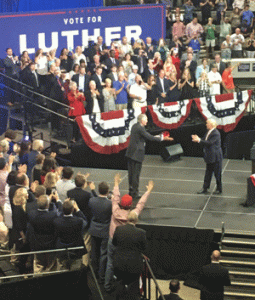
Trump and Strange onstage in Huntsville (Photo: Twitter)
But addressing Strange’s supporters in Huntsville just four days before Alabama Republicans make their decision, Trump conceded that his endorsement of Strange might turn out to be a mistake should the senator lose — and that he would campaign “like hell” for Moore if the challenger wins the September 26 vote.
“I’m taking a big risk, because if he doesn’t make it, they’re going to go after me,” Trump said, a reference to the likely media reaction if Moore wins.
“If Luther doesn’t win, they’re not going to say we picked up 25 points in a very short period of time. They’re going to say, ‘Donald Trump, the president of the United States, was unable to pull his candidate across the line. It is a terrible, terrible moment for Trump,'” he said.
However, Trump also said that he thought a Moore victory in the primary could put the seat Alabama seat in play in November, in a state where Democrats haven’t won a Senate race in 25 years.
“Roy has a very good chance of not winning in the general election,” Trump said. “Moore is going to have a hard time winning.”
The Democratic nominee is Doug Jones, a former federal prosecutor from Birmingham, whose uphill task in deep red Alabama might be less uphill against someone with Moore’s controversial past, which includes being ousted twice from his chief justice post for defying federal court rulings.
Both Strange and Moore have cast themselves as champions of the president’s agenda, in a state where Trump remains popular. But it was Strange who earned a formal endorsement from Trump just a week before the first round of voting in August, which Moore won.
Since then, Moore has been endorsed by the third place finisher, U.S. Rep. Mo Brooks, and received support from Breitbart News, the website run by Trump’s former chief strategist, Steve Bannon. Former GOP vice presidential candidate Sarah Palin also traveled to Alabama to campaign with Moore.
In addition to Trump, Strange has received support from Senate Majority Leader Mitch McConnell and his allies, who have dumped millions into the race on his behalf.
The battle in Alabama has become a proxy war between the Senate GOP leaders and their intra-party critics, who have embraced the Moore candidacy as a way of giving McConnell a black eye — and possibly saddling him with a Republican caucus member who has publicly and repeatedly called for his ouster.
The twist in the Alabama race is that Trump is on the side of the GOP establishment, rather than Moore, the insurgent outsider who has said he believes God put Trump in the White House.
Five statewide polls taken since the first round of primary voting in August have shown Moore with a lead beyond the statistical margin of error; in three others, the margin between the candidates was not large enough to draw inferences about the state of the race.
The latest poll, a September 18 survey from JMC Analytics, showed an inconclusive margin between the candidates. However, that was a marked shift from the same poll in August, which had Moore with a 19-point lead over Strange.
About 13 percent of voters polled in the survey said they were still undecided.
U.S. Senator Luther Strange
Strange, 64, was appointed to the Senate in February by former Governor Robert Bentley after Jeff Sessions was named as Trump’s attorney general.
At the time, Strange was Alabama’s attorney general, and his office had been involved in investigating the governor’s conduct. Bentley also handed Strange another gift, delaying a special election to permanently fill the Senate seat until November 2018, which would have given Strange nearly two years of incumbency before he had to face voters.
But after a sex scandal forced Bentley from office, new Alabama Governor Kay Ivey reversed course and ordered a special election.
The circumstances of Strange’s appointment, and the perception that it might have been the result of a political deal with the disgraced Bentley, have dogged the senator throughout the campaign, even though he has strongly denied any impropriety and no evidence of a corrupt bargain has surfaced.
Former Alabama Chief Justice Roy Moore
Moore, 70, first gained national notoriety as a local judge in 1995 after battling the ACLU over his practice of opening court sessions with a prayer and hanging the Ten Commandments in his courtroom.
He parlayed that prominence into election as chief justice in 2000 but was forced out in 2003 after he had a display of the Ten Commandments installed in the rotunda of the state judicial building and then defied a federal judge’s order to remove it.
Moore was once again elected chief justice in 2012, but in 2016, he was suspended by a judicial disciplinary panel for the rest of his term for ethics violations after urging local officials to defy the U.S. Supreme Court decision legalizing same-sex marriage.
After losing an appeal of his suspension, Moore resigned from the Supreme Court to run for the Senate.
Roy Moore, Luther Strange advance to Alabama U.S. Senate runoff
Former federal prosecutor Doug Jones wins Democratic nod
♦By Rich Shumate, ChickenFriedPolitics.com editor
MONTGOMERY (CFP) — U.S. Senator Luther Strange has survived the first hurdle in his quest to hang on to his seat but must now overturn a lead opened up by conservative culture warrior Roy Moore in the first round of voting in an Alabama GOP special election primary.
U.S. Senator Luther Strange
Moore, the former chief justice of the Alabama Supreme Court, won 39 percent of the vote in the August 15 vote, to 33 percent for Strange, who got the benefit of a late-stage endorsement by President Trump to edge out U.S. Rep. Mo Brooks of Huntsville for second spot in the September 26 runoff.
Brooks won 20 percent, and the question now is where his voters go after an acrimonious campaign, during which groups aligned with the Senate Republican leadership poured in millions of dollars to bolster Strange by targeting both Brooks and Moore.
After conceding defeat, Brooks offered no formal endorsement, but he complained to reporters that “the non-stop carpet bombing of my reputation and Roy Moore’s reputation, quite frankly, it took a toll in the parts of the state where I was not very well known.”
Former Alabama Chief Justice Roy Moore
In his victory speech, Moore made a directly play for the votes of the six candidates eliminated in the first round of voting, saying “the attempt by the silk-stocking Washington elitists to control the vote of the people of Alabama has failed.”
“I extend my hand of friendship to my fellow candidates who did not make this runoff,” he said. “Those candidates ran an honorable and ethical campaign. They ran on their own merits and not on the negative attack ads of (Strange).”
A runoff victory by Moore — twice thrown off Alabama’s highest court for defying federal court rulings on same-sex marriage and display of the Ten Commandments — would present a challenge to the GOP’s image nationally and would also be a rebuke to Senate Majority Leader Mitch McConnell, whom Moore has disparaged on the campaign trail.
Trump, too, has a vested interest in Strange’s survival after endorsing him a week before the primary, even though Moore — who has said he believes God put Trump in the White House — has cast himself as a solid supporter of the president’s agenda.
Meanwhile, in the Democratic primary, the victor was Doug Jones, a former federal prosecutor from Birmingham, who took 65 percent of the vote to win over seven other candidates.
The Democratic winner will face an uphill climb in a state where a Democrat hasn’t won a Senate seat in 25 years, although the prospect of facing Moore in the general election may give Democrats a glimmer of hope.
Addressing supporters after his win, Jones tried to contrast himself with the Republican candidates by casting himself as “an independent voice.”
“I’m not going to be beholden to a president or a party leader. I’m going to be beholden only to the state of Alabama,” he said. “Tonight we have taken that first step.”
Strange, 64, was appointed to the Senate in February by former Governor Robert Bentley after Jeff Sessions was named as Trump’s attorney general.
At the time, Strange was Alabama’s attorney general, and his office had been involved in investigating the governor’s conduct. Bentley also handed Strange another gift, delaying a special election to permanently fill the Senate seat until November 2018, which would have given Strange nearly two years of incumbency before he had to face voters.
But after a sex scandal forced Bentley from office, new Alabama Governor Kay Ivey reversed course and ordered a special election. And although Strange has strongly denied any impropriety, the unusual circumstances of his appointment by the disgraced Bentley have dogged him in the Senate race.
Moore, 70, first gained national notoriety as a local judge in 1995 after battling the ACLU over his practice of opening court sessions with a prayer and hanging the Ten Commandments in his courtroom.
He parlayed that prominence into election as chief justice in 2000 but was forced out in 2003 after he had a display of the Ten Commandments installed in the rotunda of the state judicial building and then defied a federal judge’s order to remove it.
Moore was once again elected chief justice in 2012, but in 2016, he was suspended by a judicial disciplinary panel for the rest of his term for ethics violations after urging local officials to defy the U.S. Supreme Court decision legalizing same-sex marriage.
After losing an appeal of his suspension, Moore resigned from the Supreme Court to run for the Senate.
 Chicken Fried Politics