
Home » Posts tagged 'Patrick Murphy' (Page 3)
Tag Archives: Patrick Murphy

State of the Races: U.S. House 2016
Only 11 seats are in play across the region; Democrats may make small gains
♦By Rich Shumate, Chickenfriedpolitics.com editor
 (CFP) — Heading toward the November election, just 11 of the South’s 154 U.S. House seats look to be at all in play, a measly 7 percent.
Indeed, in 10 states, no seats are likely to change parties, although results from Louisiana’s late November primary may add to the list. In three of the four states with seats in play–North Carolina, Florida and Virginia–the competitive races are largely the result of new court-ordered House maps, which have disturbed the political equilibrium.
Currently, Republicans hold 116 seats in the South, compared to just 38 for Democrats, or about 75 percent. That GOP dominance is unlikely to budge much.
Overall, Democrats appear poised to pick up at least two seats in Florida and one in Virginia, while Republicans are favored to pick up at least one seat in Florida. There are three seats–two in Florida and one in Texas–that are out-and-out toss-ups. Thus, a net gain of five seats for Democrats in the South would be a good night.
Here are the 11 races to watch:

Dunn
Florida 2: This seat, anchored in the Florida Panhandle around Tallahassee, is currently held by Democratic U.S. Rep. Gwen Graham. In redrawing the Sunshine State’s map, the Florida Supreme Court removed a chunk of black voters and part of Tallahassee from the district in order to redraw the adjacent 5th District, making what had been a swing seat substantially more Republican. Graham, the only Democrat to take away a Republican seat anywhere in the South in 2014, looked at her odds and decided not to run again, for good reason. Republicans nominated Panama City urologist Neal Dunn, who should have little problem here. RATING: GAIN GOP

Lawson
Florida 5: This seat, held by Democratic U.S. Rep. Corrine Brown, was the primary offender in the Supreme Court ruling that the House map was unconstitutional. Over Brown’s strenuous objections, the justices ordered an extreme makeover; the district now starts in Jacksonville and heads due west to Tallahassee, making it less black and more Republican. Brown, who has been indicted on federal corruption charges, was bounced in the primary by Al Lawson, a former state lawmaker from Tallahassee. The GOP had some hope of a takeaway with Brown in the race, but those hopes were likely dashed with her primary loss. RATING: PROBABLY DEM

Murphy

Mica
Florida 7: Republican U.S. Rep. John Mica is running again in this district in suburban Orlando. But he now has some of the Democratic voters who used to be in Brown’s 5th District, making this district much less safe that it was. He will face political newcomer Stephanie Murphy, a college professor and former national security professional, who was the only Democrat to file against Mica. RATING: PROBABLY GOP

Demings
Florida 10: This Orlando-area district, now held by Republican U.S. Rep. Daniel Webster, was made substantially more Democratic in the redraw–so much so that Webster opted to run for re-election in the adjacent 11th District, where U.S. Rep. Rich Nugent is retiring. Democrats nominated former Orlando Police Chief Val Demings, who should have little problem in November. RATING: GAIN DEM

Crist

Jolly
Florida 13: This swing district in the Tampa Bay area will feature a high voltage smackdown between Republican U.S. Rep. David Jolly and former Florida Governor Charlie Crist, the Republican-turned-independent-turned-Democrat who is trying to make a political comeback after losing the governor’s race in 2014. The redraw of Florida’s map added a portion of St. Petersburg with a large minority population to this district, making it more Democratic. Facing long odds, Jolly first opted to run for the U.S. Senate before deciding to try to keep his seat. With Jolly out, this would have been a Democratic pick-up. That’s still probable but much less certain with the incumbent back in the race. RATING: PROBABLY DEM

Perkins

Mast
Florida 18: This seat, which includes part of Palm Beach County and the Treasure Coast, is a classic swing district now held by Democratic U.S. Rep. Patrick Murphy, who gave it up to run for the U.S. Senate. Democrats selected Randy Perkins, a multimillionaire businessman from Delray Beach, while Republicans went with Brian Mast, an Army veteran who lost both his legs while serving as a bomb disposal specialist in Afghanistan. Both are political newcomers in what is likely to be a high-profile fight to the finish. RATING: TOSS-UP

Garcia

Curbelo
Florida 26: Like the 18th District, this seat, which includes southwest Miami-Dade County and the Florida Keys, has gone back and forth between the parties in recent cycles. The incumbent, Republican U.S. Rep. Carlos Curbelo, will face a rematch against the man he beat by less than 5,800 votes in 2014, former Democratic U.S. Rep. Joe Garcia. RATING: TOSS-UP

Gallego

Hurd
Texas 23: This massive district, which stretches across a vast expanse of West Texas from the San Antonio suburbs to near El Paso, has changed hands in the last three elections. The incumbent is U.S. Rep. Will Hurd, who is that rarest of creatures, a black Republican representing a majority Latino district. His Democratic challenger is the man Hurd beat in 2014, former U.S. Rep. Pete Gallego. Hurd’s winning margin last time was just 2,400 votes, indicating just how equally divided this district is. With a 55 percent Latino population and Donald Trump at the head of the GOP ticket, Hurd may be battling for his life. RATING: TOSS-UP

McEachin

Wade
Virginia 4: A new map drawn by a federal court added Richmond and Petersburg to this southeast Virginia district, making it substantially more Democratic. The incumbent, Republican U.S. Rep. Randy Forbes, left this seat to run in the redrawn 2nd District, leaving an open seat that’s ripe for a Democratic pick-up. Republican Henrico County Sheriff Mike Wade will face off against Democratic State Senator Donald McEachin, also of Henrico County. A win by McEachin in the redrawn district would add a second African-American congressman to the state’s delegation. RATING: GAIN DEM

Dittmar

Garrett
Virginia 5: Democrats have hopes of taking this seat, which is open because of the retirement of Republican U.S. Rep. Robert Hurt. But this district, which stretches through central Virginia from the North Carolina border to the Washington, D.C. suburbs, has a Republican lean. GOP State Senator Tom Garrett from Buckingham County is facing Democrat Jane Dittmar, the former chair of the Albermarle County Board of Supervisors. RATING: PROBABLY GOP

Comstock

Bennett
Virginia 10: This district, which starts in the western D.C. suburbs and stretches out to West Virginia, is held by Republican U.S. Rep. Barbara Comstock and is at the top of the Democrats’ wish list. Although Comstock won handily in 2014, this is a district full of suburban swing voters who Democrats are hoping will be turned off by a Trump-led GOP ticket. She faces Democrat LuAnn Bennett, a real estate developer who is the ex-wife of former U.S. Rep. Jim Moran. RATING: PROBABLY GOP
New U.S. House map sets off scramble in Florida
As many as seven seats could be in play after a court-ordered redraw
By Rich Shumate, Chickenfriedpolitics.com editor
 GAINESVILLE, Florida (CFP) — The weather may not be the only thing that’s hot this summer in Florida.
Thanks to new House map ordered by the Florida Supreme Court, as many as seven of the state’s 27 U.S. House seats might be in play as the filing period for congressional races begins June 24.
Republicans appear poised to take away one seat that’s now Democratic; Democrats are likely to capture two GOP-held seats. Further complicating the mix are the departure of four sitting House members who are all running for an open Senate seat.
Although Florida is a quintessential swing state, Republicans hold a 17-10 advantage in the congressional delegation, thanks to maps drawn by the GOP-controlled legislature.
The Supreme Court struck down the previous map on the grounds that it violated a state constitutional amendment prohibiting gerrymandering. The new map ordered by the high court had a domino effect on districts statewide, although it put relatively few safe seats into play.
Here are seven seats to watch in November:

Graham
Florida 2: This seat, anchored in the Florida Panhandle around Tallahassee, is currently held by Democratic U.S. Rep. Gwen Graham. The court removed a chunk of black voters and part of Tallahassee from the district in order to redraw the adjacent 5th District, making what had been a swing seat substantially more Republican.
Graham, the only Democrat to take away a Republican seat anywhere in the South in 2014, looked at her odds and decided not to run again. The GOP seems poised to pick up a seat here.

Brown
Florida 5: This seat, which belongs to Democratic U.S. Rep. Corrine Brown, was the primary offender in the Supreme Court ruling that the House map was unconstitutional. As drawn by legislators, it began in Jacksonville and snaked down to Orlando–at one point, the width of a highway–to maximize its black population.
Over Brown’s strenuous objections, the justices ordered an extreme makeover; the district now starts in Jacksonville and heads due west to Tallahassee, making it less black and more Republican. But Brown is running again, and it remains to be seen whether the changes will be enough to sink her. She faces the additional hurdle of two Democratic primary challengers in the reconfigured district.

Mica
Florida 7: Republican U.S. Rep. John Mica is running again in this district in suburban Orlando. But he now has some of the Democratic voters who used to be in Brown’s 5th District, making this district much less safe that it was. The question will be whether any brand-name Democrats will file to take on the 11-term lawmaker. If not, he’s probably headed back to Washington.

Webster
Florida 10: This Orland0-area district, now held by Republican U.S. Rep. Daniel Webster, was made substantially more Democratic in the redraw–so much so that Webster opted to run for re-election in the adjacent 11th District, where U.S. Rep. Rich Nugent is retiring. This seat will most likely flip Democratic.
Florida 13: This swing district in the Tampa Bay area, now held by Republican U.S. Rep. David Jolly, was also redrawn to add a portion of St. Petersburg with a large minority population, making it more Democratic. Rather than try to defend it, Jolly opted to run for the U.S. Senate.
Crist
The big name in this race is former Florida Governor Charlie Crist, the Republican-turned-independent-turned-Democrat who is trying to make a political comeback after losing the governor’s race in 2014. Crist would seem to be the favorite here, although his recent lack of electoral success should give Republicans some hope.

Murphy
Florida 18: This seat, which includes part of Palm Beach County and the Treasure Coast, is a classic swing district now held by Democratic U.S. Rep. Patrick Murphy. Murphy is giving it up to run for the U.S. Senate, which has put this seat at the top of the GOP’s target list. Depending on who emerges from crowded primaries on both sides, this race should be a toss-up come November.

Taddeo
Garcia
Curbelo
Florida 26: Like the 18th District, this seat, which includes southwest Miami-Dade County and the Florida Keys, has gone back and forth between the parties in recent cycles. The incumbent, Republican U.S. Rep. Carlos Curbelo, is likely to face a rematch against the man he beat in 2014, former Democratic U.S. Rep. Joe Garcia, although Garcia is going to have to get past Annette Taddeo in the primary.
In what was seen as a major snub of Garcia, the Democratic Congressional Campaign Committee, the fundraising arm of House Democrats, is backing Taddeo, a party leader from Miami who was the Democratic nominee for lieutenant governor in 2014.
Democrats need to make a net gain of four seats in order to secure a majority in the Florida delegation. If the 2nd, 10th, and 13th districts flip as expected, that would give Democrats a net gain of one seat. So they would have to defeat Mica, keep Brown’s seat and take the toss-up seats in the 18th and 26th districts in order to flip control their way.
That would seem to be a tall order, although the unpredictability of the presidential race could make the improbable probable.
State of the Races: U.S. Senate 2016
GOP favored in 7 of 9 Southern contests; Democrats have a shot at 2
♦By Rich Shumate, Chickenfriedpolitics.com editor
 (CFP) — The 2016 election will feature nine contests across 14 Southern states, all of which are currently held by Republicans. And there appears to be precious little opportunity for Democrats to make inroads in the GOP’s regional hegemony.
Florida and North Carolina appear to be the best shots Democrats have to reverse the region’s GOP tide, although the decision by Marco Rubio to run for re-election significantly bolsters Republican chances in the Sunshine State. Louisiana is another possibility if the 24-candidate free-for-all in the Pelican State’s all-party jungle primary creates an unexpected Democratic opportunity. The other six races are foregone conclusions, barring some unforeseen Republican calamity.
Republicans currently hold 24 of the 28 Southern Senate seats, including both seats in 11 out of the 14 Southern states.
Here is the 2016 rundown:

Shelby
Alabama: Republican U.S. Senator Richard Shelby is running for a seventh term. Democrats aren’t putting up a fight, letting their nomination go to a marijuana rights activist. Given that a Democrat hasn’t won a Senate race in the Yellowhammer State since 1990, Shelby is virtually assured of another term, at the end of which he’ll be 88 years old. RATING: SAFE GOP

Boozman
Arkansas: Republican U.S. Senator John Boozman is seeing a second term, despite suffering an aortic aneurysm in 2014 that kept him away from Washington for two months. The Democrats were unsuccessful in getting their top pick, former Governor Mike Beebe, to run, though they did manage to recruit a credible challenger in Conner Eldridge, a former federal prosecutor from Fayetteville. Still, a statewide race is a hard slog these days for a Democrat in the Natural State. RATING: PROBABLY GOP

Rubio
Murphy
Florida: Republican U.S. Senator Marco Rubio’s decision to reverse course and seek re-election significantly improved Republican prospects for keeping this seat. Rubio will face U.S. Rep. Patrick Murphy from Jupiter, who won the primary over liberal firebrand Alan Grayson with support from the Democratic establishment. Rubio has to be considered a favorite here, but if Hillary Clinton turns out to have coattails in the Sunshine State, this could be a race in November. RATING: GOP FAVORED

Isakson
Georgia: Republican U.S. Senator Johnny Isakson is running for re-election, despite publicly disclosing that he has been diagnosed with Parkinson’s disease. Peach State Democrats have recruited Jim Barksdale, the owner of an Atlanta investment firm, to take on Isakson. However, that strategy didn’t work in 2014 with Michelle Nunn, and there is little indication that Isakson is in trouble this time around. RATING: PROBABLY GOP

Paul
Kentucky: Now that Republican U.S. Senator Rand Paul ended his presidential run, he will be a prohibitive favorite for re-election. Democrats have managed to recruit a high-profile challenger with deep pockets, Lexington Mayor Jim Gray. But in a state that hasn’t sent a Democrat to the Senate since 1992, Gray will have a big mountain to climb. RATING: PROBABLY GOP

Vitter
Louisiana: After losing a bid for governor, Republican U.S. Senator David Vitter announced he would not seek re-election to the Senate, leaving his seat up for grabs. A gaggle of 24 candidates are seeking the seat, running in the state’s all-party jungle primary in November, with the top two advancing to a December runoff.
Democrats running include Public Service Commissioner Foster Campbell and Caroline Fayard, a New Orleans lawyer. The Republican side of the ballot includes two sitting U.S. House members, Charles Boustany of Lafayette and John Fleming of Minden; State Treasurer John Kennedy; Joseph Cao, a Vietnamese-American who represented the New Orleans area in Congress from 2009 to 2011; and Rob Maness, who made a spirited but unsuccessful Tea Party-backed bid for the Senate in 2014. White racist David Duke also filed on the GOP ticket.
While Republicans should be favored to keep this seat, Vitter’s loss to a Democrat in the governor’s race shows a flip for the Democrats is possible, if they can unite behind a high-profile challenger. Democrats could also benefit by having fewer candidates dividing up their vote in the primary. RATING: PROBABLY GOP

Lankford
Oklahoma: Republican U.S. Senator James Lankford is facing voters for the second time in two years after being elected to serve out the remainder of former U.S. Senator Tom Coburn’s term in 2014. Given that Lankford cruised to victory with 68 percent of the vote last time and Democrats haven’t won a Senate race in Oklahoma in 25 years, this race is a foregone conclusion. RATING: SAFE GOP

Burr
North Carolina: Republican U.S. Senator Richard Burr is running for a third term, and he dodged a major bullet when former Democratic U.S. Senator Kay Hagan, who was bounced from the Senate in 2014, decided not to run against him. Instead, he will face Deborah Ross, a former state legislator and Duke University law professor. North Carolina is a state where Democrats can still win statewide races, but Ross starts from well behind. RATING: PROBABLY GOP

Scott
South Carolina: Republican U.S. Senator Tim Scott, the only black Republican in the Senate, is facing voters for the second time in two years, after being appointed in 2013 to replace former U.S. Senator Jim DeMint. This time, he’s running for a full term in his own right, and he has not drawn a major challenger. He took 61 percent of the vote in 2014; count this race as a slam dunk. RATING: SAFE GOP
U.S. Rep. Alan Grayson off and running for Senate seat in Florida
Outspoken liberal firebrand’s campaign sets up a battle royale in the Democratic primary
♦By Rich Shumate, Chickenfriedpolitics.com editor
ORLANDO (CFP) — U.S. Rep. Alan Grayson, the firebrand liberal notorious for caustic comments about Republicans, has announced his candidacy for the U.S. Senate in 2016, setting up what is likely to be a bruising Democratic primary battle in the Sunshine State.
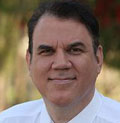
U.S. Rep. Alan Grayson
“I am unbought and unbossed,” Grayson, D-Orlando, said in a video announcing his Senate bid posted to his campaign website July 9. “I own nothing to anyone but the people.”
Grayson is running in defiance of Democratic party leaders, who are backing moderate U.S. Rep. Patrick Murphy, D-Jupiter and had hoped to avoid what is likely to be a divisive Democratic primary.
On the day of his announcement, Grayson provided a flavor of what’s to come in an interview with WKMG-TV in Orlando, in which he accused Murphy of being a closet Republican and said the Senate race “is going to live until the end of time.”
“People understand what I stand for. Patrick wants to cut Social Security, cut Medicare, and Patrick gave $2,300 to Mitt Romney’s campaign,” he said. “Patrick’s running in the wrong primary. He should be running as a Republican because that’s who he really is.”
To bring home the flavor of his political persona, Grayson is calling his campaign website SenatorWithGuts.com.
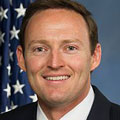
U.S. Rep. Patrick Murphy
For his part, Murphy greeted Grayson’s announcement by issuing a statement saying he was looking forward “to a clean, honest discussion of the issues in this primary.”
Grayson, 57, a Harvard-educated lawyer, burst onto the national scene after his election to Congress in 2008 with a floor speech in which he said the GOP’s health care plan was for the uninsured “to die quickly.” He has called Republicans “knuckle-dragging Neanderthals,” likened the Tea Party to the Ku Klux Klan and once compared former Vice President Dick Cheney to a vampire.
In 2009, he had to apologize after calling a female lobbyist “a K Street whore.” He is also known to subject reporters to profanity-laden tirades for stories he doesn’t like.
Grayson’s controversial profile cost him his House seat in 2010, a campaign in which he referred to his opponent, U.S. Rep. Daniel Webster, as “Taliban Dan” in a television ad. But Grayson returned to Congress in 2012, winning in a newly created Orlando-area district.
In addition to his hyperbolic comments, Grayson is also involved in a nasty divorce with his wife of 25 years, Lolita, whom he accused of bigamy and tried to have arrested for using a joint credit card to buy groceries. Lolita Grayson has charged that the congressman was unfaithful and abusive.
In his kickoff announcement, Grayson took an unabashed liberal line, calling for ending taxes on Social Security benefits, expanding Medicare to cover dental and vision care and ensuring that “every job should provide enough money to become part of the middle class.”
The Senate seat opened up when Republican U.S. Senator Marco Rubio decided to run for president. Democratic leaders are fearful that Grayson’s is too controversial and too liberal to win a statewide race in Florida — squandering an opportunity to pick up a seat that is vital to the party’s hopes of taking back the Senate.
The Democratic Senatorial Campaign Committee is backing Murphy, 32, who was a registered Republican until he switched parties to run for the House in 2012. He was re-elected in 2014 with nearly 60 percent of the vote in a competitive district.
On the Republican side, U.S. Rep. Ron DeSantis has jumped into the Senate race, and Lieutenant Governor Carlos López-Cantera is also expected to run.
Charlie Crist won’t run for Florida U.S. Senate seat in 2016
The Republican-turned-independent-turned-Democrat announces his decision in a Facebook post
TAMPA (CFP) — Former Florida Governor Charlie Crist says he will not seek a U.S. Senate seat from the Sunshine State in 2016, ending media speculation that he might jump into the race.

Former Florida Governor Charlie Crist
“I will not be seeking office in 2016, but I will be working alongside you,” Crist said in a brief Facebook message posted March 16. “Too much is at stake for our beautiful Florida to be on the sidelines.”
The seat is currently held by Republican U.S. Senator Marco Rubio, who is expected to announce in April whether he will give it up to seek the Republican presidential nomination. Rubio’s departure would likely trigger a wide-open race in politically competitive Florida.
The decision not to run comes just four months after Crist, running as a Democrat, was narrowly defeated by incumbent Republican Governor Rick Scott.
Crist, 58, was elected governor in 2006 as a Republican. In 2010, he opted to seek a Senate seat, rather than run for re-election. After it was clear he would lose to Rubio in the primary, Crist bolted the GOP and ran unsuccessfully as an independent. He became a Democrat in 2012.
Had Crist run for the Senate, he would have likely faced a battle in the Democratic primary with U.S. Rep. Patrick Murphy of Jupiter. U.S. Rep. Debbie Wasserman Schultz, the chair of the Democratic National Committee, is also reportedly considering the race.
 Chicken Fried Politics