
Home » Posts tagged 'White House 2016' (Page 10)
Tag Archives: White House 2016

Poll: Bush, Rubio open up lead over Hillary Clinton in Florida
Clinton’s unfavorable rating in Florida climbs to 55 percent
♦By Rich Shumate, Chickenfriedpolitics.com
 GAINESVILLE, Florida (CFP) — U.S. Senator Marco Rubio of Florida and former Florida Governor Jeb Bush have opened up big leads over Democratic frontrunner Hillary Clinton in the presidential race in the key swing state of Florida, a new poll shows.
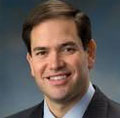
U.S. Senator Marco Rubio
The Quinnipiac Poll released August 20 also shows New York businessman Donald Trump and Bush leading among Florida Republicans; however, nearly 30 percent of state GOP voters say they would definitely not support the controversial Trump if he became the nominee.
In a hypothetical general election race, Bush bests Clinton 49 percent to 38 percent, well outside the poll’s margin of error of plus or minus 3 percent. Rubio does even better, 51 percent to 39 percent.
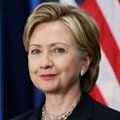
Former Secretary of State Hillary Clinton
The results are a marked change from the same poll in June, when Clinton held a slight lead over both Bush and Rubio. And in the latest poll, 55 percent of Florida voters had an unfavorable view of Clinton — up 10 points from June.
Nearly two-thirds of Florida voters — 64 percent — say Clinton is not honest or trustworthy.
Clinton even narrowly trails Trump, 43 percent to 41 percent, although that gap was within the margin of error.
In nine of the last 10 presidential elections, the winner of the presidential race in Florida also won nationally, making a victory in the Sunshine State vital for anyone who wants to capture the White House.
In the GOP primary race, Trump was the choice of 21 percent of Florida Republicans, with Bush at 17 percent, which was within the poll’s margin of error of plus or minus 4.5 percent. Rubio and retired neurosurgeon Ben Carson tied for third at 11 percent each.
However, 29 percent of Republican voters polled say they will definitely not support Trump if he is the nominee, a larger group than those now supporting him. And just 55 percent of the GOP voters polled view Trump positively, compared to 87 percent for Rubio and 81 percent for Bush.
Trump’s demeanor is also seen as a problem, with 64 percent saying he lacks the temperament and personality to handle an international crisis.
In the Democratic primary race, Clinton still maintains a wide lead in Florida, with support from 48 percent of Democrats polled. Senator Bernie Sanders of Vermont trails at 15 percent, and Vice President Joe Biden, who had yet to announce a 2016 White House bid, comes in at 11 percent.
In head-to-head matchups against Republicans, Biden runs slightly better against Rubio and Trump than does Clinton but slightly worse against Bush. The poll shows Sanders is weaker than Clinton against all three Republicans.
In the poll, 1093 Florida voters were interviewed, including 477 Republicans and 345 Democrats.
In 2016, the Florida primary will be held early in the primary calendar, on March 15, which is likely to give the state added prominence in the presidential nominating process.
The Florida GOP has also made its contest a winner-take-all affair, which means the winner gets a treasure trove of 99 delegates.
Former U.S. Senator Jim Webb enters 2016 Democratic race with shot at Hillary Clinton
Webb, who left the Senate in 2012, says Americans “need to shake the hold” of political elites
♦By Rich Shumate, Chickenfriedpolitics.com editor
 RICHMOND (CFP) — Saying the United States “needs a fresh approach to solving the problems that confront us and too often unnecessarily divide us,” former U.S. Senator Jim Webb of Virginia has announced that he will seek the 2016 Democratic presidential nomination.
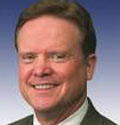
Former U.S. Senator Jim Webb
“I understand the odds, particularly in today’s political climate where fair debate is so often drowned out by huge sums of money,” Webb said in a message announcing his candidacy posted on his campaign website July 2. “Our fellow Americans need proven, experience leadership that can be trusted to move us forward.”
In his opening campaign salvo, Webb positioned himself as an outsider in the race, noting that “more than one candidate in this process intends to raise at least a billion dollars.”
“Highly paid political consultants are working to shape the ‘messaging’ of every major candidate,” he said. “We need to shake the hold of these shadow elites on our political process.”
Webb also took a direct swipe at the Democratic frontrunner, former Secretary of State Hillary Clinton, for her initial support of the 2003 invasion of Iraq, which Webb publicly opposed.
“Let me assure you, as president, I would not have urged an invasion of Iraq,” Webb said. “I warned in writing five months before that invasion that we do not belong as an occupying power in that part of the world and that this invasion would be a strategic blunder of historic proportions.”
When she ran for president in 2008, Clinton defended her vote authorizing the use of military force in Iraq — a vote which was used against her with great effect by Barack Obama. But in a 2014 book, she conceded that her vote was a mistake.
Webb also said he would have opposed military intervention in Libya in 2011 — which Obama authorized and Clinton supported as secretary of state — and that the subsequent terrorist attack on a U.S. diplomatic outpost in Benghazi on her watch “was inevitable.”
Webb, 69, is a U.S. Naval Academy graduate who served in Vietnam and was the secretary of the Navy during the Reagan administration. In 2006, he won a surprise victory to the Senate, narrowly ousting incumbent Republican George Allen in an election in which anti-war sentiment lifted Democratic fortunes.
In the Senate, Webb was considered a centrist who frequently bucked the party line, including an assertion that Obamacare would be a “disaster” for the Democratic Party. In 2012, facing the prospect of a contentious rematch with Allen, he decided not to run for re-election and left the Senate after a single term.
More recently, Webb sounded a cautionary note on the renewed drive to remove the Confederate battle emblem in the wake of the Charleston church shootings, saying in a Facebook post that “we all need to think through these issues with a care that recognizes the need for change but also respects the complicated history of the Civil War.”
“The Confederate Battle Flag has wrongly been used for racist and other purposes in recent decades. It should not be used in any way as a political symbol that divides us.”
Recent national polls have shown Webb’s support for the Democratic nomination in single digits, well behind Clinton and second-place U.S. Senator Bernie Sanders of Vermont.
In the message launching his campaign, Webb touted his sponsorship in the Senate of a GI Bill providing benefits to veterans of the Iraq and Afghanistan and his support for reform of the criminal justice system.
“It’s costing us billions of dollars. It’s wasting lives, often beginning at a very early age, creating career criminals rather than curing them. It’s not making our neighborhoods safer,” he said.
Like a number of other presidential contenders in both parties, Webb also sounded a note of economic populism.
“Let’s work to restore true economic fairness in this great country, starting with finding the right formula for growing our national economy while making our tax laws more balanced and increasing the negotiating leverage of our working people,” he said. “Our goal will be to increase the financial stability of the American workforce.”
Webb also said he would “work toward bringing the complex issue of immigration reform to a solution that respects the integrity of our legal traditions, while also recognizing the practical realities of a system that has been paralyzed by partisan debate.”
Webb is the only Southerner among the five candidates seeking the 2016 Democratic presidential nomination, although Clinton was a resident of Arkansas before moving to New York to run for the Senate in 2000.
Eight Southerners are seeking the Republican nomination: U.S. Senators Ted Cruz of Texas, Marco Rubio of Florida, Rand Paul of Kentucky and Lindsey Graham of South Carolina; former governors Jeb Bush of Florida, Mike Huckabee of Arkansas and Rick Perry of Texas; and Governor Bobby Jindal of Louisiana.
Louisiana Governor Bobby Jindal opens White House bid pledging “never to lead from behind”
Jindal touts his record, says Republicans “must stop being afraid to lose”
♦By Rich Shumate, Chickenfriedpolitics.com editor
 KENNER, Louisiana (CFP) — Taking a swipe at both Democratic “socialism” and a Republican Party that he says has been “beaten into submission,” Louisiana Governor Bobby Jindal launched his campaign for the 2016 GOP presidential nomination by calling himself a “doer,” not a “talker.”
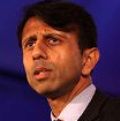
Louisiana Governor Bobby Jindal
“There are a lot of great talkers running for president. But none of them — not one — can match our record of actually shrinking the size of government,” Jindal said in his June 24 kickoff rally in Kenner, a New Orleans suburb. “I’m not running for president to be somebody. I’m running for president to do something.”
“If you want somebody who’s just going to pretend that everything is fine, just make some small tweaks, then you want somebody else. I’ll make this promise to you. I will never lead from behind.”
Jindal, 44, is in the last year of his second term as the Pelican State’s chief executive. He touted his record as governor in his opening address, noting that he took office just two years after Hurricane Katrina devastated New Orleans.
“Our economy was locked in a downward spiral. Our biggest city was reeling. For 25 straight years, more people had left this state than had moved into it,” he said. “Louisiana was in big trouble, so we had to make big changes.”
Among the achievements Jindal cited were education reform, particularly in New Orleans where the entire school system was converted into charter schools, and a 26 percent reduction in the state’s budget.
“It wasn’t easy. The big government crowd fought us every step of the way,” he said. “But in the end, we won.”
However, Jindal had to delay his widely anticipated presidential campaign while Louisiana’s legislature struggled to close a massive budget deficit that the governor’s critics blame on his refusal to consider tax increases to offset sharp declines in revenues from oil production.
Those budget problems have taken a toll on Jindal’s popularity, with a poll in March putting his approval rating at just 27 percent.
Jindal, a Rhodes scholar, was something of a wunderkind in Louisiana politics, becoming head of the state health department at the tender age of 24 and president of the University of Louisiana System at just 28. He was appointed assistant secretary of the U.S. Department of Health and Human Services during the administration of President George W. Bush.
Jindal left the Bush administration to run unsuccessfully for governor in 2003. In 2004, he was elected to the U.S. House, representing a suburban New Orleans district until his election as governor in 2007.
In the opening speech of his presidential campaigns, Jindal signaled that he plans to run as an unvarnished conservative who would cut the size of government and defend religious liberty.
“Republicans must stop being afraid to lose,” he said. “If we try to hide who we are again, we will lose again.”
Jindal took a direct shot at one of his chief GOP rivals, former Florida Governor Jeb Bush, by lampooning Bush’s assertion that GOP candidates “need to be willing to lose the primary in order to win the general election.”
“We’re going to help him do that,” Jindal said. “What Jeb Bush is saying is we need to hide our conservative ideals … Let’s do something new. Let’s endorse our own principles for a change. Let’s boldly speak the truth without fear.”
In recent months, Jindal, the son of Indian immigrants who converted to Roman Catholicism as a teenager, has been courting religious conservatives, particularly with his outspoken opposition to same-sex marriage. In his campaign kickoff, he charged that Christianity “is under assault today in America.”
“I want to say this slowly so that even Hillary Clinton can understand this — America did not create religious liberty. Religious liberty created the United States of America,” he said.
Jindal — whose given name is Piyush and who, if elected, would be the nation’s first Indian-American president — also lashed out at “all this talk about hyphenated Americans.”
“We are not Indian-Americans, African-Americans, Irish-Americans, rich Americans or poor Americans. We are all Americans.”
Jindal also leveled a broadside against President Obama, saying “this president and his apprentice-in-waiting, Hillary Clinton, are leading America down the path to destruction economically, culturally and internationally.”
“The simple fact is they are trying to turn the American dream into socialism.”
Jindal said his four main objectives as president would be to secure the border, replace Obamacare with a market-based health care system, cut the size of government and improve “America’s defenses.”
Jindal is one of eight Southern Republicans seeking the presidency in 2016. In addition to Bush and Jindal, the other Southern candidates are former governors Mike Huckabee of Arkansas and Rick Perry of Texas and U.S. Senators Ted Cruz of Texas, Marco Rubio of Florida, Rand Paul of Kentucky and Lindsey Graham of South Carolina.
The Southern GOP field is divided equally between senators and governors. Two of the last three Republicans elected president — George W. Bush and Ronald Reagan — served as governor, while the last GOP senator elected to the presidency was Warren Harding in 1920.
On the Democratic side, former U.S. Senator Jim Webb of Virginia has launched an exploratory committee for the 2016 Democratic nomination — a race that’s expected to be dominated by former Secretary of State Clinton, a former first lady of Arkansas who went on to be elected to the Senate from New York.
Poll: Rubio, Bush lead GOP field in Florida, narrowly trail Clinton
But a Quinnipiac University poll finds a majority of Sunshine State voters think Clinton isn’t trustworthy
♦By Rich Shumate, Chickenfriedpolitics.com editor
GAINESVILLE, Fla. (CFP) — Former Florida Governor Jeb Bush and the state’s U.S. senator, Marco Rubio, are in a dead heat in the GOP presidential sweepstakes in their home state, and both men are far ahead of the rest of the field, a new poll finds.
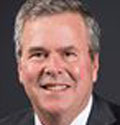
Former Florida Governor Jeb Bush
The Quinniapiac University poll of Florida voters also found that while both Bush and Rubio narrowly trailed former Secretary of State Hillary Clinton in hypothetical general election match-ups, a majority of Florida voters say they think Clinton isn’t trustworthy.
In the Republican primary race, Bush was the choice of 20 percent of registered Republicans in the poll, with Rubio at 18 percent, which was within the poll’s margin of error of plus or minus 4.6 percent. No other candidate was in double digits.
When voters were asked to name both their first and second choices in the crowded GOP field, Rubio was either the first or second choice of 36 percent of respondents; Bush, 33 percent.
U.S. Senator Marco Rubio
Florida is likely to loom large in the 2016 Republican presidential contest. The state legislature moved the primary to March 15, which will make Florida first among the four largest states to hold a primary, and the Florida Republican Party decided to make it a winner-take-all affair, putting a treasure trove of 99 delegates up for grabs.
In Quinniapiac’s hypothetical general election match-ups, Clinton led Rubio 47 percent to 44 percent, just outside the poll’s margin of error of plus or minus 2.9 percent. Her lead over Bush was 46 percent to 42 percent.
When asked whether they had a favorable or unfavorable opinion of Clinton, respondents were nearly evenly split, with 47 percent saying they viewed her favorably and 45 percent unfavorably.
However, when they were asked if they found Clinton trustworthy, only 43 percent said yes, while 51 percent said no.
Bush was viewed favorably by 52 percent and unfavorably by 36 percent. Rubio was viewed favorably by 50 percent and unfavorably by 34 percent.
Florida has become a key bellweather state in presidential politics. The last person to win the White House without carrying the state was Bill Clinton in 1992, and in the last 16 presidential elections, the winner carried Florida 14 times.
Former Florida Governor Jeb Bush kicks off 2016 presidential campaign
The brother and son of former presidents says no one deserves White House “by right”
♦By Rich Shumate, Chickenfriedpolitics.com editor
MIAMI (CFP) — Arguing that the United States is “on a very bad course,” former Florida Governor Jeb Bush has announced his candidacy for the 2016 Republican presidential nomination, saying Democrats are trying “to hold on to power, to slog on with the same agenda under another name.”
Former Florida Governor Jeb Bush
“We will take command of our future once again in this country. We will lift our sights again, make opportunity common again, get events in the world moving our way again,” Bush said at a June 15 rally at Miami-Dade Community College.
“We will take Washington — the static capital of this dynamic country — out of the business of causing problems. We will get back on the side of free enterprise and free people.”
Bush, the son and brother of presidents, also tried to put a bit of distance between himself and his famous family name, saying “not a one of us deserves the job by right of resume, party, seniority, family or family narrative.”
“It’s nobody’s turn. It’s everybody’s test, and it’s wide open — exactly as a contest for president should be,” he said. “The outcome is entirely up to you, the voters.”
At the rally, the Bush campaign unveiled its logo, which features the word “Jeb” followed by an exclamation point — with no mention of his last name.
Bush also delivered part of his opening speech in Spanish, and his campaign website is in both English and Spanish — nods to Latino voters who in recent elections have trended Democratic.
Bush’s wife, Columba, whom he married in 1974, was born in Mexico, which he jokingly described as part of his “cross-border outreach.”
Bush, 62, served two terms as governor of the Sunshine State from 1999 to 2007. He was mentioned as a candidate for president in 2012 but opted not to run.
In his opening address, he touted his record as governor, noting that during his time in Tallahassee, Florida topped the nation in job creation and taxes were cut every year he was in office.
“A self-serving attitude can take hold in any capital, just as it once did in Tallahassee,” he said. “I was a governor who refused to accept that as the normal or right way of conducting the people’s business. I will not accept it as the standard in Washington. We don’t need another president who merely holds the top spot among the pampered elites of Washington.”
While not mentioning any of his Republican opponents by name, Bush took a strong swipe at Democrats, attacking the “phone-it-in foreign policy” of the “Obama-Clinton-Kerry team” and saying the opposition has “offered a progressive agenda that includes everything but progress.”
“They are responsible for the slowest economic recovery ever, the biggest debt increases ever, a massive tax increase on the middle class, the relentless buildup of the regulatory state and the swift, mindless downturn of a military that was generations in the making,” he said.
And in a remark that drew strong applause from Cuban-American Republicans in the audience, he criticized Obama for considering making a state visit to Communist Cuba.
“We don’t need a glorified tourist to go to Havana in support of a failed Cuba,” he said. “We need an American president to go to Havana in solidarity with a free Cuban people, and I am ready to be that president.”
Bush also steered clear of two issues that have caused him heartburn with the GOP’s Tea Party base — immigration reform and the Common Core educational standards, both of which he supports.
Bush is one of eight Southern Republicans who have launched, or are expected to launch, presidential bids in 2016.
Those already in the race include former governors Mike Huckabee and Rick Perry of Texas and U.S. Senators Ted Cruz of Texas, Marco Rubio of Florida, Rand Paul of Kentucky and Lindsey Graham of South Carolina. Gov. Bobby Jindal of Louisiana expected to announce his candidacy soon, now that his state’s legislature has adjourned for the year.
The Southern GOP field is divided equally between senators and governors. Two of the last three Republicans elected president — George W. Bush and Ronald Reagan — served as governor, while the last GOP senator elected to the presidency was Warren Harding in 1920.
On the Democratic side, former U.S. Senator Jim Webb of Virginia has already launched an exploratory committee for the 2016 Democratic nomination — a race that’s expected to be dominated by former Secretary of State Clinton, a former first lady of Arkansas who went on to be elected to the Senate from New York.
Watch the video of Bush’s campaign kickoff:
 Chicken Fried Politics