
Home » Posts tagged 'White House 2016' (Page 8)
Tag Archives: White House 2016

Ted Cruz wins Iowa GOP caucus; Marco Rubio comes in a strong third
Cruz defies late polls and beats Trump, while Rubio does better than expected
♦By Rich Shumate, Chickenfriedpolitics.com
 DES MOINES, Iowa (CFP) — U.S. Senator Ted Cruz of Texas has won the Republican presidential caucus in Iowa, defeating billionaire businessman Donald Trump in a record-setting turnout.
But the surprise of the night was the late surge of U.S. Senator Marco Rubio of Florida, who took more than 23 percent of the vote and nearly knocked off Trump, who led most of the late pre-caucus polls.
Iowa was the end of the line for one of the Southern Republican candidates in the race, former Arkansas Governor Mike Huckabee, who announced he was dropping out after garnering less than 2 percent of the vote in the February 1 contest.
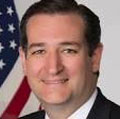
U.S. Senator Ted Cruz
Cruz won with 27.6 percent of the vote to 24.3 percent for Trump and 23.1 percent for Rubio. The four other Southern Republicans in the race all trailed in single digits.
Nearly 187,000 Republicans turned out in Iowa, shattering previous turnout records in the Hawkeye State.
Speaking to supporters after the returns came in, Cruz called the result “a victory for the grassroots.”
“Iowa has served notice that the Republican nominee and the next president of the United States will not be chosen by the media, will not be chosen by the Washington establishment, will not be chosen by the lobbyists, but will be chosen by the most incredible, powerful force in which all sovereignty resides in our nation–by we the people,” he said.
Despite coming in third, Rubio was clearly jubilant after finishing more than eight points above his standing in the last pre-election poll and setting himself up as the establishment alternative to Cruz and Trump.
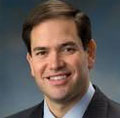
U.S. Senator Marco Rubio
“This is the moment they said would never happen,” Rubio told supporters. “The people of this great state have sent a very clear message–after seven years of Barack Obama, we are not waiting any longer to take our country back.”
Among the other Southern Republicans, U.S. Senator Rand Paul came in fifth, ahead of former Florida Governor Jeb Bush, who was sixth. Huckabee, who won the Iowa caucus when he ran in 2008, finished ninth and announced on Twitter that he was ending his campaign.
In a letter to his supporters posted on his campaign website, Huckabee shot down rumors that he was about to endorse one of the other GOP contenders
“Those rumors are totally untrue. While I may eventually support one of the candidates, right now I have a lot of things to do in wrapping up the loose ends of the campaign, trying to figure out my next chapter of life, and spending some time with my dogs who probably wonder if I had abandoned them,” he said.
The presidential race now turns to New Hampshire, which votes February 9.
U.S. Senator Rand Paul gets well-heeled challenger in Kentucky
Lexington Mayor Jim Gray’s entry into race may increase pressure on Paul to drop presidential bid
♦By Rich Shumate, Chickenfriedpolitics.com editor
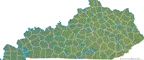 FRANKFORT, Kentucky (CFP) — As he battles to keep his presidential hopes alive, U.S. Senator Rand Paul has drawn a high-profile, independently wealthy Democratic challenger in his Senate re-election challenge back home in Kentucky.

Lexington Mayor Jim Gray
Lexington Mayor Jim Gray, chairman of his family’s international construction company, announced January 26 that he would challenge Paul, a first-term Republican who is simultaneously seeking the GOP presidential nomination and re-election to the Senate.
“Washington offers dysfunction and gridlock, and Senator Paul confuses talking with getting results,” Gray said in a video announcing his campaign. “He offers ideas that will weaken our country at home and abroad, and he puts himself and his own ambitions above Kentucky.
In 2014, Gray, 62, was elected to his second term as mayor of Lexington, the commonwealth’s second-largest city. He is one of seven Democrats who filed to run against Paul and–given his political profile and ability to self-fund his campaign–is the prohibitive favorite to be Paul’s opponent in November.
However, Gray is also openly gay, a probable complication in a state where Rowan County Clerk Kim Davis became a cause celebre after she want to jail last year for refusing to issue marriage licenses to same-sex couples.
Democrats have not won a Senate race in Kentucky since 1992. But Paul’s decision to run for two offices at once has put the Bluegrass State on the Democrats’ radar.
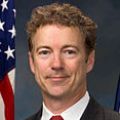
U.S. Senator Rand Paul
While the Kentucky GOP changed its presidential nominating contest to a caucus to facilitate Paul’s political double-dipping, he has been under increasing pressure from within his party to abandon his White House quest and focus on the Senate race–pressure that is likely to intensify now that he has a potentially formidable Democratic challenger.
The latest national polls in the Republican presidential contest show Paul mired in single digits.
Paul, 53, an eye surgeon from Bowling Green, won election to the Senate in 2010 with Tea Party support, besting a candidate backed by Kentucky’s Republican establishment. He is the son of former U.S. Rep. Ron Paul of Texas, who made three unsuccessful tries for the White House.
On The Trail: Ted Cruz takes small government message to New Hampshire
Texas senator is in a close race for second place in the Granite State’s GOP primary
♦By Patrick Scanlan, Chickenfriedpolitics.com contributor
 NORTH CONWAY, New Hampshire (CFP) — U.S. Senator Ted Cruz of Texas has been braving the cold New Hampshire weather in hopes of scoring support for his presidential bid from those fed up with the federal government and “establishment politics.”
In North Conway, Cruz met with about 100 supporters packed into historic Zeb’s General Store on January 19. Outside the store, supporters braving the cold held signs that read, “Join the NH Rebellion, Stop the Corruption,” and “Secure Our Border.”
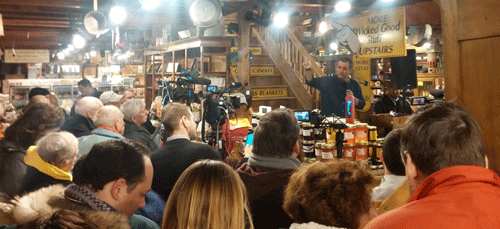
Ted Cruz campaigns in New Hampshire
“We are here because our constitutional rights are threatened every day,” Cruz said, citing what he called infringements on First and Second Amendment rights. He also lamented the size of the current federal government, including “the alphabet soup of agencies that have been killing small business.”
Cruz promised to “repeal every word of Obamacare,” and “keep the government from getting between us and our doctors,” while also pursuing an investigation into Planned Parenthood.
The group, which is the nation’s largest abortion provider, came under fire from Cruz and other conservatives after uncover videos emerged showing Planned Parenthood officials discussing procurement of fetal tissue.
Though Cruz called for decreases in government healthcare regulation, he stressed the importance of “honoring the commitments made to every soldier, sailor and marine.”
While speaking about foreign policy issues, Cruz pledged that during his first day in office he will “rip to shreds the catastrophic Iranian nuclear deal,” so that “under no circumstances will Iran be able to acquire nuclear weapons.” He also spent time addressing the threat of ISIS to the United States.
“We need a commander-in-chief who will say to the world, ‘We will defeat radical Islamic terrorism. We will destroy ISIS.’ If we stand as one and defend freedom and Judeo-Christian values, we will restore the last best hope for mankind.”
While making his case to the New Hampshire voters, Cruz also embraced his role as a outsider who is disliked by the Washington establishment.
“If you see a candidate that Washington embraces, run and hide,” he said.
Recent polling in New Hampshire shows Cruz battling for second place with U.S. Senator Marco Rubio of Florida, former Florida Governor Jeb Bush, and Ohio Governor John Kasich, well behind Donald Trump.
Analysis: Road to the 2016 GOP nomination frontloaded in the South
13 of the 14 Southern states have primaries or caucuses before March 15
♦By Rich Shumate, Chickenfriedpolitics.com editor
 (CFP) — For the gaggle of candidates seeking the Republican presidential nomination, success or failure is likely to hinge on how well they can perform in a primary calendar that is frontloaded with Southern contests.
Between February 20, when South Carolina holds its primary, and March 15, when Florida and North Carolina vote, 13 of the 14 Southern states will hold either primaries or caucuses.
 In that three-week stretch, a whopping 824 delegates will be up for grabs in the South, about two-thirds of the 1,237 delegates needed to cinch the nomination. And 471 delegates will be decided on a single day, March 1, when seven Southern states will vote in what is being dubbed the SEC Primary (albeit with a bit of ACC and Big 12 mixed in.)
Having almost all of the Southern states vote early (save West Virginia) is a new wrinkle in this year’s primary calendar that will no doubt add to the region’s clout in the nominating process. So it is perhaps not surprising that nine Southern Republicans decided to run in 2016, with six still in the race (as of this writing.)
While the early states might weed some of them out, the Southern frontloading of the calendar might provide temptation for the also-rans to hang on until they get to more hospitable territory, as there is barely more than a month between New Hampshire and Florida.
However, the last two GOP primary battles argue against the idea that Southerners might be particularly hospitable to Southern candidates. In 2008 and 2010, candidates from outside the South won twice as many Southern contests (16) as candidates from the South (8).
And if the field remains crowded, the rules under which delegates are allocated could leave Southern delegations fractured as the process heads north and west.
Here is how the process generally works: Each state gets a number of delegates who are selected statewide, and it also gets three delegates for each congressional district. The delegates are allocated based on how well a candidate performs across the state and in each congressional district, and the state’s three members of the Republican National Committee are automatically delegates.
In most of the states, there is a threshold percentage that a candidate has to meet before being eligible for statewide or district delegates, ranging from 5 to 20 percent. In a heavily split field, that means that candidates who don’t finish near the top may not get any delegates, but the delegations could be sliced and diced if multiple candidates cross the threshold.
In five states, candidates who win more than 50 percent of the vote statewide or in a district take all of the delegates; in Tennessee, that threshold is 66 percent. But if the field still remains fractured in mid-March, it is unlikely that any candidate will be able to win an outright majority to sweep most, if not all, of a state’s delegates.
Also, two of the larger states–North Carolina, with 72 delegates, and Virginia, with 49–have no threshold, with all delegates allocated proportionally based on the statewide vote. So no one is likely to sweep either of those states.
The two outliers in this process are South Carolina, which votes Feb. 20, and Florida, which votes March 15. In South Carolina, with 50 total delegates, the statewide winner gets all of the statewide delegates, and the winner of each congressional district receives all three. In Florida, with 99 total delegates, the statewide winner takes everything.
So, for instance, if one of Florida’s two favorite sons in the race–U.S. Senator Marco Rubio or former Governor Jeb Bush–lands in first place by even a single vote, he gets all 99 delegates and the other gets nothing. And if neither of them places first, they will have no Sunshine State support at the convention in Cleveland.
The two biggest prizes in the Southern primary calendar are Florida and Texas, where 155 delegates will be up for grabs on March 1.
While Bush and Rubio will be competing in their home state, only one candidate still in the face hails from Texas–U.S. Senator Ted Cruz. And Texas is one of the states where, if a candidate gets more than 50 percent of the statewide or district vote, he or she gets all of the delegates.
So if Cruz, a favorite son with statewide political roots, could win a majority in Texas, he would need to win a majority in just 19 of the state’s 36 congressional districts in order to match the delegate haul that Rubio or Bush might take out of Florida–an uphill climb in a fractured race, but doable.
The biggest wildcard heading into the Southern primaries is what the region’s all-important block of religious conservatives will do. In 2008, when they coalesced around Mike Huckabee, he won six Southern states; in 2012, when they got behind Rick Santorum, he won four. The South was the best region for both, although it did not work for either of them in the end.
Louisiana Governor Bobby Jindal ends campaign for GOP presidential nomination
Jindal’s decision comes after he was unable to gain traction in the polls or a place in the top-tier debates
♦By Rich Shumate, Chickenfriedpolitics.com editor
 WASHINGTON (CFP) — Saying it was “not my time,” Louisiana Governor Bobby Jindal has ended his campaign for the 2016 Republican presidential nomination.
Louisiana Governor Bobby Jindal
“We spend a lot of time developing detailed policy papers, and given this crazy, unpredictable election season, clearly there just wasn’t a lot of interest in those policy papers,” Jindal said in a November 17 appearance on Fox News, where he announced he was suspending his campaign.
“Certainly, we thought it would end differently, but the reality is, this is not my time.”
Jindal, 44, whose term as Louisiana’s chief executive ends in January, said he will return to the think tank he founded, America Next, after he leaves office.
When he was elected in 2007, Jindal, a former congressman and official in the George W. Bush administration, was one of America’s youngest governors and was considered to be a rising star in the GOP.
But amid a budget crisis in Baton Rouge, Jindal saw his approval ratings back home plunge, and he was unable to get out of the low single digits in polling of the crowded Republican presidential field.
Jindal had been relegated to the second tier in the first three GOP debates.
Jindal becomes the second Southern Republican to exit the race, joining former Texas Gov. Rick Perry, who left in September.
The remaining candidates are U.S. Senators Ted Cruz of Texas, Marco Rubio of Florida, Rand Paul of Kentucky and Lindsey Graham of South Carolina and former governors Jeb Bush of Florida, Mike Huckabee of Arkansas and Jim Gilmore of Virginia.
 Chicken Fried Politics