

Phil Bredensen says he won’t support Chuck Schumer for Democratic leader if elected
Democratic candidate for Tennessee’s open U.S. Senate seat makes announcement during debate with Republican rival
♦By Rich Shumate, ChickenFriedPolitics.com editor
 NASHVILLE (CFP) — Former Governor Phil Bredesen has announced that if elected to Tennessee’s open U.S. Senate seat, he will not support Chuck Schumer of New York to continue as his party’s Senate leader.

Former Governor Phil Bredesen
Bredesen, locked in a close race with Republican U.S. Rep. Marsha Blackburn, told the audience at a September 25 debate that he thinks Congress needs “new leadership.”
“I think a lot of the problem in Washington is with the leadership that we have there now. Whether it be (House Speaker Paul) Ryan or (House Minority Leader Nancy) Pelosi or (Senate Majority Leader Mitch) McConnell or Schumer, they’re not doing the job,” Bredensen said.
Bredensen took specific issue with charges by Blackburn and other Republicans claiming that he would be a rubber stamp for the current Senate Democratic leader.
“You’ve heard a lot recently of this campaign about me, about these crazy ideas about if somehow I’m elected and go to Washington, suddenly I’m going to turn my back on a whole lifetime of thinking for myself and being independent and suddenly become some kind of a political lackey,” Bredesen said. “That’s not going to happen.”
But Blackburn continued to press the line of attack, saying Bredensen’s campaign had been “bought and paid for” by Schumer.
“We all know that Phil had a choice. He could have run as a Republican or independent,” she said. “He’s running as a Democrat, so he will be with Chuck Schumer if he were to go to Washington.”
Bredesen, a former two-term governor, is trying to become the first Democrat to win a Senate seat in the Volunteer State since 1990. The four most recent public polls have shown the race within the margin of error, indicating the closeness of the race.
The seat is open due to the retirement of Republican U.S. Senator Bob Corker.
Bredesen’s stance on Schumer’s tenure is unlikely to threaten the New Yorker’s grip on the Democratic leadership, which requires support from a majority of the Democratic caucus in a non-public vote. Only one other Democratic Senate candidate, U.S. Rep. Kyrsten Sinema in Arizona, has come out against Schumer.
Democrats need to make a net gain of two seats in the Senate to take control, which would make Schumer majority leader. Four GOP-held seats being targeted include Tennessee, Texas, Arizona and Nevada.
Watch the full Bredesen-Blackburn debate:
Poll: U.S. Senator Ted Cruz has a lead over Democratic challenger Beto O’Rourke
New Quinnipiac survey finds Cruz up by 9 points, more than the margin of error
 AUSTIN (CFP) — On the eve of the first debate in the Texas U.S. Senate contest, a new poll of likely voters shows that Democratic hopes — and Republican fears — of a competitive race this November may be overblown.
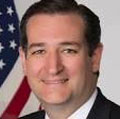
U.S. Senator Ted Cruz
A Quinnipiac University poll, released Sept. 18, found that Republican U.S. Senator Ted Cruz had a lead of 54 to 45 percent over his Democratic challenger, U.S. Rep. Beto O’Rourke , a statistically significant lead in a poll with a margin of error of plus or minus 4.1 percentage points.
An August poll by Quinnipiac had found Cruz’s lead within the margin of error and his support under 50 percent. However, that was a survey of registered voters, rather than likely voters; likely voter polls are designed to weed out respondents who are unlikely to vote.
The poll found that women and voters who classify themselves as independents were evenly divided between the two candidates. But men favored Cruz by 15 points, and he led by 34 points among white voters.
O’Rourke’s support is stronger among Latinos, where he leads Cruz by 9 points, and among African Americans, where he leads by 94 points.
The biggest hurdle for O’Rourke may be that Cruz is viewed favorably by most likely voters in Texas, with 53 percent approving of his job performance, according to the poll.
His approval numbers are better than those for President Donald Trump, who is viewed favorably and unfavorably by 49 percent.
Cruz and O’Rourke are scheduled to meet in their first debate on Friday, Sept. 20.
Cruz, 47, was elected to the Senate in 2012 on his first try for political office. In 2016, he made an unsuccessful run for the Republican presidential nomination, carrying 12 primaries and caucuses and finishing second in the delegate count behind Trump.
O’Rouke, 45, has represented metro El Paso in the House since 2013, after serving on the El Paso City Council. Although he is Irish and his given first name is Robert, he was nicknamed “Beto” — a Spanish nickname for Robert — from childhood.
His campaign has excited the Democratic base, drawing large crowds and media attention in a state that hasn’t seen a competitive Senate race in 30 years.
O’Rourke has also raised $23.6 million for the race, according to the latest Federal Elections Commission reports, slightly more than Cruz. The last time Cruz ran, in 2012, he outraised and outspent his Democratic opponent by a 2-to-1 margin, on his way to a 16-point victory.
Still, the odds against a Democrat in Texas are daunting. Republicans have won the last nine Senate races by an average margin of 19 percent.
Despite an often contentious relationship during the 2016 presidential race, Trump has announced that he would be “picking the biggest stadium in Texas we can find” for a rally for Cruz in October. No date has been announced.
The Texas race is one of six Southern states with open seats in 2018; the others are Virginia, West Virginia, Florida, Tennessee and Mississippi, where both seats are on the ballot.
Four of those races are shaping up to be potentially competitive — Florida and West Virginia, which are currently held by Democrats, and Texas and Tennessee, held by Republicans.
Democrats need to make a net gain of two seats to take control of the Senate.
Republican U.S. Rep. Ralph Norman criticized for joke about Ruth Bader Ginsburg getting groped by Abe Lincoln
Comment sets off a Twitter tit-for-tat with Norman’s Democratic opponent, Archie Parnell
♦By Rich Shumate, ChickenFriedPolitics.com
 ROCK HILL, South Carolina (CFP) — Republican U.S. Rep. Ralph Norman’s attempt to riff off of the current controversy over allegations of sexual assault against Supreme Court nominee Brent Kavanaugh is causing a fresh round of criticism in a race in which treatment of women has taken center stage.

U.S. Rep. Ralph Norman, R-South Carolina
Norman, addressing the crowd at the beginning at a September 20 debate for 5th District candidates in Rock Hill, said, “Did y’all hear the latest, late-breaking news from the Kavanaugh hearings? Ruth Bader Ginsburg came out that she was groped by Abraham Lincoln.”
The joke echoes a meme ricocheting around the internet in which Ginsburg, 85, is shown alleging that she was groped by Lincoln in 1862.
The crowd laughed. While Norman’s Democratic opponent, Archie Parnell, did not address the remark at the time, he later blasted Norman on Twitter: “My opponent apparently thinks sexual assault is a joke. It is not. But I guess that’s the best we can expect from someone who pulled a loaded gun on his own constituents.”
The latter comment was a reference to an incident in April in which Norman pulled out a loaded gun during a meeting with gun control opponents at a local diner, less than two months after the massacre of students at a high school in Parkland, Florida. Norman defended his actions, saying he was “tired of guns being demonized.”
Norman responded in kind: “Perhaps we should have a debate about your own abuse and harassment of women, Parnell.”

Archie Parnell, D-Congressional candidate
Parnell’s campaign was rocked in May after divorce records revealed that he had been accused of domestic violence against his then-wife in the 1970s. He admitted that he had been “violent” but insisted that he had changed in the intervening years.
Democratic leaders had called on Parnell to quit the race, but he refused and won the Democratic primary in June.
The 5th District has historically been solidly Republican. However, Parnell came within 2 points of beating Norman in a 2017 special election to fill the seat, which became vacant when Mick Mulvaney was picked as President Donald Trump’s budget director.
Given the closeness of the special election, the Democratic Congressional Campaign Committee had added the seat to its 2018 target list but later dumped Parnell after the abuse revelations surfaced.
The 5th District includes a stretch of upstate South Carolina from near Columbia to the Charlotte suburbs.
Candidates for Florida governor pick lieutenant governor running mates
Republican DeSantis selects State Rep. Jeanette Nuñez; Democrat Gillum picks primary rival Chris King
♦By Rich Shumate, ChickenFriedPolitics.com editor
 ORLANDO (CFP) — The major party candidates for Florida governor have announced picks for their running mates for lieutenant governor.
The Republican nominee, U.S. Rep. Ron DeSantis from Ponte Vedra, has picked State Rep. Jeanette Nuñez, a Cuban-American legislator from Miami. The Democratic nominee, Tallahassee Mayor Andrew Gillum, picked Chris King, an Orlando businessman who ran against him in the primary.

State Rep. Jeanette Nuñez, R-Florida
The selection of Nuñez is noteworthy because of her previous criticism of President Donald Trump, who has been a close ally of DeSantis.
During the 2016 presidential campaign, when she was supporting U.S. Senator Marco Rubio, she called Trump a “con man,” described herself as “never Trump” and accused him of supporting the Ku Klux Klan.
Asked about those critical comments while campaigning with DeSantis in Orlando after the running mate announcement, she said, “We’re here talking about moving forward. Elections are elections. It is what it is.”
“That election is done, and I’m looking forward to this election,” she said.
DeSantis, whose primary victory was fueled by supportive tweets from Trump, described her comments as part of a primary “tussle” in which she was supporting a hometown candidate.
“To support Marco Rubio, a Cuban-American, if I were in her shoes I probably would have been supporting Marco as well,” he said.
In a show of Republican unity, the man DeSantis defeated in the primary, State Agriculture Commissioner Adam Putnam, was on hand to campaign with the new ticket.
Nuñez, 46, was first elected to the Florida House in 2010, working her way up through the GOP leadership to become speaker pro tempore, the No. 2 position, in 2016.
As a legislator, she worked for passage of a bill that allows the children of undocumented immigrants to pay in-state tuition at Florida colleges and universities, a position contrary to the hard-line stance on illegal immigration embraced by both Trump and DeSantis.
If elected in November, she would become the first Cuban-American woman to serve as lieutenant governor. The current lieutenant governor, Carlos López-Cantera, is also Cuban-American, a community that has long been an important faction in Florida Republican politics.

Democratic nominee for lieutenant governor Chris King, D-Florida
On the Democratic side, Gillum picked King, who came in fifth place in the Democratic primary for governor that Gillum narrowly won.
The pairing was announced in a Facebook video in which both men said the personal relationship they developed on the campaign trail led to King’s selection.
“I developed a friendship with Andrew Gillum over 18 months as we were competing,” he said. “I came to care for him. I came to admire him.”
King, 39, is a lawyer and real estate investor whose run for governor was his first foray into the political arena.
In picking King, Gillum passed over the woman he narrowly defeated for the Democratic nomination, former U.S. Rep. Gwen Graham of Tallahassee, who had been considered the favorite in the race before Gillum’s surprise victory.
In Florida, the office of lieutenant governor is not independently elected, and candidates for governor pick running mates after the primary.
Though 17 states use the same system, running mates are uncommon in the South, with only Florida and Kentucky selecting lieutenant governors this way.
Judges won’t impose redraw of North Carolina U.S. House map before November vote
Decision sidesteps chaos that might have resulted from a new last-minute map
♦By Rich Shumate, ChickenFriedPolitics.com editor
 RALEIGH (CFP) — Less than a week after threatening to throw North Carolina’s congressional election into chaos by redrawing its electoral map, a panel of three federal judges has reversed course and decided not to move forward with a redraw before November.
In a September 4 order, the judges decided that there was not enough time to draw a new map and that altering the current election schedule “unduly disturbs the state’s electoral machinery and would probably confuse voters and reduce voter turnout.”
The order puts on hold a August 27 decision striking down the map drawn by North Carolina’s Republican-controlled legislature as an unconstitutional gerrymander designed to disadvantage Democrats. However, if that decision is upheld, a new map will have to be redrawn before the 2020 elections.
That decision ordering the lines to be redrawn came just 70 days before the November election and three months after primaries were held using the current lines.
Republican legislative leaders had vowed to appeal the ruling to the U.S. Supreme Court, which had issued a stay earlier this year to stop a similar decision by the same panel of judges.
In the majority opinion for the three-judge panel, Judge James Wynn of the 4th U.S. Circuit Court of Appeals said that by favoring Republicans, “the redistricting plan passed by the state’s GOP-controlled legislature amounted to “invidious partisanship” that that “runs contrary to the Constitution’s vesting of the power to elect Representatives in ‘the People.'”
Although North Carolina is fairly evenly divided in statewide and presidential elections, Republicans hold a 10-to-3 advantage in the House delegation. Two of those Democrats are African Americans who represent majority-minority districts drawn to comply with the Voting Rights Act.
In January, the same three-judge panel ruled against the state’s map, the first time a federal court had ever struck down a congressional map for being gerrymandered to favor one party.
But in June, the Supreme Court vacated the order and returned the case to the judges in Greensboro to reconsider their ruling in light of its own ruling in a different case.
In their second decision, the judges said their reconsideration of the case did not change their view that the map was unconstitutional.
Since the first ruling was vacated by the Supreme Court, Justice Anthony Kennedy has retired and his replacement hasn’t been confirmed, leaving the court with a 4-to-4 split between conservative and liberal factions.
If the issue of staying the new map had gone to the Supreme Court, North Carolina legislators would have needed to persuade five justices to stay the ruling, or the lower court decision would have stood.
Wynn, who previously served on the North Carolina Supreme Court, was appointed to the appeals court by President Barack Obama and was joined in his majority opinion by U.S. District Court Judge William Britt, a senior-status judge appointed by President Jimmy Carter.
The third judge on the panel, U.S. District Court Judge William Osteen Jr., was appointed by President George W. Bush; he dissented from part of the majority’s reasoning in ruling, although he concurred with the remedy of redrawing congressional lines.
 Chicken Fried Politics