
Home » 2021 (Page 9)
Yearly Archives: 2021


Former Georgia U.S. Rep. Doug Collins won’t seek statewide office in 2022
Republican passes on primary challenge to Governor Brian Kemp encouraged by Donald Trump
♦By Rich Shumate, ChickenFriedPolitics.com editor
 ATLANTA (CFP) — Former Georgia Republican U.S. Rep. Doug Collins has announced he won’t seek any statewide office in 2022, deciding to forgo a primary challenge to Governor Brian Kemp or a race against Democratic U.S. Senator Raphael Warnock.
In an announcement on Twitter, Collins said he planned to stay active in politics but gave no details of his future plans.

Doug Collins
“For those who may wonder, this is goodbye for now, but probably not forever,” he said. “I do plan on staying involved in shaping our conservative message to help Republicans win back the House and the Senate and help more strong conservative candidates get elected here in Georgia.”
Collins, 54, from Gainesville, was elected to represent Georgia’s 9th U.S. House District in 2012 but gave up the seat to run in a special election for a vacant U.S. Senate seat in 2020. He finished third in an all-party contest, which Warnock won in a runoff.
After the 2020 election, Donald Trump, unhappy that Kemp wasn’t doing more to help him overturn his election loss in Georgia, publicly urged Collins to challenge Kemp in this year’s GOP primary.
Collins — one of Trump’s staunchest defenders in the House — could have posed a threat to Kemp with Trump behind him, which has now been removed with his decision not to run.
Kemp has so far drawn only one significant Republican challenger — Vernon Jones, a former Democrat who served as chief executive of DeKalb County before switching parties to support Trump in 2020.
Collins is the second major Republican to take a pass on the Senate race against Warnock, joining former U.S. Senator David Perdue.
We tweet @ChkFriPolitics Join us!

New Census figures show 5-seat shift in Southern U.S. House districts
Texas, Florida and North Carolina gain seats; West Virginia loses a seat
♦By Rich Shumate, ChickenFriedPolitics.com editor
 WASHINGTON (CFP) — The U.S. Census Bureau released population totals for reapportionment of U.S. House seats Monday that will alter the size of delegations in four Southern states.
Fast-growing Texas will be the biggest winner, gaining two seats to take its delegation to 38 members. Florida will get one new seat to go to 28, and North Carolina will gain one seat to go to 14.
However, West Virginia will lose one of its three seats, which could force Republican incumbents to run against each other in newly configured, larger districts.
West Virginia’s new delegation will be its smallest in history. The Mountaineer State has had at least three members of Congress since it entered the Union in 1863 and had as many as six in the 1950s.
Alabama dodged a bullet, keeping all of its seven seats. Some projections prior to release of the final numbers had shown the Yellowhammer State losing a seat.
Georgia will also not gain a seat for the first time in 40 years.
The new numbers will set off a legislative scramble in all four states, as new lines will have to be drawn.
Republicans will be in total control of redrawing lines in all four states. While North Carolina has a Democratic governor, Roy Cooper, state law doesn’t give him authority to veto reapportionment bills.
However, Texas and North Carolina are covered by the Voting Rights Act, which requires them to preserve electoral opportunities for minority candidates. In addition, a constitutional amendment passed in Florida in 2010 outlaws gerrymandering lines based on political considerations.
Legislators in West Virginia will have to decide which of the state’s three GOP House members — David McKinley, Carol Miller and Alex Mooney — to draw into the same district. As there are no statewide or Senate races in 2022, House members may be left with the option of competing in a primary or bowing out of Congress.
In Texas, due to demographic trends, Republican legislators may have to draw at least one majority Latino district, likely to be Democratic, in order to comply with the Voting Rights Act. But they could try to maximize Republican chances across the rest of the map, including helping out incumbents who survived Democratic challenges in 2018 and 2020.
No matter now the lines are drawn, litigation is likely in Texas, Florida and North Carolina, states where maps drawn after the 2010 Census were subject to lengthy court fights that resulted in court-ordered map redraws in all three states.
While Virginia is not gaining or losing a seat, its lines could also be substantially redrawn by a new independent commission. The maps after 2010 were drawn by Republicans, who have since lost control of the legislature and governorship, and then later redrawn by a federal court after a legal fight.
The Democrat-controlled Virginia legislature implemented an independent redistricting commission earlier this year.
Also, in Georgia, Republicans may redraw the map in metro Atlanta to target two Democratic incumbents — Lucy McBath and Carolyn Bourdeaux — by combining Democratic areas currently in both of their districts into a single district, which could force one of them out of Congress.
We tweet @ChkFriPolitics Join us!

Democratic State Senator Troy Carter wins open Louisiana U.S. House seat
Carter defeats fellow State Senator Karen Carter-Peterson in 2nd District runoff
♦By Rich Shumate, ChickenFriedPolitics.com editor
 NEW ORLEANS (CFP) — The Democratic establishment has claimed another victory in its ongoing battle with progressive insurgents, with Louisiana State Senator Troy Carter winning an intra-party runoff Saturday to claim the 2nd U.S. House District seat.
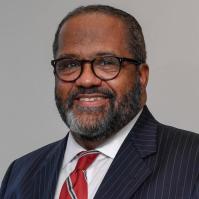
U.S. Rep.-elect Troy Carter, D-Louisiana
Carter won 55 percent of the vote to 45 percent for State Senator Karen Carter-Peterson. He will replace Cedric Richmond, who resigned to take a job as the White House public engagement director in the Biden administration.
“We’ve had a long, hard-fought campaign, and God has blessed us with a victory,” Carter said in a victory address to supporters after the vote. “Your voice was heard at the ballot box, and now I want to go to Washington to be your voice.”
Carter, who led in the first round of voting in April, was endorsed by Richmond and also had support from much of the Democratic establishment and major unions.
Carter-Peterson had support from the Congressional Progressive Caucus and from liberal grassroots group such as Democracy for America and Our Revolution, a group spun out of Bernie Sanders’s 2016 presidential campaign.
Carter-Peterson was trying to become the first black woman ever elected to Congress from the Pelican State.
The majority black 2nd District includes most of New Orleans and part of Baton Rouge, along with the River Parishes between the two cities.
Carter-Peterson carried the parts of the district in and around Baton Rouge, but Carter beat her in the two largest parishes, Orleans and Jefferson.
His win will expand the Democratic majority in the House from two to three seats, with three Democratic-leaning seats also vacant in Florida, New Mexico and Ohio. Two Republican-held seats are open in Texas and Ohio.
We tweet @ChkFriPolitics Join us!

Runoff Saturday for open Louisiana U.S. House seat
Democratic State Senators Troy Carter and Karen Carter-Peterson vying in 2nd District race
♦By Rich Shumate, ChickenFriedPolitics.com editor
 NEW ORLEANS (CFP) — Voters in Louisiana’s 2nd U.S. House District will go to the polls Saturday to decide which of two Democratic state senators from New Orleans will be their next representative in Congress.
State Senators Troy Carter and Karen Carter-Peterson are competing in a runoff to replace Cedric Richmond, who resigned to take a job as the White House public engagement director in the Biden administration.
Polls for in-person voting open at 7 a.m. and close at 8 p.m. Saturday.
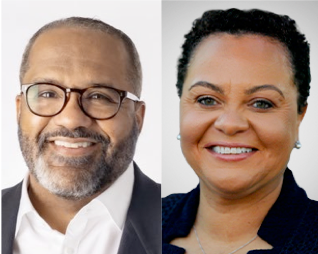
State Senators Troy Carter and Karen Carter-Peterson
Carter, who has support from much of the Democratic establishment and major unions, led in the first round of voting in April, ahead of Carter-Peterson, who has support from the Congressional Progressive Caucus and from liberal grassroots group such as Democracy for America and Our Revolution, a group spun out of Bernie Sanders’s 2016 presidential campaign.
Should she prevail on Saturday, Carter-Peterson would be the first black woman ever elected to Congress from the Pelican State.
The majority black 2nd District includes most of New Orleans and part of Baton Rouge, along with the River Parishes between the two cities.
We tweet @ChkFriPolitics Join us!
Florida U.S. Rep. Alcee Hastings dies at 84
Democrat’s death narrows party’s House majority, sets off scramble for his South Florida seat
♦By Rich Shumate, ChickenFriedPolitics.com editor
 FORT LAUDERDALE (CFP) — Democratic U.S. Rep. Alcee Hastings of Florida, who launched a barrier-breaking, three-decade career in Congress after being impeached and removed from his post as a federal judge in 1989, died April 6 after a two-year battle with pancreatic cancer.
He was 84.

U.S. Rep. Alcee Hastings, D-Florida
In a statement announcing his death, Hastings’s family said he “lived a full life with an indelible fighting spirit dedicated to equal justice. He believed that progress and change can only be achieved through recognizing and respecting the humanity of all mankind.”
Hastings was re-elected in November to his 15th term from the 20th U.S. House District, which includes parts of Fort Lauderdale, West Palm Beach and areas inland toward Lake Okeechobee. He was the longest-serving member of the Sunshine State’s House delegation.
With Hastings’s death, Democrats have just a two-seat majority in the House. Republican Governor Ron DeSantis will now call a special election to fill the seat, which could leave it vacant for several months and set off a scramble among local Democrats for a rare open seat.
The heavily Democratic, majority black district will almost certainly stay in Democratic hands.
As a civil rights lawyer in the 1960s, Hastings fought against segregation in South Florida and made headlines in 1970 with an unsuccessful run for U.S. Senate at the age of 29, the first black Floridian to seek a Senate seat.
He became a judge in Broward County in 1977 and two years later was named a U.S. District Court judge by President Jimmy Carter.
In 1981, Hastings was accused of soliciting a bribe to show leniency toward two convicted mobsters but was acquitted of all charges in 1983 after his alleged co-conspirator refused to testify.
But although he was acquitted, the House later voted to impeach Hastings in 1988, and the Senate convicted him and removed him from office in 1989, only the sixth federal judge ever tossed from the bench.
In 1992, he made a comeback by winning a House seat in Broward County in a runoff against one of his current colleagues, U.S. Rep. Lois Frankel, becoming part of a group of the first three black congressmen elected from Florida since Reconstruction. He won re-election 14 times, often by 3-to-1 margins.
In January 2019, he announced he had been diagnosed with Stage 4 pancreatic cancer, but he continued to serve in Congress and ran for re-election in 2020.
 Chicken Fried Politics