

U.S. Senator Ted Cruz picks Carly Fiorina as running mate
Cruz looks to reignite campaign with early announcement of VP pick
♦By Rich Shumate, Chickenfriedpolitics.com editor
 INDIANAPOLIS (CFP) — U.S. Senator Ted Cruz of Texas has picked former Hewlett-Packard CEO and one-time rival Carly Fiorina as his vice presidential running mate in a bid to jump start his flagging campaign.

Vice Presidential Candidate Carly Fiorina
“Carly is brilliant and capable, and yet she experienced the hardscrabble world of being a woman professional in the business world that extracts a price,” Cruz told a rally in Indianapolis on April 27, where he rolled out his new ticket. “Over and over again, Carly has shattered glass ceilings.”
Conceding that selecting a running mate before clinching the nomination was “unusual,” he said he picked Fiorina because she can unite the GOP and because her selection would “give the American people a clear choice.”
In her debut as a vice presidential candidate, Fiorina described the campaign as “a fight for the soul of our party and the future of our nation.”
“I’ve had tough fights all my life. Tough fights don’t worry me. What matters is, is this fight worth having? And this is a fight worth having. This is a fight worth winning.”
Fiorina, 61, suspended her own presidential campaign in February after finishing in seventh place in the New Hampshire GOP primary. She later endorsed Cruz and has joined him on the campaign trail, where she has bonded with Cruz’s two young daughters.
In an odd moment during her debut, Fiorina went on to sing part of a song she made up for his daughters, which began, “I know two girls that I just adore. I’m so happy I can see them more.”
GOP front-runner Donald Trump ridiculed the selection of Fiorina, dismissing it as a “desperate attempt to save a failing campaign.”
The Fiorina pick marks the first time since 1976 that a presidential candidate has named a running mate prior to clinching the nomination. It came a day after Cruz was mathematically eliminated from capturing a delegate majority after getting wiped out in five primaries in the Northeast.
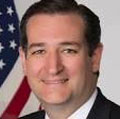
U.S. Senator Ted Cruz
Cruz came in third behind both Trump and Ohio Governor John Kasich in Connecticut, Delaware, Maryland and Rhode Island. He failed to crack 20 percent in any of those states and managed less than 11 percent in Rhode Island.
The only state where Cruz didn’t finish dead last was Pennsylvania, where he took 22 percent of the vote and edged out Kasich for second place. Trump won all five primaries up for grabs in the April 26 vote.
Cruz, the last Southerner left in the presidential race, will now head to Indiana, which is increasingly seen as a must-win for the senator to stop Trump from getting to a delegate majority, triggering a contested convention. Indiana votes May 3.
A contested convention is now Cruz’s only path to the GOP nomination. With his losses in the Northeast, he has 562 delegates and would need 675 to secure a majority in Cleveland; however, there are only 616 delegates still outstanding.
With his victories in the Northeast, Trump has 954 pledged delegates. He needs to win just 283 more delegates to secure the nomination, or about 46 percent of the delegates remaining.
U.S. Senator Ted Cruz blitzed in Northeast
Cruz loses in five states, mathematically eliminating him from getting a delegate majority
♦By Rich Shumate, Chickenfriedpolitics.com editor
PHILADELPHIA (CFP) — U.S. Senator Ted Cruz of Texas has been mathematically eliminated from capturing a majority of Republican presidential delegates after getting wiped out in five primaries in the Northeast.
U.S. Senator Ted Cruz
Cruz came in third behind both Donald Trump and Ohio Governor John Kasich in Connecticut, Delaware, Maryland and Rhode Island. He failed to crack 20 percent in any of those states and managed less than 11 percent in Rhode Island.
The only state where Cruz didn’t finish dead last was Pennsylvania, where he took 22 percent of the vote and edged out Kasich for second place. Trump won all five primaries up for grabs in the April 26 vote.
Cruz, the last Southerner left in the presidential race, will now head to Indiana, which is increasingly seen as a must-win for the senator to stop Trump from getting to a delegate majority, triggering a contested convention. Indiana votes May 3.
A contested convention is now Cruz’s only path to the GOP nomination. With his losses in the Northeast, he has 562 delegates and would need 675 to secure a majority in Cleveland; however, there are only 616 delegates still outstanding.
With his victories in the Northeast, Trump has 954 pledged delegates. He needs to win just 283 more delegates to secure the nomination, or about 46 percent of the delegates remaining.
Federal court refuses to block new Florida U.S. House map
Ruling is a blow to U.S. Rep. Corrine Brown, who objected to changes in her district
♦By Rich Shumate, Chickenfriedpolitics.com editor
 TALLAHASSEE, Florida (CFP) — A panel of federal judges has refused to block a court-ordered redistricting map for Florida that drastically altered the majority-black congressional district of U.S. Rep. Corrine Brown.
The three-judge panel also refused to issue an injunction of its ruling pending a possible appeal, which clears the way for qualifying for congressional races to begin June 24.

U.S. Rep. Corrine Brown
The decision may affect the fate of two incumbent congresswomen: Brown, a black Jacksonville Democrat whose district will become more white, and U.S. Rep. Gwen Graham, a Tallahassee Democrat whose district will become more Republican.
The judges ruled that Brown had not proven that the new configuration of Florida’s 5th District, with a reduced black voting age population, violated the federal Voting Rights Act, citing evidence that a black candidate was still likely to win the seat.
As originally drawn, Brown’s district began in Jacksonville and meandered south down the St. Johns River valley to Orlando. The new configuration instead goes directly east from Jacksonville, stretching more than 200 miles to Tallahassee.
The Florida Supreme Court had struck down the state’s U.S. House map on the grounds that it violated a constitutional amendment passed by state voters in 2010 that outlawed partisan gerrymandering. When the state legislature could not agree on a new map, the Supreme Court drew one instead.
Brown had challenged the new configuration of the 5th District, which has a black voting age population of 45 percent, compared to 50 percent in the old map.
The new map also put a number of large state prisons in rural North Florida into Brown’s district, adding about 17,000 prisoners–half of whom are black–to the district’s population. Prisoners are counted in the voting age population, even though they can’t vote, which Brown charged further diluted the black vote.
Much of the new territory in the reconfigured 5th District comes out of Graham’s neighboring 2nd District, a swing district that will now be more Republican.
Brown’s suit presented the federal judges with a novel legal question–how to resolve the conflict between the state constitution’s prohibition on gerrymandering with the Voting Right Act’s requirement to maximize minority electoral opportunity.
Brown had argued that the federal law should prevail. But the judges ruled that she had not proven that the Supreme Court erred in drawing its map, citing evidence from experts showing that even with a lower black voting age population, the 5th District is still likely to elect a black candidate.
The judges also noted that 120,000 black voters in the St. Johns valley and Orlando were moved from the 5th District to the new 10th District, which could also make a black candidate competitive there.
The Republican incumbent in that district, U.S. Rep. Daniel Webster, has already announced he will leave that seat and instead seek election in the neighboring 11th District, where U.S Rep. Rich Nugent is retiring.
Brown issued a statement saying she was “extremely disappointed” in the ruling. She hasn’t yet indicated whether she will appeal or if she will run in the reconfigured district.

U.S. Rep. Gwen Graham
Graham, too, expressed disappointment in the ruling, saying it will transform her 2nd District “from a fair, moderate district into two extreme partisan districts.”
“Now that the lengthy legal challenges to the maps have been completed, I will make a decision as to what’s next as soon as possible,” she said in a statement. “Though the maps may have changed, my commitment to public service has not.”
Graham was the only Democrat in the South who defeated a Republican incumbent in 2012. There has been speculation that she might seek statewide office if her House district becomes untenable.
U.S. Senator Ted Cruz soundly beaten in New York primary
Texas senator gets none of New York’s 95 delegates after finishing 46 points behind Donald Trump
♦By Rich Shumate, Chickenfriedpolitics.com editor
NEW YORK (CFP) — U.S. Senator Ted Cruz of Texas limped to a third-place finish in New York’s Republican primary, a loss which has all but eliminated him from capturing a delegate majority before the GOP convention in Cleveland in July.
U.S. Senator Ted Cruz
Cruz, the only Southerner left in the presidential race, took less than 15 percent of the vote in the Empire State, trailing Donald Trump, who took 61 percent, and Ohio Governor John Kasich, who took 25.
Because he failed to crack 20 percent in New York, Cruz was also shut out of getting any of the 95 delegates up for grabs in the April 19 vote.
To get to the 1,237 delegates needed for a first ballot victory, Cruz will now need to sweep all of the remaining primaries, including several on April 26 in Northeastern and Mid-Atlantic states where polls show him trailing Trump.
However, Cruz has been making inroads in the parallel delegate selection process, where actual convention delegates are picked. And although many of these pro-Cruz delegates will be legally obligated to vote for Trump on the first ballot, they will be free to defect if Trump can’t muster a first-ballot majority.
Cruz thumps Trump in Wisconsin primary
Texas senator’s win complicates Trump’s quest for GOP delegate majority
MILWAUKEE (CFP) — U.S. Senator Ted Cruz of Texas easily defeated Donald Trump in Wisconsin’s Republican presidential primary, complicating Trump’s quest to get to the 1,237 delegates he needs to win the GOP nomination outright.
U.S. Senator Ted Cruz
Riding a wave of conservative and establishment opposition to Trump, Cruz took 48 percent in the April 5 vote, compared to 35 percent for Trump and 14 percent for Ohio Governor John Kasich.
Perhaps more importantly, Cruz took 36 of the 42 delegates up for grabs in the Badger State, compared to just six for Trump.
Speaking to his supporters in Milwaukee after his victory, the Texas senator hailed the result as a turning point in the campaign.
“Tonight, Wisconsin has lit a candle guiding the way forward,” Cruz said. “Tonight is about unity, and tonight is about hope.”
Trump did not speak after the results came in, but his campaign released a statement calling Cruz “a Trojan horse, being used by the party bosses attempting to steal the nomination from Mr. Trump.”
Cruz’s win in Wisconsin was his ninth of the campaign season and his second in the Midwest, after Iowa. But he still trails Trump, who has won in 21 states.
Trump’s loss means he will now have to win 56 percent of the delegates up for grabs in the remaining primaries and caucuses to secure a majority at the Republican convention in Cleveland, making a contested convention more likely.
However, the primary battle now turns to states in the Northeast, including New York in two weeks–home turf for Trump but inhospitable territory for a Southern conservative.
 Chicken Fried Politics