
Home » U.S. House Races (Page 13)
Category Archives: U.S. House Races


5 Southern U.S. House Democrats from pro-Trump districts support impeachment bill
Vote on bill outlining procedures for impeachment process breaks down along party lines
♦By Rich Shumate, ChickenFriedPolitics.com
 WASHINGTON (CFP) — Five Southern U.S. House Democrats who hold seats from districts President Donald Trump carried in 2016 voted with their party Thursday to approve procedures for his possible impeachment, a vote they’ll have to defend as they fight to keep their seats next year.
The Democrats from Trump districts who voted yes included Abigail Spanberger and Elaine Luria of Virginia, Lucy McBath of Georgia, Kendra Horn of Oklahoma, and Joe Cunningham of South Carolina.
Cunningham, Horn and McBath had not previously expressed support for the impeachment inquiry; Spanberger and Luria had.
Five other Democrats who also flipped GOP-held seats in 2018 — Colin Alled and Lizzie Fletcher of Texas, Jennifer Wexton of Virginia, and Debbie Mucarsel-Powell and Donna Shalala of Florida — also voted for the resolution. Those districts were carried by Hillary Clinton in 2016.
These 10 seats are at the top of the GOP target list for 2020, with the impeachment vote certain to be an issue in those races.
Two other GOP 2020 targets — Democrats Stephanie Murphy and Charlie Crist from Florida — also voted in favor of the impeachment measure.
The lone Republican in a Southern seat Clinton carried, Will Hurd of Texas, voted no, as did eight other Southern Republicans who have announced they won’t seek another term in 2020.
The overall vote among Southern House members on the bill broke down entirely along party lines. Across the whole House, no Republicans supported the measure, while two Democrats — Collin Peterson from Minnesota and Jeff Van Drew of New Jersey — voted no.
Thursday’s vote was the first formal move by House Democrats to advance the impeachment of Trump over his overture to the president of Ukraine to investigate corruption allegations against his Democratic rival, Joe Biden.
Cunningham told the Post and Courier newspaper of Charleston that he was voting for the bill in order to make the investigation into Trump more transparent, as Republicans have been demanding.
“Overall it’s a good measure to shine some light on these hearings and make sure that we respect due process,” Cunningham told the Post and Courier.
Horn, announcing her support for the bill on Twitter, stressed that she was only supporting an investigation, not Trump’s actual impeachment.
“It is a vote to create clear rules for effective public hearings and ensure transparency for the American people,” she said. “As I’ve said all along, I always look at the facts in front of me and vote in the best interests of Oklahomans.”
Even before the vote, McBath had felt the potential sting of the impeachment fight when unhappy Trump supporters picketed her district office in suburban Atlanta earlier this month. In response, McBath took to Twitter to say she refused “to be intimidated, I will do what is right,” and included a fundraising solicitation in her post.
Three Southern House members did not vote on the impeachment bill — Jody Hice of Georgia, John Rose of Tennessee, Don McEachin of Virginia.
We tweet @ChkFriPolitics Join us!

Call it a “Texodus”: 6th Lone Star U.S. House Republican bows out of 2020 race
Departures follow exits of 8 Texas House Republicans in 2018
♦By Rich Shumate, ChickenFriedPolitics.com editor
 WASHINGTON (CFP) — With a sixth U.S. House Republican from Texas opting not to run for re-election in 2020, the pending departures have earned a new nickname in Washington — a “Texodus.”
U.S. Rep. Mac Thornberry — one of the few Republicans left who rolled into Washington in the party’s “Contract with America” sweep in 1994 — announced his retirement September 30, joining five home-state colleagues who had earlier announced they would not see re-election.
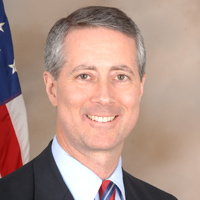
U.S. Rep. Mac Thornberry, R-Texas
“It has been a great honor to serve the people of the 13th District of Texas as their congressman for the last 25 years,” Thornberry said in a statement announcing his retirement. “We are reminded, however, that ‘for everything there is a season,’ and I believe that the time has come for a change.”
While Thornberry’s district, which sprawls from the Dallas Metroplex to the Panhandle, is heavily Republican and unlikely to fall into Democratic hands, his departure is the latest in a string of retirements that have reshaped the Lone Star State’s congressional delegation.
Thornberry and the five other Texas House Republicans who have announced their retirements this year have, together, more than 80 years of seniority. And of the 25 Republicans elected to the state’s delegation in 2016, only 11 will be left standing after 2020 — if no one else retires or loses. Eight retired or lost their seats in 2018.
The other GOP members retiring in 2020 are Mike Conaway, Bill Flores, Pete Olson, Will Hurd, and Kenny Marchant. All but Hurd had been in the House for more than a decade.
Thornberry had chaired the House Armed Services Committee before Republicans lost their majority in 2018 and currently serves as ranking member. However, term limits imposed by the Republican conference would have forced him out of that role after 2020, which means he would not have reclaimed his chairmanship even if Republicans took back the House.
Conway faced the same situation on the House Agriculture Committee.
Of the six seats being vacated, Conaway and Thornberry’s are safely Republican, and the next occupant will be decided in the GOP primary next March. But the other four are on the target list for Democrats, who hope to build on the two-seat gain they made in Texas in 2018.
Two other Texas House Republicans, both representing Austin-area districts, are on the retirement watch list — Michael McCaul and John Carter, who are also being targeted by Democrats. However, both men have been raising money for their re-election campaigns.
Candidates have until December 9 to decide whether to run for re-election — or ride off into the Texas sunset.
We tweet @ChkFriPolitics.com Join us!
Republicans hold 9th District U.S. House seat in North Carolina
State Senator Dan Bishop defeats Democrat Dan McCready with last-minute help from Donald Trump
♦By Rich Shumate, ChickenFriedPolitics.com editor
 CHARLOTTE (CFP) — Republican State Senator Dan Bishop has squeaked out a victory over Democrat Dan McCready in a special election to fill North Carolina’s vacant 9th District U.S. House seat, keeping the seat in GOP hands.
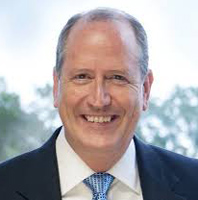
U.S. Rep.-elect Dan Bishop, R-North Carolina
Bishop — bolstered by an election-eve campaign appearance on his behalf by President Donald Trump — took 51 percent in the September 10 vote to 49 percent for McCready.
Although McCready beat Bishop decisively in the part of the district in suburban Mecklenburg County in and around Charlotte, Bishop rolled up a 20-pont margin in exurban Union County, which was enough to put him over the top.
McCready’s defeat extinguishes Democratic hopes of making a breakthrough in the Tar Heel State, where they failed to flip a single U.S. House seat in 2018.
In another special election in the 3rd District, Republican State Rep. Greg Murphy defeated Democrat Allen Thomas, the former mayor of Greenville. The seat became vacant when longtime incumbent GOP U.S. Rep. Walter Jones died in February.
Murphy took 62 percent of the vote to 38 percent for Thomas.
The 9th stretches from the suburbs of Charlotte east along the South Carolina state line toward Fayetteville. The 3rd is a mostly rural district that takes in the counties along the state’s Atlantic coast.
Last November, McCready fell 900 votes short in a race against Republican Mark Harris, but the State Board of Elections ordered a rerun of the election after allegations of absentee ballot fraud were raised against a contractor working for Harris.
The contractor is now facing criminal charges; Harris dropped out of the race, clearing the way for Republicans to pick Bishop as a replacement.
The seat has been vacant for nine months as the dispute over the seat lingered.
Bishop, 55, is a social conservative who has served in both houses of the legislature. He is best known as one of the authors of North Carolina’s “bathroom bill,” a law passed in 2016 which required transgendered people to use the restroom assigned to their birth gender in public facilities. After a public outcry and organized boycotts of the state, the law was repealed in 2017.
Trump held a rally in Fayetteville Monday in which he heaped praise on Bishop and went on the attack against McCready, whom he accused of wanting “open borders,” “sanctuary cities” and gun control.
In 2016, Trump won the 9th District by 12 points, but the district swung toward the Democrats in 2018, part of a similar shift seen in suburban areas across the South.
While that shift allowed Democrats to make breakthroughs in Atlanta, Dallas, Houston, Richmond, Charleston and Oklahoma City, they came up short in all four targeted House races in North Carolina.
With the results Tuesday, Republicans will hold a 10-to-3 advantage in the Tar Heel State’s House delegation.
We tweet @ChkFriPolitics Join us!

Voters decide Tuesday who fills disputed North Carolina 9th District U.S. House seat
Donald Trump heading to Tar Heel state to rally Republicans ahead of vote
♦By Rich Shumate, ChickenFriedPolitics.com editor
CHARLOTTE (CFP) — Voters in two North Carolina congressional districts will go to the polls Tuesday to fill vacant seats, with Democrats hoping to make a breakthrough by flipping the 9th District into their column.
In a sign of the national implications of the vote, President Donald Trump is heading to Fayetteville Monday to campaign for Republican State Senator Dan Bishop, who is in a tight race with Democrat Dan McCready in the 9th District.
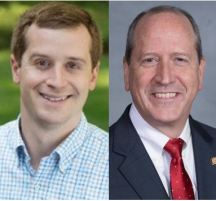
Dan McCready and Dan Bishop
A McCready win would flip a House seat to the Democrats and add to the majority they won in 2018. The seat has been vacant for nine months after a narrow GOP win last November was overturned amid allegations of absentee ballot fraud.
In the 3rd District, Republican State Rep. Greg Murphy is heavily favored to win over Democrat Allen Thomas, the former mayor of Greenville. The seat became vacant when longtime incumbent GOP U.S. Rep. Walter Jones died in February.
The 9th District stretches from the suburbs of Charlotte east toward Fayetteville. The 3rd District takes in the counties along the state’s Atlantic coast.
Polls point to a close race between McCready, a political newcomer who came close to winning in last November’s disputed election, and Bishop, a veteran state lawmaker whom Republican picked to replace their previous tarnished nominee.
In November, McCready fell 900 votes short in a race against Republican Mark Harris. But the State Board of Elections ordered a rerun of the election after allegations of absentee ballot fraud were raised against a contractor working for Harris.
The contractor is now facing criminal charges; Harris dropped out of the race, clearing the way for Republicans to pick Bishop in an effort to keep the seat.
Bishop, 55, is a social conservative who has served in both houses of the legislature. He is best known as one of the authors of North Carolina’s “bathroom bill,” a law passed in 2016 which required transgendered people to use the restroom assigned to their birth gender in public facilities. After a public outcry and organized boycotts of the state, the law was repealed in 2017.
McCready, 36, is a Marine Corps veteran and solar energy entrepreneur making his first bid for political office.
Trump won the district by 12 points in 2015, but the district swung toward the Democrats in 2018, part of a similar shift seen in suburban areas across the South.
While that shift allowed Democrats to make breakthroughs in Atlanta, Dallas, Houston, Richmond, Charleston and Oklahoma City, they came up short in all four targeted House races in North Carolina. Winning Tuesday would be a bit of redemption.
Republicans currently hold a 8-to-3 advantage in the state’s congressional delegation, with two seats vacant.
We tweet @ChkFriPolitics Join us!
Texas Republican U.S. Rep. Will Hurd bowing out of the House
In a surprise move, the chamber’s lone black Republican and sometime Trump critic says he plans “to help our country in a different way”
♦By Rich Shumate, ChickenFriedPolitics.com
 WASHINGTON (CFP) — Just two weeks after voting with Democrats to condemn President Donald Trump over his tweets about four liberal House members, Republican U.S. Rep. Will Hurd of Texas has announced that he will not seek re-election in 2020, opening up a prime pickup opportunity for Democrats in West Texas.
Hurd, a former undercover CIA agent who had been considered a rising star among House Republicans before his surprise announcement, said in a statement that he was leaving “in order to pursue opportunities outside the halls of Congress to solve problems at the nexus between technology and national security.”
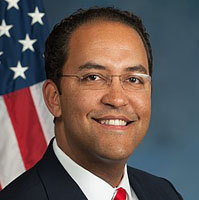
U.S. Rep. Will Hurd, R-Texas
While his statement did not indicate any future plans, Hurd told the Washington Post that he did intend to run for office again in the future — and that despite his criticism of the president, he planned to vote for Trump if he is the GOP nominee as expected in 2020.
“It was never my intention to stay in Congress forever, but I will stay involved in politics to grow a Republican Party that looks like America,” he said in his statement.
Of his six years in Congress, Hurd said. “There were times when it was fun and times when it wasn’t. When people were mad, it was my job to listen. When people felt hopeless, it was my job to care. When something was broken, it was my job to find out how to fix it.”
Hurd is the third Texas House Republican to forgo re-election next year, joining U.S. Reps. Pete Olson and Michael Conaway. Hurd’s seat, in Texas’s 23rd District, which he won by a mere 926 votes in 2018, is by far the most vulnerable.
Hurd, 41, was something of a political unicorn in Congress. Not only was he the only African-American Republican in the House — and one of only two in Congress — he was also a Republican representing a district that is more than 70 percent Latino, which he said gave him the opportunity to take “a conservative message to places that don’t often hear it. ”
“Folks in these communities believe in order to solve problems we should empower people not the government, help families move up the economic ladder through free markets not socialism and achieve and maintain peace by being nice with nice guys and tough with tough guys,” he said in his statement. “These Republican ideals resonate with people who don’t think they identify with the Republican Party.”
Hurd was also the last Southern Republican left in Congress representing a district Hillary Clinton carried, albeit narrowly, in 2016.
As a member of the House Intelligence Committee, Hurd questioned special counsel Robert Mueller during his July 24 appearance to discuss his investigation into Russian meddling in the 2016 election, offering a less confrontational line of questioning than many of his fellow Republicans on the panel.
Last month, Hurd was the only Southern Republican — and one of only four in the House — who broke ranks to support a resolution condemning Trump over tweets he made about four far-left congresswomen known as “The Squad,” which were widely denounced as racist by the president’s critics.
The 23rd District is the largest geographically in Texas, stretching from the suburbs of San Antonio across rural West Texas toward El Paso, and one of the most consistently competitive seats anywhere in the country.
Hurd’s victory in 2014 marked the fourth time in a decade that the seat had switched between parties. He managed to hold it for three election cycles, although never winning by more than 3,000 votes.
The Democratic candidate for the seat in 2018, Gina Ortiz Jones, is running again in 2020, and Hurd was facing another difficult election fight to keep the seat, including, after his criticism of Trump, a possible primary challenge.
Conaway’s district, the 11th, which includes Midland, Odessa and San Angelo, is strongly Republican and will likely not change hands with his retirement. Olson’s district, the 22nd, in the suburbs of Houston, is more vulnerable to a Democratic challenge.
 Chicken Fried Politics