
Home » White House 2016 (Page 6)
Category Archives: White House 2016

U.S. Senator Ted Cruz soundly beaten in New York primary
Texas senator gets none of New York’s 95 delegates after finishing 46 points behind Donald Trump
♦By Rich Shumate, Chickenfriedpolitics.com editor
 NEW YORK (CFP) — U.S. Senator Ted Cruz of Texas limped to a third-place finish in New York’s Republican primary, a loss which has all but eliminated him from capturing a delegate majority before the GOP convention in Cleveland in July.
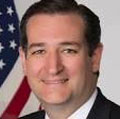
U.S. Senator Ted Cruz
Cruz, the only Southerner left in the presidential race, took less than 15 percent of the vote in the Empire State, trailing Donald Trump, who took 61 percent, and Ohio Governor John Kasich, who took 25.
Because he failed to crack 20 percent in New York, Cruz was also shut out of getting any of the 95 delegates up for grabs in the April 19 vote.
To get to the 1,237 delegates needed for a first ballot victory, Cruz will now need to sweep all of the remaining primaries, including several on April 26 in Northeastern and Mid-Atlantic states where polls show him trailing Trump.
However, Cruz has been making inroads in the parallel delegate selection process, where actual convention delegates are picked. And although many of these pro-Cruz delegates will be legally obligated to vote for Trump on the first ballot, they will be free to defect if Trump can’t muster a first-ballot majority.
Cruz thumps Trump in Wisconsin primary
Texas senator’s win complicates Trump’s quest for GOP delegate majority
MILWAUKEE (CFP) — U.S. Senator Ted Cruz of Texas easily defeated Donald Trump in Wisconsin’s Republican presidential primary, complicating Trump’s quest to get to the 1,237 delegates he needs to win the GOP nomination outright.
U.S. Senator Ted Cruz
Riding a wave of conservative and establishment opposition to Trump, Cruz took 48 percent in the April 5 vote, compared to 35 percent for Trump and 14 percent for Ohio Governor John Kasich.
Perhaps more importantly, Cruz took 36 of the 42 delegates up for grabs in the Badger State, compared to just six for Trump.
Speaking to his supporters in Milwaukee after his victory, the Texas senator hailed the result as a turning point in the campaign.
“Tonight, Wisconsin has lit a candle guiding the way forward,” Cruz said. “Tonight is about unity, and tonight is about hope.”
Trump did not speak after the results came in, but his campaign released a statement calling Cruz “a Trojan horse, being used by the party bosses attempting to steal the nomination from Mr. Trump.”
Cruz’s win in Wisconsin was his ninth of the campaign season and his second in the Midwest, after Iowa. But he still trails Trump, who has won in 21 states.
Trump’s loss means he will now have to win 56 percent of the delegates up for grabs in the remaining primaries and caucuses to secure a majority at the Republican convention in Cleveland, making a contested convention more likely.
However, the primary battle now turns to states in the Northeast, including New York in two weeks–home turf for Trump but inhospitable territory for a Southern conservative.
Poll: Trump, Clinton running even in normally deep red Mississippi
Results of a new Mason-Dixon poll expose Trump’s general election vulnerabilities
 JACKSON, Mississippi (CFP) — A new poll shows that if Republicans pick Donald Trump as their nominee, Mississippi could be in play in the general election for the first time in 36 years–a stark illustration of the uphill battle he may face across the country come November.
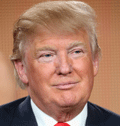
Candidate Donald Trump
The Mason-Dixon poll of Mississippi voters showed Trump leading the likely Democratic nominee, Hillary Clinton, by just 3 points, 46 percent to 43 percent, with 11 percent undecided. That is within the poll’s margin of error of plus or minus 4 percent, which means that, statistically speaking, Trump and Clinton are in a tie.
By contrast, Trump’s rivals for the GOP nomination, U.S. Senator Ted Cruz of Texas and Ohio Governor John Kasich, both beat Clinton by double-digit margins.
The last time Mississippi was in play in a general election was in 1980, when Ronald Reagan defeated Jimmy Carter by less than 2 points. The last Democrat to carry Mississippi was Carter in 1976.
How rare is it for a Democratic nominee to carry Mississippi? In the last 60 years, it has happened exactly twice, in 1956 and 1976. And in the last four elections, the Republican candidate has won by an average of 15 points.
The poll results are likely to add fuel to arguments by Cruz and Kasich that Trump would be a general election disaster for the GOP. Cruz leads Clinton in a general election match-up 51 percent to 40 percent; Kasich does even better, 52 percent to 37 percent.
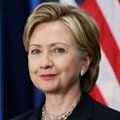
Former Secretary of State Hillary Clinton
Clinton holds an astounding 90-point lead among African-American voters, who make up a third of the Mississippi electorate. A mere 3 percent of black voters said they support Trump.
Clinton also has an 8-point lead among women and is taking a 15 percent share of Republican women.
And while Trump pulls only 8 percent of Democrats, the poll showed Clinton winning 11 percent of Republicans. Self-identified independents broke for Trump 49 percent to 37 percent.
The poll also showed that while both Clinton and Trump have high negatives among voters in the Magnolia State, Trump was viewed slightly more unfavorably. The difference between his favorable and unfavorable ratings was 11 points; hers was 8.
The poll of 625 registered Mississippi voters was conducted March 28-30. The margin of error was plus or minus 4 percentage votes, which means there is a 95 percent probability that the actual result if all voters were surveyed would fall within a range 4 points above and below the reported figure.
Jeb Bush joins Ted Cruz bandwagon after decisive win in Utah
In his endorsement of Cruz, Bush decries Donald Trump’s “divisiveness and vulgarity”
♦By Rich Shumate, Chickenfriedpolitics.com editor
 HOUSTON (CFP) — A day after capturing his first outright majority in any state primary, U.S. Senator Ted Cruz of Texas captured the endorsement of the man who began the GOP presidential race as the presumed front-runner, former Florida Governor Jeb Bush.

Former Florida Governor Jeb Bush
Bush’s endorsement came in a statement released by the Cruz campaign March 23 in which he called the Texas senator “a consistent, principled conservative who has demonstrated the ability to appeal to voters and win primary contests.”
“Washington is broken, and the only way Republicans can hope to win back the White House and put our nation on a better path is to support a nominee who can articulate how conservative policies will help people rise up and reach their full potential,” he said.
In endorsing Cruz, Bush also took a swipe at the front-runner in the Republican race, Donald Trump.
“For the sake of our party and country, we must move to overcome the divisiveness and vulgarity Donald Trump has brought into the political arena, or we will certainly lose our chance to defeat the Democratic nominee and reverse President Obama’s failed policies,” Bush said.
U.S. Senator Ted Cruz
The nod from Bush came a day after Cruz won 69 percent in the Utah primary–his best showing of the entire primary campaign and the first state in which he took an outright majority of the vote. The result gave Cruz all of the Beehive State’s 40 delegates. Trump trailed badly at just 14 percent.
However, in neighboring Arizona, Trump carried 47 percent to Cruz’s 25 percent, taking all 58 delegates in the winner-take-all state.
To date, Trump has 739 delegates, about 60 percent of the 1,237 he needs to get the nomination. Cruz trails with 465 delegates. There are 17 states left that have not held primaries or caucuses, including one Southern state, West Virginia, which votes in May.
Analysis: Trump, Clinton’s Southern primary wins expose weaknesses for the fall
Trump needs to run the table in the South. Can Clinton stop him?
♦By Rich Shumate, Chickenfriedpolitics.com editor
(CFP) — The primary and caucus season across the South has largely come and gone (Republicans have voted everywhere except West Virginia; Democrats, Kentucky and West Virginia), leaving behind some clear trends and evidence about how things might play out in the fall.
 First the trends: Donald Trump and Hillary Clinton cut through the region like Sherman on steroids. She won every state save Oklahoma, most by whopping margins; he took everything except Texas and Oklahoma, which he lost to U.S. Senator Ted Cruz.
Given that Clinton runs best among African-American voters, and Trump’s strongest support is among white working-class voters, this was no surprise. Both of those demographic groups dominate the Democratic and Republican vote, respectively, across the South.
The irony for Clinton, however, is that she is running extraordinarily well in a region where, as conventional wisdom would have it, she doesn’t have a prayer of winning in the fall. And the weak appeal she has exhibited among white voters turned up in Oklahoma, one of the South’s whiter states, where U.S. Senator Bernie Sanders beat her.
That bears repeating: An avowed socialist beat Clinton in Oklahoma.
Meanwhile, the thrice-married, frequently profane rich guy from Long Island rolled from Paragould to Pascagoula to Pensacola, with gobs of religious conservatives apparently willing to overlook his colorful biography in order to make America great again. More impressively, he beat Cruz in a region where the Texan should have done much better.
However, the primary results showed that there could be challenges ahead for Trump in his quest to keep the solid Republican South solid in the fall should he be the nominee.
And a Southern sweep is vital to his hopes of winning the White House. The last four times the Republican candidate carried the region, he won; the last four times he didn’t, he lost. (Bill Clinton carried four Southern states; Obama, three.)
For all of his victories, Trump did not crack 50 percent anywhere in the South, although he came close in Mississippi. That means that even in a region where his brand of populism seems to have struck a chord, more Republicans were opposed to voting for him than voted for him. In six states, he didn’t even crack 40 percent.
And it is also instructive to look at some of the places where Trump didn’t win.
He lost Atlanta and two of its suburban counties; Richmond and its suburbs; Little Rock; Oklahoma City; Columbia and Charleston, S.C.; Miami-Dade County (although that was to hometown U.S. Senator Marco Rubio); and the Raleigh-Durham-Chapel Hill area. In Tennessee, he barely carried Nashville and Memphis, winning only about 30 percent of the vote. He lost all of the major cities in Texas to Cruz, who, admittedly, had the home court advantage.
These results show that Trump’s political act may not be wearing as well with urban and suburban Southern Republicans as it is in small towns and rural areas. That probably won’t matter in the fall in places such as Mississippi, Alabama, Louisiana and South Carolina. But if he can’t win those reluctant-for-Trump voters over to his side by November, it could matter in other places.
We already know that Virginia, North Carolina and Florida will be battleground states because Obama carried all three. And he did so running against Republicans that had, more or less, the united backing of their party. Trump doesn’t have that now, and it’s unclear if he will.
And then there’s Georgia, which has a large and politically active African-American population that will crawl across broken glass to vote for Clinton. If Trump continues to show weakness in Atlanta and its suburbs, the Peach State could also be in play.
Tennessee and Arkansas are probably longer shots, primarily because Clinton will have fewer African-American voters on which she can rely. However, there is still a residual strain of affection for Clinton in some quarters in Arkansas, where she spent 10 years as first lady.
Of course, Clinton’s weakness among white voters shows why she may be the Democrat least equipped to carry anything south of the Mason-Dixon line. After all, if even white Democrats aren’t voting for her, how is she going to fare when white people who aren’t Democrats are voting against her? That hurdle could be too high to jump, even with extraordinary support among black voters.
Remember, though, that Clinton doesn’t have to win everything in the South; just two or three states could make Trump’s ascension to the White House darn near impossible. He either needs to run the table or find states elsewhere to make up the difference.
Can he do it? Well, Trump has proven that he has a knack for defying the odds, so a wise pundit doesn’t bet against him. But the primary results show it may prove a more difficult feat than the Donald expects.
 Chicken Fried Politics