
Latest Posts
Latest Coverage
-
Symbolic solution in search of an actual problem
Support of 9 Southern Republicans for Respect for Marriage Act shows why Supreme Court isn’t about to ban same-sex marriage ♦By Rich Shumate, ChickenFriedPolitics.com editor…
-

West Virginia stubborn, or playing hard to get
U.S. Senator Joe Manchin pisses off his party yet again … to what end? ♦By Rich Shumate, ChickenFriedPolitics.com editor Also in this report: Atlanta DA…
-

2 Mississippi Republican U.S. House members forced into runoffs after weak primary showings
Michael Guest narrowly trails challenger in 3rd District; Steven Palazzo clears just 32% in 4th District ♦By Rich Shumate, ChickenFriedPolitics.com editor JACKSON, Mississippi (CFP) –…
-
Mississippi Republican U.S. Rep. Steven Palazzo facing Tuesday primary fight amid ethics investigation
6 opponents hitting “No-Show Palazzo” over inattention to district, ethics problems ♦By Rich Shumate, ChickenFriedPolitics.com editor GULFPORT (CFP) — Mississippi U.S. Rep. Steven Palazzo —…
-

Primary Wrap: Kemp, Raffensperger survive Trump’s ire; Brooks makes Alabama U.S. Senate runoff
Texas Democratic U.S. Rep. Henry Cuellar survives challenge from the left; George P. Bush gets blown out by Attorney General Ken Paxton ♦By Rich Shumate,…
-
U.S. House’s last pro-life Democrat, Texas’s Henry Cuellar, fighting to keep seat in Tuesday primary runoff
Challenger Jessica Cisneros wanted House Democratic leaders to rescind Cuellar endorsement; they refused ♦By Rich Shumate, ChickenFriedPolitics.com editor LAREDO, Texas (CFP) — Amid the newly…
Virginia Governor Terry McAuliffe express shock at federal investigation
Probe focuses on campaign contributions from a Chinese businessman who also gave to the Clinton Foundation
♦By Rich Shumate, Chickenfriedpolitics.com editor
 RICHMOND (CFP) — Virginia Governor Terry McAuliffe says he was shocked to discover from a news report that he is under investigation by the FBI and the Justice Department over $120,000 in campaign contributions from a Chinese businessman who also gave money to the Clinton Foundation.

Virginia Governor Terry McAuliffe
But speaking to reporters May 24, a day after the news broke, McAuliffe insisted that contributions from the donor, Wang Wenliang, were legal and that he had been “fully vetted” by the governor’s campaign staff.
He also insisted that the investigation has “nothing to do” with the Clinton Foundation, even though Wang had also given money to the foundation and McAuliffe sits on the board of one of its subsidiaries.
“I didn’t bring the donor in. I didn’t bring him into the Clinton Foundation. I’m not even sure I’ve ever met the person,” McAuliffe said.
The governor was also asked about the more than 100 donors common to his 2013 gubernatorial campaign and foundation, and whether he used his position with the Clinton Foundation to solicit campaign contributions.
McAuliffe explained that given his close relationship with the Clinton family, it would not be surprising to find donors who had given to both the campaign and the foundation.
“I think we’ve traveled in the same circles,” McAuliffe said. “I’ve traveled the globe with President Clinton, and we have a lot of the same friends.
News of the federal investigation was first reported by CNN. which attributed its information to “U.S. officials briefed on the probe.” It centers on $120,000 in contributions to McAuliffe’s campaign by Wang, according to the network.
The reason for the FBI”s scrutiny remains unclear. While foreign nationals are prohibited from giving money to U.S. political campaigns, McAuliffe said that would not apply to Wang because he has been a permanent resident of the United States since 2007, and green-card holders can contribute to campaigns.
That would seem to point to the possibility that a relationship between the McAuliffe campaign and the Clinton Foundation is the focus of the probe. According to some news reports, the FBI’s investigation into Hillary Clinton’s use of a private email server has expanded to the foundation.
McAuliffe is a longtime associate of Bill and Hillary Clinton, even loaning them money to buy a house after they left the White House in 2001. He was the co-chair of Hillary Clinton’s 2008 presidential campaign, and both Clintons campaigned for him when he ran for governor.
The governor is on the board of the Clinton Global Initiative, the international outreach arm of the Clinton Foundation, which, since its founding in 1997, has raised more than $2 billion.
Wang is the head of the China Rilin Construction Group. Forbes magazine put his net worth at more than $1 billion.
State of the Races: U.S. House 2016
Only 11 seats are in play across the region; Democrats may make small gains
♦By Rich Shumate, Chickenfriedpolitics.com editor
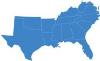 (CFP) — Heading toward the November election, just 11 of the South’s 154 U.S. House seats look to be at all in play, a measly 7 percent.
Indeed, in 10 states, no seats are likely to change parties, although results from Louisiana’s late November primary may add to the list. In three of the four states with seats in play–North Carolina, Florida and Virginia–the competitive races are largely the result of new court-ordered House maps, which have disturbed the political equilibrium.
Currently, Republicans hold 116 seats in the South, compared to just 38 for Democrats, or about 75 percent. That GOP dominance is unlikely to budge much.
Overall, Democrats appear poised to pick up at least two seats in Florida and one in Virginia, while Republicans are favored to pick up at least one seat in Florida. There are three seats–two in Florida and one in Texas–that are out-and-out toss-ups. Thus, a net gain of five seats for Democrats in the South would be a good night.
Here are the 11 races to watch:

Dunn
Florida 2: This seat, anchored in the Florida Panhandle around Tallahassee, is currently held by Democratic U.S. Rep. Gwen Graham. In redrawing the Sunshine State’s map, the Florida Supreme Court removed a chunk of black voters and part of Tallahassee from the district in order to redraw the adjacent 5th District, making what had been a swing seat substantially more Republican. Graham, the only Democrat to take away a Republican seat anywhere in the South in 2014, looked at her odds and decided not to run again, for good reason. Republicans nominated Panama City urologist Neal Dunn, who should have little problem here. RATING: GAIN GOP

Lawson
Florida 5: This seat, held by Democratic U.S. Rep. Corrine Brown, was the primary offender in the Supreme Court ruling that the House map was unconstitutional. Over Brown’s strenuous objections, the justices ordered an extreme makeover; the district now starts in Jacksonville and heads due west to Tallahassee, making it less black and more Republican. Brown, who has been indicted on federal corruption charges, was bounced in the primary by Al Lawson, a former state lawmaker from Tallahassee. The GOP had some hope of a takeaway with Brown in the race, but those hopes were likely dashed with her primary loss. RATING: PROBABLY DEM

Murphy

Mica
Florida 7: Republican U.S. Rep. John Mica is running again in this district in suburban Orlando. But he now has some of the Democratic voters who used to be in Brown’s 5th District, making this district much less safe that it was. He will face political newcomer Stephanie Murphy, a college professor and former national security professional, who was the only Democrat to file against Mica. RATING: PROBABLY GOP

Demings
Florida 10: This Orlando-area district, now held by Republican U.S. Rep. Daniel Webster, was made substantially more Democratic in the redraw–so much so that Webster opted to run for re-election in the adjacent 11th District, where U.S. Rep. Rich Nugent is retiring. Democrats nominated former Orlando Police Chief Val Demings, who should have little problem in November. RATING: GAIN DEM

Crist

Jolly
Florida 13: This swing district in the Tampa Bay area will feature a high voltage smackdown between Republican U.S. Rep. David Jolly and former Florida Governor Charlie Crist, the Republican-turned-independent-turned-Democrat who is trying to make a political comeback after losing the governor’s race in 2014. The redraw of Florida’s map added a portion of St. Petersburg with a large minority population to this district, making it more Democratic. Facing long odds, Jolly first opted to run for the U.S. Senate before deciding to try to keep his seat. With Jolly out, this would have been a Democratic pick-up. That’s still probable but much less certain with the incumbent back in the race. RATING: PROBABLY DEM

Perkins

Mast
Florida 18: This seat, which includes part of Palm Beach County and the Treasure Coast, is a classic swing district now held by Democratic U.S. Rep. Patrick Murphy, who gave it up to run for the U.S. Senate. Democrats selected Randy Perkins, a multimillionaire businessman from Delray Beach, while Republicans went with Brian Mast, an Army veteran who lost both his legs while serving as a bomb disposal specialist in Afghanistan. Both are political newcomers in what is likely to be a high-profile fight to the finish. RATING: TOSS-UP

Garcia

Curbelo
Florida 26: Like the 18th District, this seat, which includes southwest Miami-Dade County and the Florida Keys, has gone back and forth between the parties in recent cycles. The incumbent, Republican U.S. Rep. Carlos Curbelo, will face a rematch against the man he beat by less than 5,800 votes in 2014, former Democratic U.S. Rep. Joe Garcia. RATING: TOSS-UP

Gallego

Hurd
Texas 23: This massive district, which stretches across a vast expanse of West Texas from the San Antonio suburbs to near El Paso, has changed hands in the last three elections. The incumbent is U.S. Rep. Will Hurd, who is that rarest of creatures, a black Republican representing a majority Latino district. His Democratic challenger is the man Hurd beat in 2014, former U.S. Rep. Pete Gallego. Hurd’s winning margin last time was just 2,400 votes, indicating just how equally divided this district is. With a 55 percent Latino population and Donald Trump at the head of the GOP ticket, Hurd may be battling for his life. RATING: TOSS-UP

McEachin

Wade
Virginia 4: A new map drawn by a federal court added Richmond and Petersburg to this southeast Virginia district, making it substantially more Democratic. The incumbent, Republican U.S. Rep. Randy Forbes, left this seat to run in the redrawn 2nd District, leaving an open seat that’s ripe for a Democratic pick-up. Republican Henrico County Sheriff Mike Wade will face off against Democratic State Senator Donald McEachin, also of Henrico County. A win by McEachin in the redrawn district would add a second African-American congressman to the state’s delegation. RATING: GAIN DEM

Dittmar

Garrett
Virginia 5: Democrats have hopes of taking this seat, which is open because of the retirement of Republican U.S. Rep. Robert Hurt. But this district, which stretches through central Virginia from the North Carolina border to the Washington, D.C. suburbs, has a Republican lean. GOP State Senator Tom Garrett from Buckingham County is facing Democrat Jane Dittmar, the former chair of the Albermarle County Board of Supervisors. RATING: PROBABLY GOP

Comstock

Bennett
Virginia 10: This district, which starts in the western D.C. suburbs and stretches out to West Virginia, is held by Republican U.S. Rep. Barbara Comstock and is at the top of the Democrats’ wish list. Although Comstock won handily in 2014, this is a district full of suburban swing voters who Democrats are hoping will be turned off by a Trump-led GOP ticket. She faces Democrat LuAnn Bennett, a real estate developer who is the ex-wife of former U.S. Rep. Jim Moran. RATING: PROBABLY GOP
Bernie Sanders endorses Debbie Wasserman Schultz’s primary challenger
Sanders also says he’ll replace Florida congresswoman as head of the Democratic National Committee
 WASHINGTON (CFP) — U.S. Senator Bernie Sanders and his supporters have long complained that Democratic National Committee chair Debbie Wasserman Schultz has been unfair to his presidential campaign.
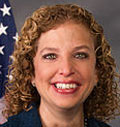
U.S. Rep. Debbie Wasserman Schultz
And now, he’s trying to exact some political revenge by endorsing Wasserman Schultz’s Democratic primary challenger in Florida’s 23rd District, Tim Canova.
“Clearly, I favor her opponent,” Sanders said in an interview on CNN’s State of the Union, which aired May 22. “His views are much closer to mine than to Wasserman Schultz’s.”
Sanders also said that if he wins the White House, he will replace her as head of the DNC.
In response, Wasserman Schultz released a statement saying that even though Sanders is now backing Canova, “I remain, as I have been from the beginning, neutral in the presidential Democratic primary.”
Sanders and his supporters have been highly critical of the DNC chair for what they see as her tilt toward his rival, Hillary Clinton, including scheduling debates on weekends when audiences were small in order to blunt his populist appeal.
Wasserman Schultz has been officially neutral in the 2016 campaign. However, in 2008, she was the national co-chair of Clinton’s unsuccessful presidential campaign, and the two women have had a long association.

Congressional candidate Tim Canova
Canova, 56, is a law professor and Sanders supporter from Hollywood making his first bid for elected office in the 23rd District, which takes in southern Broward County and Miami Beach.
His campaign has raised more than $1 million to challenge Wasserman Schultz, although she has outpaced him in fundraising. She has also been endorsed by President Obama.
In the presidential primary back in March, Clinton pummeled Sanders by more than 30 points in Broward County, which does not bode well for Canova’s chances in a similar proxy fight with Wassserman Schultz.
Still, the primary challenge is proving something of a headache for the DNC chair, with South Florida media noting an uptick in her campaigning for what had been considered an unassailable seat. This is the first time in her 12-year congressional career that she has faced primary competition.
New U.S. House map sets off scramble in Florida
As many as seven seats could be in play after a court-ordered redraw
By Rich Shumate, Chickenfriedpolitics.com editor
GAINESVILLE, Florida (CFP) — The weather may not be the only thing that’s hot this summer in Florida.
Thanks to new House map ordered by the Florida Supreme Court, as many as seven of the state’s 27 U.S. House seats might be in play as the filing period for congressional races begins June 24.
Republicans appear poised to take away one seat that’s now Democratic; Democrats are likely to capture two GOP-held seats. Further complicating the mix are the departure of four sitting House members who are all running for an open Senate seat.
Although Florida is a quintessential swing state, Republicans hold a 17-10 advantage in the congressional delegation, thanks to maps drawn by the GOP-controlled legislature.
The Supreme Court struck down the previous map on the grounds that it violated a state constitutional amendment prohibiting gerrymandering. The new map ordered by the high court had a domino effect on districts statewide, although it put relatively few safe seats into play.
Here are seven seats to watch in November:

Graham
Florida 2: This seat, anchored in the Florida Panhandle around Tallahassee, is currently held by Democratic U.S. Rep. Gwen Graham. The court removed a chunk of black voters and part of Tallahassee from the district in order to redraw the adjacent 5th District, making what had been a swing seat substantially more Republican.
Graham, the only Democrat to take away a Republican seat anywhere in the South in 2014, looked at her odds and decided not to run again. The GOP seems poised to pick up a seat here.

Brown
Florida 5: This seat, which belongs to Democratic U.S. Rep. Corrine Brown, was the primary offender in the Supreme Court ruling that the House map was unconstitutional. As drawn by legislators, it began in Jacksonville and snaked down to Orlando–at one point, the width of a highway–to maximize its black population.
Over Brown’s strenuous objections, the justices ordered an extreme makeover; the district now starts in Jacksonville and heads due west to Tallahassee, making it less black and more Republican. But Brown is running again, and it remains to be seen whether the changes will be enough to sink her. She faces the additional hurdle of two Democratic primary challengers in the reconfigured district.

Mica
Florida 7: Republican U.S. Rep. John Mica is running again in this district in suburban Orlando. But he now has some of the Democratic voters who used to be in Brown’s 5th District, making this district much less safe that it was. The question will be whether any brand-name Democrats will file to take on the 11-term lawmaker. If not, he’s probably headed back to Washington.

Webster
Florida 10: This Orland0-area district, now held by Republican U.S. Rep. Daniel Webster, was made substantially more Democratic in the redraw–so much so that Webster opted to run for re-election in the adjacent 11th District, where U.S. Rep. Rich Nugent is retiring. This seat will most likely flip Democratic.
Florida 13: This swing district in the Tampa Bay area, now held by Republican U.S. Rep. David Jolly, was also redrawn to add a portion of St. Petersburg with a large minority population, making it more Democratic. Rather than try to defend it, Jolly opted to run for the U.S. Senate.
Crist
The big name in this race is former Florida Governor Charlie Crist, the Republican-turned-independent-turned-Democrat who is trying to make a political comeback after losing the governor’s race in 2014. Crist would seem to be the favorite here, although his recent lack of electoral success should give Republicans some hope.

Murphy
Florida 18: This seat, which includes part of Palm Beach County and the Treasure Coast, is a classic swing district now held by Democratic U.S. Rep. Patrick Murphy. Murphy is giving it up to run for the U.S. Senate, which has put this seat at the top of the GOP’s target list. Depending on who emerges from crowded primaries on both sides, this race should be a toss-up come November.

Taddeo
Garcia
Curbelo
Florida 26: Like the 18th District, this seat, which includes southwest Miami-Dade County and the Florida Keys, has gone back and forth between the parties in recent cycles. The incumbent, Republican U.S. Rep. Carlos Curbelo, is likely to face a rematch against the man he beat in 2014, former Democratic U.S. Rep. Joe Garcia, although Garcia is going to have to get past Annette Taddeo in the primary.
In what was seen as a major snub of Garcia, the Democratic Congressional Campaign Committee, the fundraising arm of House Democrats, is backing Taddeo, a party leader from Miami who was the Democratic nominee for lieutenant governor in 2014.
Democrats need to make a net gain of four seats in order to secure a majority in the Florida delegation. If the 2nd, 10th, and 13th districts flip as expected, that would give Democrats a net gain of one seat. So they would have to defeat Mica, keep Brown’s seat and take the toss-up seats in the 18th and 26th districts in order to flip control their way.
That would seem to be a tall order, although the unpredictability of the presidential race could make the improbable probable.
Clinton ekes out win in Democratic presidential primary in Kentucky
Lexington Mayor Jim Gray wins Democratic nomination to face Republican Rand Paul in U.S. Senate race
♦By Rich Shumate, Chickenfriedpolitics.com
 LOUISVILLE (CFP) — Hillary Clinton scored a narrow victory over U.S. Senator Bernie Sanders of Vermont in the Kentucky Democratic presidential primary, the last stop in the Southern primary season.
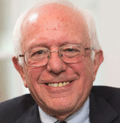
U.S. Senator Bernie Sanders
Clinton took 46.8 percent of the vote in the May 17 vote, compared to just 46.3 percent for Sanders. a margin of just 1,900 votes. That was a stark reversal from eight years ago, when Clinton walloped Barack Obama by more than 35 points in the Bluegrass State.
With the results in Kentucky, Clinton ends the Southern primary season by nearly running the table, taking 12 out of 14 contests. Sanders won only Oklahoma and West Virginia.

Lexington Mayor Jim Gray
Meanwhile, in Kentucky’s U.S. Senate primary, Lexington Mayor Jim Gray won the Democratic nomination over a crowded field, taking 58 percent of the vote. He will now face Republican U.S. Senator Rand Paul in November.
Given Kentucky’s Republican tendencies in federal elections, Paul, seeking his second term, is considered a prohibitive favorite, although Gray, as mayor of the commonwealth’s second-largest city and the wealthy owner of a family construction business, poses a credible challenge.
Gray is also trying to become the first openly gay man ever elected to the Senate.


