
Latest Posts
Latest Coverage
-
Symbolic solution in search of an actual problem
Support of 9 Southern Republicans for Respect for Marriage Act shows why Supreme Court isn’t about to ban same-sex marriage ♦By Rich Shumate, ChickenFriedPolitics.com editor…
-

West Virginia stubborn, or playing hard to get
U.S. Senator Joe Manchin pisses off his party yet again … to what end? ♦By Rich Shumate, ChickenFriedPolitics.com editor Also in this report: Atlanta DA…
-

2 Mississippi Republican U.S. House members forced into runoffs after weak primary showings
Michael Guest narrowly trails challenger in 3rd District; Steven Palazzo clears just 32% in 4th District ♦By Rich Shumate, ChickenFriedPolitics.com editor JACKSON, Mississippi (CFP) –…
-

Mississippi Republican U.S. Rep. Steven Palazzo facing Tuesday primary fight amid ethics investigation
6 opponents hitting “No-Show Palazzo” over inattention to district, ethics problems ♦By Rich Shumate, ChickenFriedPolitics.com editor GULFPORT (CFP) — Mississippi U.S. Rep. Steven Palazzo —…
-

Primary Wrap: Kemp, Raffensperger survive Trump’s ire; Brooks makes Alabama U.S. Senate runoff
Texas Democratic U.S. Rep. Henry Cuellar survives challenge from the left; George P. Bush gets blown out by Attorney General Ken Paxton ♦By Rich Shumate,…
-

U.S. House’s last pro-life Democrat, Texas’s Henry Cuellar, fighting to keep seat in Tuesday primary runoff
Challenger Jessica Cisneros wanted House Democratic leaders to rescind Cuellar endorsement; they refused ♦By Rich Shumate, ChickenFriedPolitics.com editor LAREDO, Texas (CFP) — Amid the newly…
State of the Races: Governor 2016
Competitive chief executive races on the ballot in North Carolina, West Virginia
♦By Rich Shumate, Chickenfriedpolitics.com editor
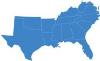 (CFP) — In 2016, just two Southern states will be holding races for governor, and the races in both North Carolina and West Virginia are expected to be close, hard-fought affairs.
Heading into the election, Republicans hold 11 of 14 governorships in the South, in all but Louisiana, Virginia and West Virginia.
Here are this year’s races:

McCrory

Cooper
North Carolina: Incumbent Republican Gov. Pat McCrory is running for a second term against the Tar Heel State’s Democratic attorney general, Roy Cooper. McCrory rode a GOP wave into office in 2012, but the Republican-controlled legislature’s passage of a controversial voter ID law and measures favored by religious conservatives have made the governor a lightning rod. The issue dominating the race is McCrory’s decision to sign a law requiring transgendered students to use bathrooms that match their gender of birth, rather than their gender of identity. Cooper not only opposed the measure, but he also refused to defend it in court. Expect massive amounts of outside cash to be poured into this race, which has become the latest battle in the culture wars. RATING: TOSS-UP

Justice

Cole
West Virginia: Democrats in the Mountaineer State, who have seen their once dominant hold on state politics slip away, are hoping to revive their fortunes with Jim Justice, a billionaire coal mine owner best known for his efforts to revive the state’s famed Greenbrier Resort. He faces Republican State Senate President Bill Cole, who became leader of the chamber in 2015 after the GOP captured a Senate majority for the first time in 83 years. Cole, an auto dealer from Bluefield, is hoping to become the first Republican elected governor in West Virginia since 1996. To get there, he’ll have to overcome Justice’s deep pockets. This seat is open because Democratic Governor Earl Ray Tomblin is term-limited, putting this race near the top of the GOP’s target list. RATING: TOSS-UP
Debbie Wassermann Schultz’s primary challenger raises eye-popping pile of cash
Tim Canova’s campaign raises $1 million in four months
♦By Rich Shumate, Chickenfriedpolitics.com
 HOLLYWOOD, Florida (CFP) — U.S. Rep. Debbie Wasserman Schultz may be in for the fight of her political career against a Democratic primary challenger who is raising a small mountain of cash to use against her.

Congressional candidate Tim Canova
Tim Canova, a law professor from Hollywood who criticizes Wasserman Schultz for being insufficiently liberal, has broken the $1 million mark in campaign fundraising, his campaign has announced.
He described his campaign as a “grassroots movement that will restore a voice in our democracy to everyday people and demand accountability from our leaders.”
If that sounds a lot like Bernie Sanders, it is by design. Canova has tied himself firmly to the Vermont senator’s coattails in his effort to oust Wasserman Schultz, who is also chair of the Democratic National Committee.
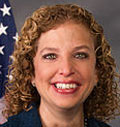
U.S. Rep. Debbie Wasserman Schultz
Sanders partisans have been critical of Wasserman Schultz and the DNC, complaining they are showing partiality to Hillary Clinton in the Democratic presidential race. Now, that anger has spilled over into the primary in Florida’s 23rd District, which takes in southern Broward County and Miami Beach.
While Canova has raised enough money to be competitive, he still trails Wasserman Schultz in the money chase. She has raised $1.77 million as of March 15, the last time candidates reported fundraising numbers to the Federal Election Commission.
In fact, Wasserman Schultz has already spent more money on her campaign–$1.3 million–than Canova has raised for the August 30 primary.
And in the presidential primary back in March, Clinton pummeled Sanders by more than 30 points in Broward County, which does not bode well for Canova’s chances in a similar proxy fight with Wassserman Schultz.
Still, the primary challenge is proving something of a headache for the DNC chair, with South Florida media noting an uptick in her campaigning for what had been considered an unassailable seat. This is the first time in her 12-year congressional career that she has faced primary competition.
Canova has also been criticizing Wasserman Schultz for not yet accepting his offer to debate.
However, in addition to her fundraising advantage, Wasserman Schultz also has another big gun in her arsenal–a highly touted endorsement from President Barack Obama.
Bernie Sanders cruises to big win in West Virginia primary
Democrat Jim Justice wins Democratic governor’s race, will face Republican Bill Cole in November
♦By Rich Shumate, Chickenfriedpolitics.com editor
 CHARLESTON, West Virginia (CFP) — U.S. Senator Bernie Sanders of Vermont easily won the Democratic presidential primary in West Virginia, notching a rare victory in the South.
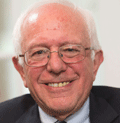 Sanders took 51.4 percent of the vote in Mountaineer State, compared to just 35.9 percent for Hillary Clinton. On the Republican ballot, Donald Trump–now unopposed for the nomination–scored an easy victory, taking 77 percent in the May 10 vote.
Meanwhile, in the state’s gubernatorial primaries, political newcomer Jim Justice won the Democratic nomination and will face Republican State Senate President Bill Cole in the general election. The incumbent Democrat, Governor Earl Ray Tomblin, is term limited.
A Republican hasn’t won the governorship in West Virginia since 1996. However, the state’s recent GOP trend, which including capturing the state legislature in 2014, has given Republicans high hopes for taking the state’s top office.
But they will have to get past the deep pockets of Justice, a billionaire farmer and coal mine owner who was a registered Republican until 2015. Justice has gotten the coveted endorsement of the politically powerful United Mine Workers of America and other labor groups., as well as conservative Democratic U.S. Senator Joe Manchin.
Sanders’ victory in West Virginia is just his second win in the South this primary season. With only Kentucky left to vote on May 17, Clinton has swept everything in the region except Oklahoma, most by wide margins.
Speaking to jubilant supporters in Salem, Oregon, as the results came in, Sanders pointedly noted that Clinton carried West Virginia by more than 40 points when she ran against Barack Obama in 2008
“West Virginia is a working class state and like many other states … in this country, working class people are hurting,” Sander said. “And what the people of West Virginia said tonight, and I believe the people of Oregon and Kentucky will say next week, is that we need an economy that works for all of the people, not just the 1 percent.”
Clinton was dogged by a remark she made in March that “we’re going to put a lot of coal miners and coal companies out of business,” which went over badly in coal-producing West Virginia. She later apologized for what she termed a “misstatement.”
Kentucky, the last Southern state left in the Democratic primary calendar, is also a coal-producing state. Both Sanders and Clinton have been campaigning hard in the Bluegrass State.
West Virginia was the final Southern stop for Republicans. Trump won every state in the region except for Oklahoma and Texas, which went to U.S. Senator Ted Cruz.
Report: Trump nomination opens up Southern possibilities for Clinton
Cook Political Report moves projections for four Southern states toward the Democrats
 WASHINGTON (CFP) — Now that Donald Trump has secured the Republican presidential nomination, the respected Cook Political Report is shifting its projections for four Southern states, with 73 electoral votes, toward Democrat Hillary Clinton.
The more pessimistic projections for Trump are due to his “historic unpopularity with wide swaths of the electorate,” according to the report.
The four Southern states where Clinton is projected to have increased opportunity are Florida, Georgia, North Carolina and Virginia. Those states are four of the five largest in the region, and all have large populations of suburban swing voters Clinton is expected to target.
Of the largest Southern states, only Texas remains solidly Republican, according to Cook. The remaining nine states in the South–Oklahoma, Arkansas, Louisiana, Alabama, Mississippi, Tennessee, South Carolina, Kentucky and West Virginia–are also still rated as solidly Republican.
After Trump became the presumptive nominee, the Cook report shifted its projections toward Clinton in 12 states. In only one state, Maine, did it project an increased opportunity for Trump.
Nationwide, states with a combined 309 electoral votes are projected as either solidly for or leaning toward Clinton, 40 more than she needs to win. By contrast, the states solidly behind or leaning toward Trump have just 190 electoral votes.
Perhaps the most significant shift in Cook’s projections was for Florida, with 29 electoral votes, which went from a toss-up to leaning Democratic.
History shows how vital the Sunshine State is to any GOP presidential candidate: The last Republican to win the White House without carrying Florida was Calvin Coolidge way back in 1924. Five of the last six times a Democrat won, he carried Florida.
 The most surprising shift in the projections was for Georgia, with 16 electoral votes, which moved from solidly Republican to leaning Republican.
The last time a Democrat carried Georgia was in 1980, when native son Jimmy Carter was on the ballot. Republican Mitt Romney won it by eight points in 2012.
 The Cook report moved Virginia, with 13 electoral votes, from a toss-up to leaning toward Clinton. Although the Old Dominion became reliably Republican in presidential contests in the 1960s, Barack Obama won it in both 2008 and 2012 with a strong performance in the Washington, D.C. suburbs, something Clinton hopes to replicate.
 North Carolina, which had been leaning Republican, is also now a toss-up, according to Cook. The Tar Heel State has been a swing state in recent elections; Obama won it in 2008, but Romney took it back in 2012.
Obama’s victories show just how important keeping the South solidly Republican is for a GOP nominee. Winning just three Southern states in 2008, and just two in 2012, was enough for him to put the Electoral College out of reach for John McCain and Romney.
In 2000, George W. Bush took 168 electoral votes out of the South, more than 60 percent of what he needed to win. In 2012, Romney carried only 138, barely half of what he needed, forcing him to make up the differences in regions that were less Republican-friendly, which he failed to do.
An April Mason-Dixon poll of voters in Mississippi also illustrated the scope of Trump’s potential problems in the South. His lead over Clinton was within the margin of error, meaning that the race in the Magnolia State was a statistical dead heat.
If deep-red Mississippi were to be in play come November, the rest of the South would likely also be in play, which could mean a very long election night for Trump.
Ted Cruz drops out of presidential race after Indiana loss
Departure of the last Southerner in the White House contest hands nomination to Donald Trump
♦By Rich Shumate, Chickenfriedpolitics.com editor
 INDIANAPOLIS (CFP) — After a crushing loss to Donald Trump in the Indiana primary, U.S. Senator Ted Cruz of Texas has dropped out of the race for the Republican presidential nomination, ending a 13-month quest for the nation’s highest office.
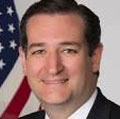
U.S. Senator Ted Cruz
“From the beginning, I’ve said that I would continue on as long as there was a viable path to victory. Tonight, I’m sorry to say, it appears that path has been foreclosed,” Cruz told incredulous supporters in Indianapolis after the May 3 vote. “Together, we left it all on the field in Indiana. We gave it everything we’ve got, but the voters chose another path.”
Spectators in the audience shouted “No!” as it became clear that Cruz would bow out of the race.
Cruz was the last of the 10 Southerners still in the presidential contest, a field that one point included nine Republicans and one Democrat from the region. His departure came after losing to Trump by 16 points in Indiana and getting shut out in the hunt for delegates.
Trump’s win in the Hoosier State extinguished any hope of denying him a majority of the delegates to this summer’s Republican National Convention.
Cruz, 45, is in his first term representing the Lone Star State. He ran for president hoping to harness the support of religious conservatives and Tea Party forces that had carried him to the Senate.
Cruz won the first presidential contest, narrowly defeating Trump in Iowa. However, Cruz struggled to find traction with his base in the face of the Trump phenomenon. That was particularly true in the South, an evangelical-heavy region where he won just two states, Texas and Oklahoma.
As the field began to dwindle, Cruz tried to position himself as the alternative to stop Trump, which worked in early April with a victory in Wisconsin. But then Trump rolled through New York and several Northeastern states, giving him a delegate lead that became insurmountable after Cruz’s loss in Indiana.
Cruz was not helped by his deep unpopularity with his colleagues in Congress, one of whom, former House Speaker John Boehner, described him as “Lucifer in the flesh.” But Cruz wore their opprobrium as a badge of honor, saying it proved he was a genuine outsider.


