
Latest Posts
Latest Coverage
-
Symbolic solution in search of an actual problem
Support of 9 Southern Republicans for Respect for Marriage Act shows why Supreme Court isn’t about to ban same-sex marriage ♦By Rich Shumate, ChickenFriedPolitics.com editor…
-

West Virginia stubborn, or playing hard to get
U.S. Senator Joe Manchin pisses off his party yet again … to what end? ♦By Rich Shumate, ChickenFriedPolitics.com editor Also in this report: Atlanta DA…
-

2 Mississippi Republican U.S. House members forced into runoffs after weak primary showings
Michael Guest narrowly trails challenger in 3rd District; Steven Palazzo clears just 32% in 4th District ♦By Rich Shumate, ChickenFriedPolitics.com editor JACKSON, Mississippi (CFP) –…
-

Mississippi Republican U.S. Rep. Steven Palazzo facing Tuesday primary fight amid ethics investigation
6 opponents hitting “No-Show Palazzo” over inattention to district, ethics problems ♦By Rich Shumate, ChickenFriedPolitics.com editor GULFPORT (CFP) — Mississippi U.S. Rep. Steven Palazzo —…
-

Primary Wrap: Kemp, Raffensperger survive Trump’s ire; Brooks makes Alabama U.S. Senate runoff
Texas Democratic U.S. Rep. Henry Cuellar survives challenge from the left; George P. Bush gets blown out by Attorney General Ken Paxton ♦By Rich Shumate,…
-

U.S. House’s last pro-life Democrat, Texas’s Henry Cuellar, fighting to keep seat in Tuesday primary runoff
Challenger Jessica Cisneros wanted House Democratic leaders to rescind Cuellar endorsement; they refused ♦By Rich Shumate, ChickenFriedPolitics.com editor LAREDO, Texas (CFP) — Amid the newly…
Florida Legislature approves changes to U.S. House map
New plan makes slight alterations to 10 districts and is unlikely to disturb delegation’s GOP tilt
♦By Rich Shumate, Chickenfriedpolitics.com editor
 TALLAHASSEE, Florida (CFP) — On a largely party-line vote, the Republican-controlled Florida House and Senate have approved a bill redrawing the state’s U.S. House map, which a state judge ruled last month was unconstitutionally gerrymandered.
The new map makes only minor alterations to 10 of the state’s 27 districts that are unlikely to change the House delegation’s partisan balance. The groups that sued to strike down the map, including the League of Women Voters, are demanding more substantial changes that could trigger new districts statewide and are expected to ask the judge to reject the redrawn map.
The Senate approved the new map by a vote of 25-12 on August 11. The House gave its approval a short time later by a vote of 71-38. Lawmakers rejected a democratic alternative that would have made two GOP-held districts near Orlando more competitive.
Leon County Circuit Judge Terry Lewis ruled that two districts in northwestern and central Florida — the majority black 5th District and the Republican-leaning 10th District — violated two constitutional amendments Florida voters approved in 2010 designed to limit political gerrymandering.
Under the new rules, districts cannot be drawn to benefit any political party and must be geographically compact. However, the amendments left redistricting in the hands of legislators, rather than turning it over to an independent outside panel.
Lewis ruled that the map draw by legislators packed black voters into the oddly shaped 5th District to make surrounding districts more Republican and also added an appendage to the 10th District east of Orlando to add more Republican voters.
Lewis ordered legislators to draw a new map by August 15, although he has not said whether he will order the map to be used in this year’s congressional elections. That could throw the Sunshine State’s election process into chaos as absentee ballots have already been sent out for the August 26 primary.
While Republican leaders in the legislature decided to comply with Lewis’s order to redraw the map rather than appeal, they have said they will only support using the new map beginning in 2016 and want to continue this year’s elections under the old map.
Lewis has set a hearing for August 20 to hear arguments on implementing the new map.

U.S. Rep. Corrine Brown
Under the original map, the 5th District, held by Democratic U.S. Rep Corrine Brown of Jacksonville, was a majority black district that meandered from Jacksonville over to Gainesville and then down to Orlando, taking in heavily black precincts to create a black majority At one point, it is the width of a highway.
In the new map, the 5th District still runs from Jacksonville to Orlando, but some black voters in the Orlando area are shifted to adjacent districts and some more rural areas are added south of Jacksonville to make the district geographically wider. The new district is 48 percent black.
Brown joined with Republicans in supporting the original map, which she said met the Voting Rights Act’s requirement to create majority minority districts wherever possible.
The new map also makes changes to the 10th District, held by U.S. Rep. Daniel Webster, and the adjacent 7th District, held by U.S. Rep. John Mica, that will make them less Republican. Because House districts must have equal population, the changes to those three districts required slight changes in seven surrounding districts in central Florida.
The League of Women Voters and the other plaintiffs are criticizing the new map, saying it doesn’t fix the geographic problems with the 5th District. They have proposed a different map that would have the 5th District running due west from Jacksonville past Tallahassee — a change that would require a wholesale revision of the map statewide.
The Democratic alternative rejected by the legislature doesn’t go as far as the plaintiff’s map, but it would have made the 7th and 10th districts more evenly split between Republicans and Democrats.
Although Florida is evenly divided politically, Republicans enjoy a 17-10 advantage in the state’s congressional delegation, largely due to their control of the redistricting process.
In his ruling striking down the map, Lewis was highly critical of the behind-the-scenes role Republican political consultants played in the redistricting process, which was supposed to be apolitical.
“They made a mockery of the legislature’s proclaimed transparent and open process of redistricting by doing all of this in the shadow of that process, utilizing the access it gave them to the decision makers, but going to great lengths to conceal from the public their plan and their participation in it,” Lewis said.
Analysis: Southern Senate races expose fault line that GOP must correct
Incumbents’ weak victories show bitter primaries have become the new normal
♦By Rich Shumate, Chickenfriedpolitics.com editor
 Tea Party-backed insurgents struck out in their quest to unseat sitting Southern Republican U.S. senators this year, with a final tally of 0-for-5.
 But while those results are arguably a significant victory for the powers that be in the GOP, a closer look at the results shows a deep and potentially problematic fault line running right through the party. And the rancor and contention generated by the establishment’s aggressive push back against the Tea Party has made that fault line wider.
Historically, sitting senators rarely face much of a battle for renomination. If they have any opposition at all, it is usually dispatched with an easy majority of 70 or 80 percent. While that is still largely true for Democrats, for Republicans — in the South and elsewhere — bitter primary contests seem to have become the new normal. True, all the incumbents survived this year. But they didn’t exactly set the world on fire.
In Tennessee, Lamar Alexander — a well-respected former Cabinet secretary and university president who has won statewide office four times — could only manage a meager 50 percent, while in Mississippi, Thad Cochran was dragged into a runoff that he only survived with the help of Democrats.
John Cornyn in Texas and Lindsey Graham in South Carolina did a bit better (59 percent and 56 percent, respectively), but they should be thankful that their opposition was as weak as it was. If bigger names had gotten into either of these races, the outcome might have been very different.
The Southern GOP senator who performed the best was Senate Minority Leader Mitch McConnell, who took 60 percent in his race, despite an avalanche of outside help given to his opponent, Matt Bevin. But that brutish primary did nothing to help McConnell’s prospects in a tough race this fall with Democratic Secretary of State Alison Ludergan Grimes.
What these races, collectively, show is that 40 percent or more of the Republican primary electorate is unhappy enough with their own elected leaders that they are prepared to vote them out — even if that means nominating little known candidates who, in many cases, seem less than fit to sit in the Senate.
For the time being, the GOP might be able to ignore this fault line because there is little indication, except perhaps in Kentucky, that Democrats will be able to take advantage of the Republican schism to flip seats in November.
But if Republicans can’t figure out a way to avoid this internal warfare, Democrats are eventually going to figure out a way to use it to their advantage. And that presents a real and present danger to the political hegemony that the GOP has built in the South.
Yes, 2014 was a victory for the establishment. But it was also a danger-Will-Robinson moment. And the bitterness left over from these primary fights has probably made the divisions within the party even worse, particularly in Mississippi.
Few of those Tea Party Republicans who feel scorned by their party are going to vote Democratic in November, but more than a few may stay home. Is this hemorrhage from the base likely to imperil these sitting Southern senators? No, except maybe for McConnell. But if the establishment can’t find a way to bridge this divide, there is certainly potential for trouble ahead.
Conservative effort to oust Tennessee Supreme Court justices fails
Three of the court’s five justices were targeted in retention election
♦By Rich Shumate, Chickenfriedpolitics.com
 NASHVILLE (CFP) — Conservative critics of Tennessee’s Supreme Court have failed in their campaign to oust three of the court’s five justices, which would have given Republican Governor Bill Haslam the power to appoint a new majority on the state’s highest court

Chief Justice Gary Wade
Tennessee voters decided to retain Chief Justice Gary Wade and Justices Cornelia Clark and Sharon Lee in the August 7 vote. The three targeted justices were all appointed by former Democratic Governor Phil Bredesen.
In Tennessee, justices don’t run directly for election, but voters decide every eight years if they should be retained. The Supreme Court also has the power to appoint the state’s attorney general, which uniquely in Tennessee is neither elected nor appointed by the governor.
Support for retention of all three justices topped 55 percent.
Critics of the three justices accused them of being soft on crime, particularly in death penalty cases. The effort to oust them was lead by Republican Lieutenant Governor Ron Ramsey and supported by Americans for Prosperity, a political operation funded by the billionaire Koch brothers from Kansas.
The justices raised and spent more than $1 million defending their record.
Tennessee primary: Lamar Alexander wins, Scott DesJarlais in cliffhanger
Alexander beats back Tea Party U.S. Senate challenger; DesJarlais battles to keep U.S. House seat amid messy personal scandal
♦By Rich Shumate, Chickenfriedpolitics.com editor
NASHVILLE (CFP) — U.S. Senator Lamar Alexander has taken a major step towards securing a third term by easily beating back a Tea Party-inspired GOP primary challenge from State Rep. Joe Carr.

U.S. Senator Lamar Alexander
Alexander took 50 percent of the vote in the August 7 primary, where he faced Carr and five other challengers. Carr, who had the support of Tea Party and outside conservative groups that had targeted Alexander for defeat, took 41 percent.
Alexander was one of five sitting Southern Republican senators targeted in primaries this year. All five survived.
In a closely-fought Democratic primary, Gordon Ball, a former federal prosecutor, narrowly defeated Terry Adams, a Knoxville attorney, by less than 2,000 votes. Ball will face Alexander in November.
After a fractious primary in which half of the voters from his own party voted for someone else, Alexander, 74, sounded a note of conciliation in his victory speech at a Nashville pizza parlor, reaching out not only to his GOP opponents but also to Democrats and independents.
“After we make our speeches, we’re going to have to roll up our sleeves, get together, work with each other and get something done,” he said. “That’s the Tennessee way. That’s the American way.”
Meanwhile, in Tennessee’s 4th District, with some absentee and provisional ballots still to be counted, incumbent Republican U.S. Rep. Scott DesJarlais held a lead of just 35 votes over his primary challenger, State Senator Jim Tracy, amid a messy personal scandal that took a toll on DesJarlais’s popularity.
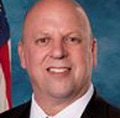
U.S. Rep. Scott DesJarlais
Given the district’s strong GOP tendencies, the GOP nominee will be favored for re-election in November over Democrat Lenda Sherrell, a retired accountant from Monteagle.
DesJarlais, 49, was facing voters for the first time since lurid details emerged from the case file of his bitter 2001 divorce from his first wife. In it, the congressman admitted having a string of extra-martial affairs and — perhaps even more damaging for an avowed right-to-life lawmaker — encouraging his then-wife to have two abortions.
DesJarlais (pronounced Dez-yar-lay), a medical doctor, also admitted having relationships with two female patients, which prompted the Tennessee State Board of Medical Examiners to reprimand him for unprofessional conduct and fine him $500.
Details about DesJarlais’s divorce became an issue in his contentious 2012 re-election campaign, which he won with just 56 percent of the vote. However, he successfully fought to prevent release of the full transcript of the case file until after the election.
Chris McDaniel wants Mississippi GOP to name him winner of U.S. Senate runoff
McDaniel slams supporters of U.S. Senator Thad Cochran for “dirty tricks”
♦By Rich Shumate, Chickenfriedpolitics.com editor
 JACKSON, Mississippi (CFP) — Citing widespread voting irregularities, State Senator Chris McDaniel is asking the Mississippi Republican Party to overturn the results of the June 24 primary runoff and declare him the U.S. Senate nominee instead of incumbent Senator Thad Cochran.
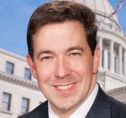
State Senator Chris McDaniel
“They asked us to put up or shut up. Here we are. Here we are with the evidence,” McDaniel said at an August 4 press conference. “What we’re going to show is a pattern of conduct on the part of a number of people that demonstrates a problem with this election. The evidence is clear.”
“We saw the dirty tricks. We saw the dirty money come from Washington D.C.,” he said. “Through the actions they took, they moved more than 40,000 Democrats into the Republican primary, and in so doing, mistakes were made.”
McDaniel led Cochran in the first round of voting on June 3. But after making direct appeals to Democratic and independent voters to cross over and vote in the runoff, Cochran erased McDaniel’s lead and won by 7,667 votes.
About 67,000 more people voted in the runoff than in the primary, and in Hinds County — which includes the predominantly black city of Jackson — Cochran’s margin of victory was 11,000 votes, nearly double what it was in the first round.
State law only allows voters to cross over to vote in the Republican runoff if they didn’t vote in the Democratic primary in the first round. McDaniel’s attorney, Mitch Tyner, said there were at least 3,500 crossover votes that should not have been allowed.
Tyner also said another 9,500 votes were “irregular,” and 2,275 absentee ballots were improperly cast. Those votes, together, are more than Cochran’s margin of victory.
McDaniel is asking the executive committee of the Mississippi Republican Party to declare him the winner, rather than calling for a new election.
“We anticipate that after they review the challenge that they’ll see Chris McDaniel clearly, clearly won the Republican vote on the runoff,” Tyner said. He said the state party doesn’t rule on the challenge in 10 days, McDaniel will go to court to overturn the election.
McDaniel also asked the executive committee to hold a public hearing to consider the evidence his supporters have collected.
“This is an opportunity for our party to take the lead on honest, good and transparent government,” he said.

U.S. Senator Thad Cochran
Responding to McDaniel’s challenge, Mark Garriga, an attorney for Cochran’s campaign, said “we are dedicated to the defense of the votes of those Mississippians who voted on June 24 for Thad Cochran as their United States Senator, an election which has been as thoroughly reviewed and examined as any in modern Mississippi history.”
“The filing of this challenge marks the point where this matter moves from an arena of press conferences and rhetoric into a setting where nothing matters but admissible evidence and the rule of law,” Garriga said in a statement.
The bitter Senate race in Mississippi pitted Cochran and the state’s Republican establishment against Tea Party activists and outside conservative groups — such as the Senate Conservatives Fund, FreedomWorks and the Club for Growth — that strongly backed McDaniel.
Cochran was one of five Southern Republican senators targeted in primaries this year. Four of them survived, with a fifth race to be decided August 7 in Tennessee.
View video of McDaniel’s press conference:


