
Latest Posts
Latest Coverage
-
Symbolic solution in search of an actual problem
Support of 9 Southern Republicans for Respect for Marriage Act shows why Supreme Court isn’t about to ban same-sex marriage ♦By Rich Shumate, ChickenFriedPolitics.com editor…
-

West Virginia stubborn, or playing hard to get
U.S. Senator Joe Manchin pisses off his party yet again … to what end? ♦By Rich Shumate, ChickenFriedPolitics.com editor Also in this report: Atlanta DA…
-

2 Mississippi Republican U.S. House members forced into runoffs after weak primary showings
Michael Guest narrowly trails challenger in 3rd District; Steven Palazzo clears just 32% in 4th District ♦By Rich Shumate, ChickenFriedPolitics.com editor JACKSON, Mississippi (CFP) –…
-

Mississippi Republican U.S. Rep. Steven Palazzo facing Tuesday primary fight amid ethics investigation
6 opponents hitting “No-Show Palazzo” over inattention to district, ethics problems ♦By Rich Shumate, ChickenFriedPolitics.com editor GULFPORT (CFP) — Mississippi U.S. Rep. Steven Palazzo —…
-

Primary Wrap: Kemp, Raffensperger survive Trump’s ire; Brooks makes Alabama U.S. Senate runoff
Texas Democratic U.S. Rep. Henry Cuellar survives challenge from the left; George P. Bush gets blown out by Attorney General Ken Paxton ♦By Rich Shumate,…
-

U.S. House’s last pro-life Democrat, Texas’s Henry Cuellar, fighting to keep seat in Tuesday primary runoff
Challenger Jessica Cisneros wanted House Democratic leaders to rescind Cuellar endorsement; they refused ♦By Rich Shumate, ChickenFriedPolitics.com editor LAREDO, Texas (CFP) — Amid the newly…
Poll: Arkansas U.S. Senate race is still a dead heat
Republican U.S. Rep. Tom Cotton’s slight lead over U.S. Senator Mark Pryor is within the margin of error
♦By Rich Shumate, Chickenfriedpolitics.com editor
 LITTLE ROCK (CFP) — Less than four months before election day, a new poll in the U.S. Senate race in Arkansas shows a statistical toss-up between Democratic U.S. Senator Mark Pryor and his Republican challenger, U.S. Rep. Tom Cotton.

U.S. Rep. Tom Cotton
The Talk Business & Politics/Hendrix College poll of 1,780 likely voters showed Cotton with 44 percent support, compared to 42 percent for Pryor. That was within the poll’s margin of error of plus or minus 2.3 percentage points.
The latest poll showed a slight shift from April, when Pryor held a 3-point advantage over Cotton. But the race still remains a toss-up, despite a deluge of negative television ads aired by both campaigns and their allied outside groups.
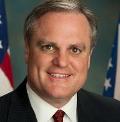
U.S. Senator Mark Pryor
Cotton partisans have hit Pryor for his ties to President Barack Obama, particularly his vote in favor of Obamacare. Pryor and his advocates have hit Cotton as being a tool of outside billionaires and out of touch with Arkansas voters, highlighting his votes against the federal farm bill and disaster relief.
In the latest poll, Cotton held a nearly 17-point margin over Pryor among independent voters. But Pryor held a 5-point lead among female voters and a whopping 57-point lead among African-Americans, who make up about 16 percent of Arkansas’s population.
David Perdue wins Georgia GOP Senate runoff
Perdue defeats U.S. Rep. Jack Kingston and faces Democrat Michelle Nunn in November
♦By Rich Shumate, Chickenfriedpolitics.com editor
 ATLANTA (CFP) — First-time candidate David Perdue has taken a major step toward securing a seat in the U.S. Senate by narrowly winning the Republican runoff for Georgia’s open seat.

U.S. Senate nominee David Perdue
Perdue, a businessman from St. Simons Island, defeated U.S. Rep. Jack Kingston, 59, an 11-term congressman from from Savannah, with 51 percent of the vote to 49 percent for Kingston.
Perdue led after the first round of primary voting on May 20. Although Kingston secured endorsements from the third and fourth place finishers in the crowded primary, Perdue carried the vote-rich Atlanta suburbs in the runoff to claim victory.
Perdue will now face Democrat Michelle Nunn, the daughter of former Georgia U.S. Senator Sam Nunn. Despite the Peach State’s Republican tilt, recent polling has shown a potentially competitive race this fall.
Perdue made clear in his victory speech that he plans to tie Nunn, who is running for office for the first time, to President Barack Obama and Democratic leaders in Washington.
“We’ve got a mission in front of us. Our opponent should not be taken lightly,” he said. “This fall, we’re going to have a clear choice. And that is a choice we’re going to have to win for our kids and grandkids. We’ve had enough of this the last six years.”

Democratic nominee Michelle Nunn
Nunn, 47, was the CEO of the Points of Light Foundation, affiliated with former Presdent George H.W. Bush.
During the heated runoff campaign, Kingston ran ads attacking Perdue’s conservative bona fides on issues including the Common Core education standards and immigration.
Perdue criticized the veteran congressman for being part of the high-spending Washington establishment.
The seat opened up when U.S. Senator Saxby Chambliss decided to retire.
Bob Barr’s political comeback falls short in Georgia
Barr, a former GOP congressman and 2008 Libertarian presidential candidate, loses U.S. House runoff
♦By Rich Shumate, Chickenfriedpolitics.com editor
MARIETTA, Georgia (CFP) — Bob Barr, a former GOP congressman who bolted the party to seek the Libertarian presidential nomination in 2008, has fallen short in his bid to return to Congress as a Republican.
 Barr, 65, lost the GOP runoff for Georgia’s open 11th District U.S. House seat to former State Senator Barry Loudermilk, who took 69 percent of the vote to 31 percent for Barr. Loudermilk had led in the first round of balloting on May 20.
Loudermilk’s win means he will be headed to Congress because no Democrat filed to run in the 11th District, a heavily Republican enclave in Atlanta’s northwest suburbs.
Barr, a former federal prosecutor, was first elected to Congress in the Republican wave of 1994. But he was defeated in a primary in 2002 after the Democratic-controlled Georgia legislature dismembered his district, forcing him to run against another Republican incumbent, former U.S. Rep. John Linder.
By 2006, Barr had left the GOP for the Libertarian Party and was its presidential nominee in 2008. He won just 0.4 percent of the national vote.
There is precedent for Barr’s attempt at a Republican comeback. Former U.S. Rep. Ron Paul returned to Congress as a Republican in 1996 after running as the Libertarian nominee in 1988.
The 11th District seat opened up when U.S Rep. Phil Gingrey made an unsuccessful bid for the U.S. Senate.
Reality star with drug conviction files to run against U.S. Sen. Lindsey Graham
Thomas Ravenel, a once-rising GOP political star in South Carolina, seeks a comeback as an independent
♦By Rich Shumate, Chickenfriedpolitics.com editor
 COLUMBIA, South Carolina (CFP) — After successfully fending off a gaggle of GOP primary challengers, U.S. Senator Lindsey Graham will likely face a Republican-turned-independent with a checkered and colorful past in November.

Senate candidate Thomas Ravenel
Thomas Ravenel, 51, who resigned as South Carolina state treasurer in 2007 after being arrested on cocaine distribution charges, collected more than 16,000 signatures to qualify as independent. If those signatures are certified, he will be on the ballot against Graham this fall.
Ravenel spent 10 months in federal prison on the drug charges. He is also a cast member on the Bravo network’s reality show Southern Charm.
As a convicted felon, Ravenel won’t be able to vote for himself, although federal law does not prohibit felons from running for federal office.
Speaking to reporters after delivering his petition signatures on July 14, Ravenel admitted he was an “imperfect messenger.”
“My personal life is my problem,” he said. “Lindsey Graham’s public life is your problem — everyone’s problem.”
In recent media interviews, Ravenel has touted his libertarian positions, saying one of his political causes would be drug legalization.
Ravenel hails from a prominent Charleston family and is the son of former Republican U.S. Rep. Arthur Ravenel Jr. He was considered a rising star when he was elected state treasurer in 2006, but he was forced to resign after just seven months in office after being arrested on the cocaine charges.
He also pleaded guilty to drunken driving charges in New York in 2013.
While Graham’s campaign has not commented on Ravenel’s entry into the race, the South Carolina Republican Party issued a blistering denunciation, calling his campaign a publicity stunt.
“His so-called campaign an embarrassment, and the people of South Carolina don’t appreciate it one bit,” Republican spokesman Matt Orr said in the statement.
But the Palmetto State is no stranger to political redemption. Former Governor Mark Sanford won a seat in the U.S. House in 2013 despite a messy scandal involving clandestine trips to visit an Argentinian mistress.
Graham was the No. 1 target of Tea Party and outside conservative groups who tried to oust him in June’s Republican primary. He won but with just 56 percent of the vote — potentially leaving room for a conservative independent candidate such as Ravenel.
Also in the race is Democratic State Senator Brad Hutto.
Analysis: Why Chris McDaniel’s fight won’t succeed even if it does
The best possible outcome — overturning his primary loss — won’t get him to the U.S. Senate
♦By Rich Shumate, Chickenfriedpolitics.com editor
Mississippi State Senator Chris McDaniel and his supporters are still seething over his primary runoff loss to veteran U.S. Senator Thad Cochran, particularly vexed by the fact that the only way Cochran survived was with Democratic cross-over votes.
In the weeks since the runoff, McDaniel has been making noise about a court challenge to the result and has even been raising money to pay for it. His camp claims to have evidence of more than 8,000 questionable votes — a number of voters larger than Cochran’s margin of victory.
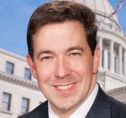
State Senator Chris McDaniel
Such a court challenge might be satisfying for people who think they were cheated out of a much anticipated victory. But would it be wise?
Consider the best possible outcome for McDaniel. It is exceedingly unlikely that a judge would just toss the result and hand the GOP nomination to McDaniel. A more possible (but not likely) scenario is that a judge throws out the primary result and orders the runoff to be rerun.
Assume, for the sake of argument, that McDaniel wins the third time around. He would be the nominee of a fiercely divided party. The atmosphere between his supporters and Cochran’s would be poisonous. The Democratic nominee, former U.S. Rep. Travis Childers, would be in the driver’s seat come November.
In that case, the Republican nomination would be a thing not worth having. And McDaniel would take the blame.
An even worse possible outcome for McDaniel would be to try to overturn the result and lose. Right now, he has political capital from being perceived as a wronged party. He still has a future in statewide politics. But if he drags Mississippi Republicans through a bitter fight, that capital vanishes.
History gives us two examples that are pertinent here.
In 1960, Richard Nixon narrowly lost the presidency under questionable circumstances. But he decided not to contest the results. Eight years later, he was president.
In 2000, Al Gore decided to put America through Florida recount hell, even though he knew he was unlikely to prevail. It was the end of his political career.
Nixonian behavior is not normally recommended. But there are times when the best thing to do in a bad situation is just walk away, no matter how unfair it might seem at the time.


