
Latest Posts
Latest Coverage
-
Symbolic solution in search of an actual problem
Support of 9 Southern Republicans for Respect for Marriage Act shows why Supreme Court isn’t about to ban same-sex marriage ♦By Rich Shumate, ChickenFriedPolitics.com editor…
-

West Virginia stubborn, or playing hard to get
U.S. Senator Joe Manchin pisses off his party yet again … to what end? ♦By Rich Shumate, ChickenFriedPolitics.com editor Also in this report: Atlanta DA…
-

2 Mississippi Republican U.S. House members forced into runoffs after weak primary showings
Michael Guest narrowly trails challenger in 3rd District; Steven Palazzo clears just 32% in 4th District ♦By Rich Shumate, ChickenFriedPolitics.com editor JACKSON, Mississippi (CFP) –…
-

Mississippi Republican U.S. Rep. Steven Palazzo facing Tuesday primary fight amid ethics investigation
6 opponents hitting “No-Show Palazzo” over inattention to district, ethics problems ♦By Rich Shumate, ChickenFriedPolitics.com editor GULFPORT (CFP) — Mississippi U.S. Rep. Steven Palazzo —…
-

Primary Wrap: Kemp, Raffensperger survive Trump’s ire; Brooks makes Alabama U.S. Senate runoff
Texas Democratic U.S. Rep. Henry Cuellar survives challenge from the left; George P. Bush gets blown out by Attorney General Ken Paxton ♦By Rich Shumate,…
-

U.S. House’s last pro-life Democrat, Texas’s Henry Cuellar, fighting to keep seat in Tuesday primary runoff
Challenger Jessica Cisneros wanted House Democratic leaders to rescind Cuellar endorsement; they refused ♦By Rich Shumate, ChickenFriedPolitics.com editor LAREDO, Texas (CFP) — Amid the newly…
Florida’s legislative leaders won’t appeal decision to strike down U.S. House map
Senate President Don Gaetz and House Speaker Will Weatherford ask judge to delay redrawing map until after November’s election
♦By Rich Shumate, Chickenfriedpolitics.com editor
 TALLAHASSEE, Florida (CFP) — Republican leaders in the Florida Legislature won’t appeal a judge’s ruling that the U.S. House map drawn in 2011 was unconstitutionally gerrymandered.
But Senate President Don Gaetz and House Speaker Will Weatherford are urging Leon County Circuit Judge Terry Lewis not to order the map redrawn until the end of the current election cycle, noting that ballots have already gone out to military and overseas voters for the August 26 primary.
“Any attempt to change the districts at this late stage of the 2014 elections process would cause chaos and confusion and would threaten the rights of our deployed military voters,” Gaetz and Weatherford said in a July 15 joint statement.
“It has been the practice in other states and in Florida to remedy maps at a future election so as not to disrupt and disenfranchise voters.”

Florida Circuit Judge Terry Lewis
In his July 10 order striking down the map, Lewis did not indicate when or how it might be redrawn. But attorneys for the plaintiffs who brought the suit, including the League of Women Voters, have said they wank the judge to change the map immediately.
The suit arose over two constitutional amendments Florida voters approved in 2010 designed to limit political gerrymandering. Under the new rules, districts cannot be drawn to benefit any political party and must be geographically compact.
However, the amendments left redistricting in the hands of legislators, rather than turning it over to an independent outside panel.
Lewis found two congressional maps — the 5th District and the 10th District — were drawn to benefit Republicans. While he rejected specific challenges to several other districts, bringing those two districts into compliance would likely trigger revisions across the state’s 27 districts.
Although Democrats are highly competitive in statewide races, Republicans hold a 17-10 majority in Florida’s congressional delegation under the map drawn by the GOP-controlled legislature.
Lewis was also highly critical of the behind-the-scenes role Republican political consultants played in drawing the map, which was supposed to be apolitical.
“They made a mockery of the legislature’s proclaimed transparent and open process of redistricting by doing all of this in the shadow of that process, utilizing the access it gave them to the decision makers, but going to great lengths to conceal from the public their plan and their participation in it,” Lewis said.
The 5th District, held by Democratic U.S. Rep Corrine Brown, is a majority black district that meanders from Jacksonville over to Gainesville and then down to Orlando. At one point, it is the width of a highway.
The 10th District, held by Republican U.S. Rep. Daniel Webster, is anchored in central Florida west of Orlando. But it has an appendage that wraps around Orlando to take in GOP voters to the east in Seminole County.
Legislative leaders have said they drew the districts to comply with the Voting Rights Act: Brown’s to create a majority black district and Webster’s to create a neighboring district in which Latino voters would have influence.
But Lewis ruled that a majority black district could have been drawn that was more compact and that putting those Republican voters in Webster’s district was unlikely to increase Latino influence.
Brown has joined with Republican leaders in defending the map,
“Minority communities do not live in compact, cookie-cutter like neighborhoods, and excessive adherence to district ‘compactness,’ while ignoring the maintenance of minority access districts, fragments minority communities across the state,” she said in a statement.
To comply with the Voting Rights Act, Republican legislators across the South have created legislative and congressional districts with black majorities, which, in order to capture as many black voters as possible, are often oddly shaped.
Because the black vote is overwhelmingly Democratic, adjacent districts have become more Republican. At the congressional level, this has meant that white Democrats have virtually disappeared, and the GOP dominates House delegations.
Florida’s 2010 constitutional amendments added a new wrinkle by forbidding both use of party considerations in redistricting and requiring geographic compactness, neither of which are required in other Southern states.
Chris McDaniel raises money for suit to overturn Mississippi GOP U.S. Senate runoff
McDaniel says his June 24 runoff loss to U.S. Senator Thad Cochran was a “sham” with “illegal voting” by Democrats
♦By Rich Shumate, Chickenfriedpolitics.com editor
 JACKSON, Mississippi (CFP) — In the clearest sign yet that State Senator Chris McDaniel isn’t going quietly into the political sunset, he has sent an email to supporters asking for money to pay for a lawsuit to overturn the results of Mississippi’s June 24 GOP runoff for U.S. Senate.
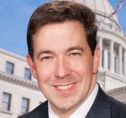
State Senator Chris McDaniel
“Thanks to illegal voting from liberal Democrats, my opponent stole last week’s runoff election, but I’m not going down without a fight,” McDaniel said.
“We’ve already found thousands of irregularities in the voting process. According to Mississippi state law, Democrats who voted in the Democratic primary cannot vote in the Republican runoff, and that is exactly what happened.”
McDaniel asked supporters to contribute at least $50 for what he described as a “long fight” to overturn the runoff.
After narrowly beating U.S. Senator Thad Cochran in the first found of primary voting on June 3, McDaniel lost to the veteran incumbent by about 6,700 votes in the runoff.
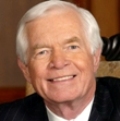
U.S. Senator Thad Cochran
Cochran’s campaign made direct appeals to Democratic and independent voters to support him in the runoff, which they were free to do if they hadn’t already voted in the Democratic primary.
The results of the second round of voting showed how well that strategy worked. About 67,000 more people voted in the runoff than in the primary, and in Hinds County — which includes the predominantly black city of Jackson — Cochran’s margin of victory was 11,000 votes, nearly double what it was in the first round.
The race in Mississippi pitted Cochran and the state’s Republican establishment against Tea Party activists and outside conservative groups — such as the Senate Conservatives Fund, FreedomWorks and the Club for Growth — that strongly backed McDaniel.
Outside groups on both sides poured millions in advertising into the Magnolia State, clogging its relatively inexpensive airwaves.
McDaniel and his conservative Tea Party supporters cried foul over Cochran’s cross-party strategy, and he has refused to concede defeat. A conservative watchdog group, True the Vote, has already filed a federal lawsuit to overturn the election.
In another bizarre twist in this bitter race, Mark Mayfield, a McDaniel supporter who was arrested during the campaign for his alleged role in videotaping Cochran’s invalid wife in her nursing home, committed suicide after McDaniel’s runoff loss.
Cochran is one of five sitting Southern GOP senators targeted for defeat by Tea Party activists and outside conservative groups. So far, Cochran and three other incumbents have survived, with one contest still to come in August in Tennessee.
If his runoff win holds up, Cochran will face Democratic former U.S. Rep. Travis Childers in the fall.
Thad Cochran survives Mississippi Senate runoff
In Oklahoma, U.S. Rep. James Lankford wins Republican nomination for open U.S. Senate seat
JACKSON, Mississippi (CFP) — Buoyed by an influx of support from Democratic and independent voters, U.S. Senator Thad Cochran has turned back a bitter GOP primary challenge in Mississippi, defeating State Senator Chris McDaniel.
U.S. Senator Thad Cochran
Cochran, 76, took 51 percent of the vote in the June 24 runoff, compared to 49 percent for McDaniel. The runoff was triggered when neither man captured a majority in the first round of voting June 3.
“We all have the right to be proud of our state tonight,” Cochran told his jubilant supporters. “Thank you for this wonderful honor and wonderful challenge that lies ahead.”
But a clearly unhappy McDaniel refused to concede, criticizing Cochran’s campaign for appealing to black and Democratic voters in order to win the primary and stay in office.
“There is something a bit unusual about a Republican primary that’s decided by liberal Democrats,” McDaniel said. “So much for principle.”
Cochran will now face former Democratic U.S. Rep. Travis Childers in November’s general election.
Meanwhile, in Oklahoma, U.S. Rep. James Lankford has captured the Republican nomination for the Sooner State’s open U.S. Senate seat, defeating former Oklahoma House Speaker T.W. Shannon.
Lankford took 57 percent of the vote, compared to 34 for Shannon, with five other Republican candidates trailing the front-runners.
Given Oklahoma’s pronounced Republican tendencies, Lankford will be the heavy favorite in November’s general election. The Democrats will decide an August 26 runoff between State Senator Connie Johnson from Oklahoma City and retired teacher Jim Rogers.
The Oklahoma seat opened up when U.S. Senator Tom Coburn announced he would retire at the end of this year due to health issues.
The race in Mississippi pitted Cochran and the state’s Republican establishment against Tea Party activists and outside conservative groups — such as the Senate Conservatives Fund, FreedomWorks and the Club for Growth — that strongly backed McDaniel.
Outside groups on both sides poured millions in advertising into the Magnolia State, clogging its relatively inexpensive airwaves.
After trailing McDaniel in the first round of voting, Cochran’s campaign began making appeals to Democratic and independent voters who did not vote in the GOP primary in the first round.
That is legal in Mississippi, as long as those voters didn’t already vote in the Democratic primary.
The results of the second round of voting showed how well that strategy worked. About 67,000 more people voted in the runoff than in the primary, and in Hinds County — which includes the predominantly black city of Jackson — Cochran’s margin of victory was 11,000 votes, nearly double what it was in the first round.
Cochran is one of five sitting Southern GOP senators targeted for defeat by outside conservative groups. So far, incumbents have survived primaries in Texas, Kentucky, South Carolina and Mississippi, with one contest still to come in August in Tennessee.
Cochran’s victory is bad news for Democrats, who were rooting for a McDaniel victory to have an outside shot at capturing a Senate seat in deeply Republican Mississippi.
Childers was elected to the U.S. House from Mississippi in 2008 but lost his seat in the Republican wave of 2010. He got into the race when it appreared Cochran might lose, which could have given Democrats an opening against a more conservative candidate running statewide for the first time.
In the closing days of the race, Cochran and his allies told voters that nominating McDaniel, an outspoken radio talk show host, was too risky.
The GOP Senate primary in Oklahoma came down to a battle between two of the party’s fastest rising stars.
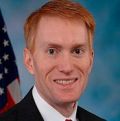
U.S. Rep. James Lankford
Lankford, 45, represents much of metro Oklahoma City in the House, In just his second term in Congress, he was elected head of the House Republican Policy Committee, the fifth highest position in the House GOP leadership.
That insider resume drew fire from some Tea Party and conservative groups who rallied around Shannon, 35, from Lawton, an African-American who is also an enrolled member of the Chickasaw Nation.
A one-time aide to former U.S. Rep. J.C. Watts, Shannon rocketed to prominence in state politics, becoming speaker just six years after being elected in 2006.
Analysis: Hillary Clinton’s coy routine isn’t fooling anybody
Clinton’s latent tsunami of publicity makes no sense if she isn’t running for president
♦By Rich Shumate, Chickenfriedpolitics.com editor
 Among the least attractive characteristics of the Clintons (both she and he) is what may be charitably described as their chronic disingenuousness.
To wit, they resort to spin and subterfuge that’s too clever by half, even when the truth would do them no harm. The meaning of ‘is’ always seems to depend on what the meaning of ‘is’ is, at any given moment in time. Just like her Arkansas accent comes and goes.
Which brings us to Hillary’s recent magical mystery tour, replete with an orgy of copious, self-serving publicity that would make a Kardashian blush. The centerpiece of this effort has been her repeated insistence, that, by gosh, she just hasn’t decided yet if she’s going to run for president.
But of course she’s running for president. Would Bonnie and Clyde walk by a bank without at least attempting to rob it? Of course not.
If she’s not running for president, her recent behavior makes absolutely no sense.
She doesn’t need to make money by hawking a book. After all, she and Bill now have more dough than they or Chelsea could spend in five lifetimes, no matter how many houses (note the plural) they buy.
She certainly doesn’t need a book tour to bolster her celebrity. And it’s rather doubtful that she has any realistic ambition to win a Pulitzer prize with her weighty tome.
So that brings us to the inevitable conclusion that all of this is but a prelude to 2016.
The Ready for Hillary crowd might say, so what? Why should she telegraph her intentions now and become a target for the vast right-wing conspiracy? As Hillary might put it (with a hearty thump on the desk), at this point, what difference does it make?
Well, for one thing, her coy routine isn’t going to keep her from being fired upon by conservatives. They’ve never stopped. However, what it does do is remind many voters how allergic the Clintons are to candor.
So six months or a year from now, when Hillary finally admits that, well, by golly, she is going to run for president after all, many people will realize that, once again, they have been taken in by Clintonian double-speak.
Of course, that last statement presupposes that anyone in America actually believes that Hillary Clinton isn’t running for president. Perhaps that depends on what the meaning of ‘isn’t’ is.
Meanwhile, refusing to admit what voters already know just reminds them that, for the Clintons, the truth is always a movable feast.
Louisiana U.S. Rep. Steve Scalise wins majority whip
Scalise is the only Southern member in the House GOP leadership
♦By Rich Shumate, Chickenfriedpolitics.editor
 WASHINGTON (CFP) — Republican U.S. Rep. Steve Scalise of Louisiana has been elected as House majority whip, making him the sole Southerner in the House GOP hierarchy.
Scalise, 48, who represents the Pelican State’s 1st District anchored in the New Orleans suburbs, defeated U.S. Reps. Peter Roskam of Illinois and Martin Stutzman of Indiana in the June 19 vote.

House Majority Whip-elect Steve Scalise
The final vote total wasn’t announced, but Scalise won a majority among the 233 House Republicans on the first ballot. He will take office August 1 as the No. 3 Republican in the House.
“I’m looking forward to bringing a fresh new voice to our leadership table and joining with this team to help confront the challenges that people all across this country are facing,” Scalise said after the vote.
“We’ve got solid conservative solutions that are going to solve the problems facing our country.”
Scalise’s ascension was made possible by the defeat of House Majority Leader Eric Cantor of Virginia in his June 10 GOP primary race.
Cantor resigned as majority leader, and the current majority whip, U.S. Rep. Kevin McCarthy of California, claimed Cantor’s spot, opening up the whip’s post for Scalise.
Despite the fact that nearly half of the 233 members of the House Republican caucus represent Southern states, Scalise is the only Southerner in the party’s leadership. Cantor had also been the only Southern leader.
Southerner members also hold nine of the 21 committee chairmanships in the House.
Scalise was elected to the House in 2008. He was previously a state legislator in Louisiana.


