
Latest Posts
Latest Coverage
-
Symbolic solution in search of an actual problem
Support of 9 Southern Republicans for Respect for Marriage Act shows why Supreme Court isn’t about to ban same-sex marriage ♦By Rich Shumate, ChickenFriedPolitics.com editor…
-

West Virginia stubborn, or playing hard to get
U.S. Senator Joe Manchin pisses off his party yet again … to what end? ♦By Rich Shumate, ChickenFriedPolitics.com editor Also in this report: Atlanta DA…
-

2 Mississippi Republican U.S. House members forced into runoffs after weak primary showings
Michael Guest narrowly trails challenger in 3rd District; Steven Palazzo clears just 32% in 4th District ♦By Rich Shumate, ChickenFriedPolitics.com editor JACKSON, Mississippi (CFP) –…
-

Mississippi Republican U.S. Rep. Steven Palazzo facing Tuesday primary fight amid ethics investigation
6 opponents hitting “No-Show Palazzo” over inattention to district, ethics problems ♦By Rich Shumate, ChickenFriedPolitics.com editor GULFPORT (CFP) — Mississippi U.S. Rep. Steven Palazzo —…
-

Primary Wrap: Kemp, Raffensperger survive Trump’s ire; Brooks makes Alabama U.S. Senate runoff
Texas Democratic U.S. Rep. Henry Cuellar survives challenge from the left; George P. Bush gets blown out by Attorney General Ken Paxton ♦By Rich Shumate,…
-

U.S. House’s last pro-life Democrat, Texas’s Henry Cuellar, fighting to keep seat in Tuesday primary runoff
Challenger Jessica Cisneros wanted House Democratic leaders to rescind Cuellar endorsement; they refused ♦By Rich Shumate, ChickenFriedPolitics.com editor LAREDO, Texas (CFP) — Amid the newly…

Former South Carolina U.S. Rep. Joe Cunningham running for governor
Lowcountry Democrat lost his U.S. House re-election bid in 2020
♦By Rich Shumate, ChickenFriedPolitics.com editor
 CHARLESTON, South Carolina (CFP) — Former Democratic U.S. Rep. Joe Cunningham officially launched his 2022 campaign for governor on April 26 with a broadside against the Republican establishment that has reigned supreme in Columbia for two decades.
“The challenges that we face are not because of our people. They’re because of our politicians,” Cunningham said in a video launching his campaign. “After 20 years of trying the same thing, it’s time for something different.”
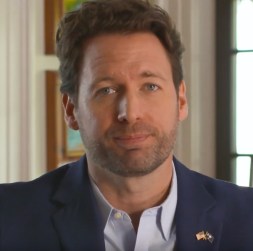
Democrat Joe Cunningham announces run for governor
Cunningham hit State House Republicans and incumbent Republican Governor Henry McMaster for focusing on new abortion and voting restrictions and loosening gun laws as residents struggled to cope with the COVID-19 pandemic.
“Governor McMaster has been cheering them on, every step of the way,” Cunningham said. “It’s embarrassing.”
And although a Democrat hasn’t won a governor’s race in the Palmetto State since 1998, Cunningham pointed to his own 2018 U.S. House win as evidence that his campaign is not a lost cause.
“To those who say a Democrat can’t win in South Carolina, well, we’ve heard that before,” he said.
Cunningham, 38, a Charleston lawyer, shocked the political world in 2018 with his win in the state’s 1st District, part of a Democratic wave that swept the party to House control.
However, he could not hold the seat in 2020, losing to Republican Nancy Mace despite raising and spending more than $7 million for the race.
With his name recognition and fundraising prowess, Cunningham will be the prohibitive favorite for the Democratic nomination to face McMaster, who will be running for his second full term as chief executive.
News of Cunningham’s candidacy drew some praise from Republican U.S. Senator Lindsey Graham, who told The State newspaper that Cunningham would be “a formidable opponent.”
However, he also noted that his own re-election race in 2020 — where he won by 10 points despite $100 million in spending against him — shows that South Carolina is “still a pretty Republican state.”
Video of Cunningham’s announcement:
We tweet @ChkFriPolitics Join us!

Former Georgia U.S. Rep. Doug Collins won’t seek statewide office in 2022
Republican passes on primary challenge to Governor Brian Kemp encouraged by Donald Trump
♦By Rich Shumate, ChickenFriedPolitics.com editor
 ATLANTA (CFP) — Former Georgia Republican U.S. Rep. Doug Collins has announced he won’t seek any statewide office in 2022, deciding to forgo a primary challenge to Governor Brian Kemp or a race against Democratic U.S. Senator Raphael Warnock.
In an announcement on Twitter, Collins said he planned to stay active in politics but gave no details of his future plans.

Doug Collins
“For those who may wonder, this is goodbye for now, but probably not forever,” he said. “I do plan on staying involved in shaping our conservative message to help Republicans win back the House and the Senate and help more strong conservative candidates get elected here in Georgia.”
Collins, 54, from Gainesville, was elected to represent Georgia’s 9th U.S. House District in 2012 but gave up the seat to run in a special election for a vacant U.S. Senate seat in 2020. He finished third in an all-party contest, which Warnock won in a runoff.
After the 2020 election, Donald Trump, unhappy that Kemp wasn’t doing more to help him overturn his election loss in Georgia, publicly urged Collins to challenge Kemp in this year’s GOP primary.
Collins — one of Trump’s staunchest defenders in the House — could have posed a threat to Kemp with Trump behind him, which has now been removed with his decision not to run.
Kemp has so far drawn only one significant Republican challenger — Vernon Jones, a former Democrat who served as chief executive of DeKalb County before switching parties to support Trump in 2020.
Collins is the second major Republican to take a pass on the Senate race against Warnock, joining former U.S. Senator David Perdue.
We tweet @ChkFriPolitics Join us!

New Census figures show 5-seat shift in Southern U.S. House districts
Texas, Florida and North Carolina gain seats; West Virginia loses a seat
♦By Rich Shumate, ChickenFriedPolitics.com editor
 WASHINGTON (CFP) — The U.S. Census Bureau released population totals for reapportionment of U.S. House seats Monday that will alter the size of delegations in four Southern states.
Fast-growing Texas will be the biggest winner, gaining two seats to take its delegation to 38 members. Florida will get one new seat to go to 28, and North Carolina will gain one seat to go to 14.
However, West Virginia will lose one of its three seats, which could force Republican incumbents to run against each other in newly configured, larger districts.
West Virginia’s new delegation will be its smallest in history. The Mountaineer State has had at least three members of Congress since it entered the Union in 1863 and had as many as six in the 1950s.
Alabama dodged a bullet, keeping all of its seven seats. Some projections prior to release of the final numbers had shown the Yellowhammer State losing a seat.
Georgia will also not gain a seat for the first time in 40 years.
The new numbers will set off a legislative scramble in all four states, as new lines will have to be drawn.
Republicans will be in total control of redrawing lines in all four states. While North Carolina has a Democratic governor, Roy Cooper, state law doesn’t give him authority to veto reapportionment bills.
However, Texas and North Carolina are covered by the Voting Rights Act, which requires them to preserve electoral opportunities for minority candidates. In addition, a constitutional amendment passed in Florida in 2010 outlaws gerrymandering lines based on political considerations.
Legislators in West Virginia will have to decide which of the state’s three GOP House members — David McKinley, Carol Miller and Alex Mooney — to draw into the same district. As there are no statewide or Senate races in 2022, House members may be left with the option of competing in a primary or bowing out of Congress.
In Texas, due to demographic trends, Republican legislators may have to draw at least one majority Latino district, likely to be Democratic, in order to comply with the Voting Rights Act. But they could try to maximize Republican chances across the rest of the map, including helping out incumbents who survived Democratic challenges in 2018 and 2020.
No matter now the lines are drawn, litigation is likely in Texas, Florida and North Carolina, states where maps drawn after the 2010 Census were subject to lengthy court fights that resulted in court-ordered map redraws in all three states.
While Virginia is not gaining or losing a seat, its lines could also be substantially redrawn by a new independent commission. The maps after 2010 were drawn by Republicans, who have since lost control of the legislature and governorship, and then later redrawn by a federal court after a legal fight.
The Democrat-controlled Virginia legislature implemented an independent redistricting commission earlier this year.
Also, in Georgia, Republicans may redraw the map in metro Atlanta to target two Democratic incumbents — Lucy McBath and Carolyn Bourdeaux — by combining Democratic areas currently in both of their districts into a single district, which could force one of them out of Congress.
We tweet @ChkFriPolitics Join us!

Democratic State Senator Troy Carter wins open Louisiana U.S. House seat
Carter defeats fellow State Senator Karen Carter-Peterson in 2nd District runoff
♦By Rich Shumate, ChickenFriedPolitics.com editor
 NEW ORLEANS (CFP) — The Democratic establishment has claimed another victory in its ongoing battle with progressive insurgents, with Louisiana State Senator Troy Carter winning an intra-party runoff Saturday to claim the 2nd U.S. House District seat.
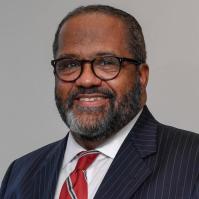
U.S. Rep.-elect Troy Carter, D-Louisiana
Carter won 55 percent of the vote to 45 percent for State Senator Karen Carter-Peterson. He will replace Cedric Richmond, who resigned to take a job as the White House public engagement director in the Biden administration.
“We’ve had a long, hard-fought campaign, and God has blessed us with a victory,” Carter said in a victory address to supporters after the vote. “Your voice was heard at the ballot box, and now I want to go to Washington to be your voice.”
Carter, who led in the first round of voting in April, was endorsed by Richmond and also had support from much of the Democratic establishment and major unions.
Carter-Peterson had support from the Congressional Progressive Caucus and from liberal grassroots group such as Democracy for America and Our Revolution, a group spun out of Bernie Sanders’s 2016 presidential campaign.
Carter-Peterson was trying to become the first black woman ever elected to Congress from the Pelican State.
The majority black 2nd District includes most of New Orleans and part of Baton Rouge, along with the River Parishes between the two cities.
Carter-Peterson carried the parts of the district in and around Baton Rouge, but Carter beat her in the two largest parishes, Orleans and Jefferson.
His win will expand the Democratic majority in the House from two to three seats, with three Democratic-leaning seats also vacant in Florida, New Mexico and Ohio. Two Republican-held seats are open in Texas and Ohio.

 Chicken Fried Politics