
Latest Posts
Latest Coverage
-
Symbolic solution in search of an actual problem
Support of 9 Southern Republicans for Respect for Marriage Act shows why Supreme Court isn’t about to ban same-sex marriage ♦By Rich Shumate, ChickenFriedPolitics.com editor…
-

West Virginia stubborn, or playing hard to get
U.S. Senator Joe Manchin pisses off his party yet again … to what end? ♦By Rich Shumate, ChickenFriedPolitics.com editor Also in this report: Atlanta DA…
-
2 Mississippi Republican U.S. House members forced into runoffs after weak primary showings
Michael Guest narrowly trails challenger in 3rd District; Steven Palazzo clears just 32% in 4th District ♦By Rich Shumate, ChickenFriedPolitics.com editor JACKSON, Mississippi (CFP) –…
-
Mississippi Republican U.S. Rep. Steven Palazzo facing Tuesday primary fight amid ethics investigation
6 opponents hitting “No-Show Palazzo” over inattention to district, ethics problems ♦By Rich Shumate, ChickenFriedPolitics.com editor GULFPORT (CFP) — Mississippi U.S. Rep. Steven Palazzo —…
-

Primary Wrap: Kemp, Raffensperger survive Trump’s ire; Brooks makes Alabama U.S. Senate runoff
Texas Democratic U.S. Rep. Henry Cuellar survives challenge from the left; George P. Bush gets blown out by Attorney General Ken Paxton ♦By Rich Shumate,…
-
U.S. House’s last pro-life Democrat, Texas’s Henry Cuellar, fighting to keep seat in Tuesday primary runoff
Challenger Jessica Cisneros wanted House Democratic leaders to rescind Cuellar endorsement; they refused ♦By Rich Shumate, ChickenFriedPolitics.com editor LAREDO, Texas (CFP) — Amid the newly…
North Carolina legislators pass compromise ending trangendered bathroom ban
But compromise measure prevents cities from passing protections for LGBTQ people
♦By Rich Shumate, Chickenfriedpolitics.com editor
 RALEIGH (CFP) — After a year of turmoil and economic boycotts, North Carolina legislators have passed a compromise bill that rolls back HB2, a law which prohibited transgendered people from using restrooms in public facilities that didn’t conform with their their birth gender.
However, the bill hammered out by Democratic Governor Roy Cooper and leaders of the Republican-controlled legislature also forbids local jurisdictions in North Carolina from passing non-discrimination ordinances protecting LGBTQ people until at least 2020, a compromise that left LGBTQ advocates seething.
“Lawmakers and Governor Cooper have failed to resolve the problems with HB2 by doubling down on discrimination,” said Chris Sgro executive director of Equality NC. “Once again, the North Carolina General Assembly has enshrined discrimination into North Carolina law.”
“Lawmakers must reject this disgraceful backroom deal that uses the rights of LGBT people as a bargaining chip,” said Sarah Gillooly, policy director for the ACLU of North Carolina. “It is shameful that legislative leaders and North Carolina’s governor are once again rushing through a discriminatory anti-LGBT measure without proper vetting or an opportunity for public input.”
The bill to repeal HB 2 passed March 30, less than 12 hours after the compromise between Cooper and legislative leaders was unveiled. The House approved the repeal 70 to 48; the Senate, 32 to 16.
Cooper, who as attorney general refused to defend HB2 when it was challenged in court, campaigned for governor in 2016 on a pledge to repeal the law. Just a week before the compromise was reached, Equality NC was lauding Cooper for insisting on full repeal.
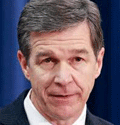
Attorney General Roy Cooper
In a statement issued after the repeal bill was unveiled, the governor conceded that it was a compromise from the outright repeal initially sought.
“It’s not a perfect deal, but it repeals House Bill 2 and begins to repair our reputation,” Cooper said.
The compromise bill was passed the same day that the NCAA was to decide whether to remove all of its events from North Carolina until 2022 in protest of the transgendered bathroom exclusion.
HB2 was pushed through the GOP-controlled legislature in March 2016 in reaction to the decision by the Charlotte City Council to pass a human rights ordinance protecting LGBTQ people, which included the right of transgendered people to use restrooms and locker rooms that comport with their gender identity, rather than their birth gender.
The new law set off a firestorm of controversy. The NBA, ACC and NCAA all pulled events from the state, and a number of businesses halted plans to relocate or expand there.
The governor at the time, Republican Pat McCrory, bore the brunt of the nationwide backlash to the law. Last November, he was the only Republican governor to lose his seat, in a campaign dominated by the HB2 controversy.
Under the repeal measure, local jurisdictions would no longer be able to regulate use of bathroom facilities in public buildings, as Charlotte tried to do. Only the legislature could enact such regulations, but, after repeal of HB 2, no regulations currently exist. In essence, while transgendered people would not specifically be barred from using facilities that comport with their gender identity, they would also not have a legal right to do so.
However, the second part of the repeal bill prevents Charlotte or any other jurisdiction in North Carolina from passing LGBTQ anti-discrimination measure for the next three years.
Impeachment hearings set for Alabama Governor Robert Bentley
State House Judiciary Committee will hear testimony starting April 10
♦By Rich Shumate, Chickenfriedpolitics.com editor
 MONTGOMERY (CFP) — Alabama’s House Judiciary Committee will begin taking testimony on April 10 concerning possible impeachment proceedings against Governor Robert Bentley over his relationship with a female subordinate.

Alabama Governor Robert Bentley
The schedule for the hearings was disclosed in a letter sent to Bentley’s attorneys by Jack Sharman, the special counsel hired by the committee to investigate allegations that Bentley may have misused state resources to carry on an extramarital affair with aide Rebekah Mason, which both of them have denied.
Sharman said he will issue a report with findings from his investigation on Friday, April 7, and hearings before the committee will begin the following Monday. However, he said that schedule could slip if Bentley files a lawsuit over the proceedings, which the governor’s attorneys have indicated is possible.
Bentley’s attorneys, Ross Garber and David Byrne, pushed back on the process in a strongly worded letter to Sharman, complaining that his proposal for hearings exceeded the authority granted to him by the committee.
They also complained that Sharman’s proposed timetable would deprive the governor of due process by giving him only three days to prepare a defense after receiving the investigative report.
Sharman said Bentley, who has refused the committee’s request to submit to an interview under oath, would be able to testify in front of the committee. However, if he does, his testimony could be used against him in any future criminal proceedings.
Bentley’s relationship with Mason is already the subject of investigations by the state attorney general’s office, a federal grand jury and the Alabama Ethics Commission. He is also being sued by Spencer Collier, the former head of Alabama Law Enforcement Agency, who went public with allegations about Bentley’s affair with Mason after the governor fired him.
In March 2016, an audio recording surfaced in which the governor can be heard expressing “love” to an unidentified party in a telephone conversation and talking about how much he enjoys touching her breasts.
Collier identified Bentley’s paramour as Mason, alleging the two had an ongoing sexual relationship and that he warned the governor that he would be breaking the law if he was used state resources to carry on an affair.
Bentley denied having a sexual relationship with Mason, but he apologized to the people of Alabama for making “inappropriate” comments. Mason also denied the affair but resigned from Bentley’s staff shortly after the allegations became public.
Just who made the recording isn’t clear, but, according to Collier, an unidentified member of Bentley’s own family provided it to ALEA officials in August 2014. In 2015, Bentley, 74, and his wife of 50 years, Dianne, divorced. He has declined to say whether his inappropriate conduct played a role.
Collier claimed that he was fired by the governor because he refused to mislead the state attorney general’s office about an investigation related to a political ally, a charge Bentley denied.
During her time in the governor’s office, Mason was, by Bentley’s own description, one of his top aides. However, she was not a state employee, and her salary was paid by the Alabama Council for Excellent Government, a 501(c)(4) group with ties to Bentley.
Collier said Mason exhibited a svengali-like influence over Bentley that made her the “de facto governor.” He said he had received complaints about Mason from other law enforcement officials, as well as members of Bentley’s cabinet and members of his family.
If the Judiciary Committee approves articles of impeachment, the matter would go to the full House. If the House votes to impeach Bentley, he would be temporarily suspended from office pending trial in the Senate, and a conviction in the Senate would result in his removal from office.
No Alabama governor has ever been impeached, although the Yellowhammer State is no stranger to gubernatorial misdeeds.
In 1993 Republican Governor Guy Hunt resigned under pressure after he was convicted for looting his inaugural fund to pay personal expenses. Former Democratic Governor Don Siegelman also served five years in prison after being convicted of trading government favors for campaign contributions while he was governor.
Bentley, elected in 2010, is serving his second term. He is term-limited from seeking re-election in 2018.
Oklahoma U.S. Rep. Tom Cole: Trump owes Obama an apology
Oklahoma Republican calls Trump’s wiretap charge against Obama “reckless”
 WASHINGTON (CFP) — Donald Trump may have carried U.S. Rep. Tom Cole’s district by 38 points in November, but the Oklahoma Republican is mincing no words in calling for Trump to apologize to former President Barack Obama over claims that Obama wiretapped Trump Tower during the presidential campaign.
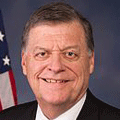
U.S. Rep. Tom Cole, R-Oklahoma
Speaking to reporters in the Capitol March 17, Cole said there is “no indication” that Trump’s allegation against Obama is true.
“It’s not a charge I would ever have made. And frankly, unless you can produce some pretty compelling proof, then I think … President Obama is owed an apology,” said Cole.
“If (Obama) didn’t do it, we shouldn’t be reckless in accusations that he did.”
In a March 4 tweet, Trump claimed that Obama has his “wires tapped” in Trump Tower, his New York home. He followed that up with additional tweets comparing Obama’s conduct to the Watergate scandal that brought down Richard Nixon in 1974.
Trump has so far offered no evidence to back that claim, but he has not retracted it. Leaders of the House and Senate intelligence committees from both parties have said the claim is unsubstantiated. Obama administration officials have also said the claim has no merit.
While other Republican leaders have distanced themselves from Trump’s wiretapping claim, none of them have gone as far as Cole in calling for an apology.
Cole has a place in the GOP leadership as a deputy whip to House Majority Whip Steve Scalise of Louisiana. From 2006 to 2008, he served as chair of the National Republican Congressional Committee, the party’s House campaign arm.
Cole, from Moore, represents Oklahoma’s 4th District, which stretches from the southern Oklahoma City suburbs south to the Texas border. He has held the seat since 2003.
A college history professor before entering politics, Cole, a member of the Chickasaw Nation, is one of only two Native Americans currently serving in Congress. The other is U.S. Rep. Markwayne Mullin, a Republican who represents Oklahoma’s 2nd District.
In the 2016 election, Trump carried 66 percent of the vote in the 4th District, to just 28 percent for Democrat Hillary Clinton.
Florida U.S. Rep. Ileana Ros-Lehtinen breaks ranks with GOP leaders on health care bill
Florida congresswoman says Obamacare replacement would leave too many of her constituents uninsured
♦By Rich Shumate, Chickenfriedpolitics.com editor
 MIAMI (CFP) — U.S. Rep. Ileana Ros-Lehtinen has become the first House Republican to break ranks with her party’s leadership to oppose a new plan to repeal and replace Obamacare.
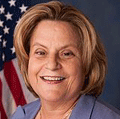
U.S. Rep. Ileana Ros-Lehtinen, R-Fla.
R0s-Lehtinen, who represents the 27th District in Miami-Dade County, announced her decision to oppose the bill March 14 on her Twitter feed:
“I plan to vote NO on the current ACHA bill. As written the plan leaves too many from my SoFla district uninsured. As AHCA stands, it will cut much needed help for SoFla’s poor (and) elderly populations. Need a plan that will do more to protect them.”
ACHA stands for the American Health Care Act, which is the formal name of the GOP bill.
In a subsequent statement, Ros-Lehtinen said that after studying the bill and hearing from her constituents, she concluded “too many of my constituents will lose insurance and there will be less funds to help the poor and elderly with their health care.” However, she made it clear that she would support changes in the existing Affordable Care Act, commonly known as Obamacare.
“I voted to repeal Obamacare many times because it was not the right fix for our broken healthcare system and did not live up to its promise to the American people, but this plan is not the replacement South Florida needs,” she said. “We should work together to write a bipartisan bill that works for our community and our nation without hurting the elderly and disadvantaged among us.”
Democrats have not participated in crafting the Republican health care replacement bill, being pushed by House Speaker Paul Ryan. The plan has also run into opposition from his own caucus, both from more conservative members who feel it keeps too many features of Obamacare and more moderate members who fear its impact on Americans who have managed to gain coverage under the existing plan.
Ros-Lehtinen falls into the latter category. She is also one of only six Southern Republicans who represent a House district that Democrat Hillary Clinton carried in the presidential election last year.
Clinton carried the district by nearly 20 points, her largest margin of victory in any Southern GOP-held district. The majority-Latino district is anchored by Miami’s Cuban-American community.
Ros-Lehtinen became the first Cuban-American to serve in Congress when she was elected in 1989. She has broken with her party leadership in the past, most notably in her support for same-sex marriage.
Analysis: Results in Confederate namesake counties show role of race in Democratic decline
Trump accelerates Republican shift in counties named for Jefferson Davis and Robert E. Lee
♦By Rich Shumate, Chickenfriedpolitics.com editor
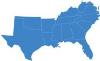 (CFP) — Jefferson Davis and Robert E. Lee loom large as icons of the Southern Confederacy, so much so that 11 Southern counties and one Louisiana parish bear their names. But if these lions of the South are aware of what is happening in their namesake counties today, they may be rotating in their graves.
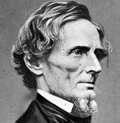
Confederate President Jefferson Davis
Changes in presidential voting in these counties over the past 40 years illustrate just how far the Black Republicans against which Lee and Davis fought are now transcendent—and the alarming (for Democrats) degree to which white Southerners have forsaken their traditional political roots.
Of course, the South’s march toward the GOP is not news. Today, the term “Solid South” has an entirely different connotation than it did during the days of FDR or Lyndon Johnson. However, these namesake counties do provide a window into how these shifts in party preference have occurred over time and the role that race played in them.
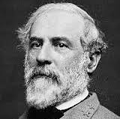
Confederate General Robert E. Lee
The 2016 presidential results also show that the Republicanization of the South is accelerating in these counties that bear the mark of Southern heritage, which bodes ill for future Democratic prospects.
In 1976, when Democrat Jimmy Carter became the first Southerner to win the White House since Zachary Taylor in 1848, he carried nine of the 12 Davis and Lee counties. By 1992, Bill Clinton and George H.W. Bush were splitting them six-to-six.
By 2000, Republican George W. Bush had flipped nine of the 12 namesake counties his way; his average share of the total votes cast for the two major party candidates in those counties that year was an impressive 64 percent. But in 2016, Trump trumped the younger Bush, carrying those same nine counties with an average of 70 percent of the two-party vote.
In 1976, Republican President Gerald Ford’s share of the two-party vote topped 50 percent in just three namesake counties (in Florida, Alabama, and Kentucky). But by 2016, Trump’s share of the two-party vote was more than 50 percent in nine counties and parishes; above 60 percent in eight; above 70 percent in four; and above a whopping 80 percent in two (Georgia and Kentucky).
The most dramatic changes were in Jeff Davis County, Georgia, where native Georgian Carter carried 79 percent of the vote in 1976 and Trump won 81 percent in 2016, and Jefferson Davis Parish, Louisiana, where Carter won 62 percent and Trump 75 percent. However, even in majority black Lee County, Arkansas, Trump’s 16-point loss in 2016 was less than half of Ford’s 38-point defeat.
In addition to Lee County, Arkansas, the only namesake counties Trump lost in 2016 were Jefferson Davis County, Mississippi, and Lee County, South Carolina, which are also majority black. However, even in these three counties, Trump carried a larger share of the two-party vote in 2016 than Mitt Romney did in 2012.
In fact, Trump improved on Romney’s result in 11 of the 12 namesake counties, save only Jeff Davis County, Texas, where Trump had to settle for merely matching Romney’s total.
The results in these namesake counties over time also illustrate the role race has played in the political realignment of the South.
In all seven of the overwhelmingly white namesake counties, the Republican share of the two-party vote was higher in 2016 than in 1976, by an average of 29 percent. Trump did better than Romney by an average of 4 percent.
By contrast, in majority-black Lee counties in Mississippi and South Carolina, the Republican two-party share fell by an average 2.5 percent from 1976 to 2016, but Trump outperformed Romney by the same 2.5 percent. These results indicate that the white Southern shift to the Republicans appears stronger than the corresponding black shift to the Democrats.
This is borne out by the results in Lee County, Arkansas, which has the smallest African-American population of any of the majority-black namesake counties (55 percent). There, the Republican share of the two-party vote actually climbed 11 percent between 1976 and 2016, and Trump beat Romney’s total by 5 percent.
Two of the namesake counties—Lee County, Florida, and Jeff Davis County, Texas—are outliers in that they have significant Latino populations. The Republican share of the two-party vote in both of those counties was higher in 2016 than it was in 1976, but Trump’s results were down from the numbers put up in 2000 and 2004 by George W. Bush, who, for a Republican, ran strongly with Latino voters.
The results in the namesake counties also illustrate the mountain which Democrats need to climb if they are to reduce Republican hegemony in the South.
The Democratic base once included small towns and rural areas across the Southern landscape, as well as urban areas. In 2016, Democrats still held the cities (with newfound and welcome signs of life in suburban Atlanta and Houston) and the mostly small rural counties with majority black populations, such as the namesake counties in Arkansas, Mississippi and South Carolina. Democrats also do well in college towns such as Athens, Georgia, and Gainesville, Florida.
But Democrats’ failure to compete for the votes of small town and rural white voters is what is killing them electorally, as the results in the Davis and Lee namesake counties without black majorities vividly illustrates.
Only one of these namesake counties is urban—Lee County, Florida, which includes Fort Myers—and Lee County, Alabama, contains Auburn University. The rest of these counties and parishes are all rural, white areas where Messrs. Davis and Lee are no doubt remembered fondly and Jimmy Carter ran reasonably well—and where Hillary Clinton couldn’t get elected dog catcher if she handed out $20 bills at the polling booth.
As a barometer of the past, these namesake counties illustrate how far Democrats have fallen in their former strongholds. But if Trump’s improved results over Romney’s are a barometer of the future, the bottom may not yet have been reached.


