
Home » Posts tagged 'David Perdue' (Page 3)
Tag Archives: David Perdue


Decision 2020: Has Georgia finally arrived at a political tipping point?
Democrats are in contention in presidential, U.S. Senate races, poised to pick up another U.S. House seat
♦By Rich Shumate, ChickenFriedPolitics.com editor
 ATLANTA (CFP) — When the smoke clears from the 2020 election, a whole new political day may have dawned in Georgia.
Democrats appear ready to capture another U.S. House seat, which would give them six out of 14 seats in the state delegation, nearly at parity with Republicans. They also have a shot at both U.S. Senate seats and an outside chance of capturing a majority in the Georgia House.
And, in perhaps the biggest surprise of all, Joe Biden could become the first Democrat to carry the Peach State in 28 years.
That’s a best case, rosy scenario for the Democrats, one which Republicans would no doubt dismiss as wishful thinking. But even if this optimistic scenario doesn’t all pan out, 2020 is likely to go down as the best year state Democrats have had since they suffered a collapse in 2002, losing the governorship and control of the legislature after a decade in which they had lost their grip on the state’s federal offices.
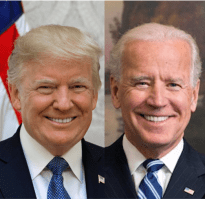
Trump, Biden neck-and-neck in Georgia polls
In 2016, Donald Trump carried Georgia by 5 points–enough to get the state’s 16 electoral votes but the weakest showing by a Republican since Bob Dole in 1996. The biggest shock in that race was Hillary Clinton carried both Cobb and Gwinnett counties, which had for decades been impenetrable Republican redoubts in the Atlanta suburbs.
These suburbs, which continued to swing toward the Democrats in the 2018 midterm elections, are key in the presidential race. Trump should get a sizable win in rural areas and small towns; Biden will easily carry the urban cores of the Atlanta and the state’s other cities; so the suburbs will be where this contest is won or lost.
Polls now show the race between Biden and Trump within the margin of error. The biggest sign the state is truly competitive: Both Trump and Biden are making October campaign stops in Georgia, which rarely gets a glimpse of presidential candidates outside of the primary season.
U.S. Senate
Because of the retirement of Republican Johnny Isakson at the end of last year, both of Georgia’s U.S. Senate seats are up this year. Republican David Perdue is seeking a second term, and Republican while Kelly Loeffler, a wealthy Atlanta businesswoman and political newcomer appointed to fill Isakson’s seat by Governor Brian Kemp, will try to keep it in an all-party special election.
Perdue is facing Democrat Jon Ossoff, who rose to national prominence in an expensive but ultimately unsuccessful U.S. House race shortly after Trump’s election. At the beginning of the race, Perdue wasn’t thought to be in much trouble, but Ossoff has closed the gap, with polls showing the race within the margin of error.
A major source of contention in the race has been the coronavirus epidemic, with Ossoff hitting Perdue for downplaying the severity of the disease during the early days of the pandemic and voting to dismantle Obamacare, which Ossoff says has provided a lifeline to virus victims.
Perdue has hit Ossoff over his fundraising from out-of-state sources, charging that Ossoff’s contributors support a “radical socialist agenda” that he would pursue as a senator.
Ossoff has raised nearly $33 million, much of it in small dollar online contributions from Democratic donors across the country. Perdue has raised about $21 million.
Because of a quirk in Georgia law, if neither Perdue or Ossoff break 50%, they will face each other in a January runoff, which could happen if a Libertarian candidate also in the race draws off enough support.
In the special election, 20 candidates are running, and polls show three are competing for spots in a January runoff: Loeffler; Republican U.S. Rep. Doug Collins from Gainesville, who has been trying to run at Loeffler from the right; and Democrat Raphael Warnock, the senior pastor at Atlanta’s Ebenezer Baptist Church, a pulpit once held by Martin Luther King Jr.
Warnock has surged to the front in the latest polls, consolidating Democratic support with an ad blitz. Loeffler and Collins are running neck-and-neck for the second spot, in a race that has divided state Republicans into two camps.
Collins, one of Trump’s most vocal defenders during last year’s impeachment fight, decided to challenge Loeffler after Kemp passed him over for the Senate appointment. But he has so far not gotten the president’s endorsement, and Loeffler has been battling him for supremacy on the right by firmly embracing Trump and taking conservative stands on social issues.
One key metric to look at on election night will be whether the Republicans in the race collectively attract more votes overall that the Democrats, which could be a sign of things to come in the runoff.
Warnock has raised the most money, at $22 million, but Loeffer has more money to spend, after tapping her considerable personal fortune for $23 million in loans. Collins trails at $6 million.
Depending on results in other states, control of the U.S. Senate could hinge on two runoff elections in Georgia in January — a circumstance that would attract massive amounts of money and national attention to the Peach State.
U.S. House
The focus in the U.S. House races with be the 6th District, in Atlanta’s near northwest suburbs, and the 7th District, in the near northeast suburbs.
Two years ago, Democrat Lucy McBath flipped the 6th District seat, defeating Republican Karen Handel, Handel is back for a rematch, but McBath — like other freshmen Democrats defending seats in districts Trump won in 2016 — has raised a mountain of money, nearly $8 million, to less than $3 million for Handel
Trump won this district by less than 2 points in 2020. Demographic changes, including more minority voters, are also contributing to its shift from red to purple, and most election handicappers are giving McBath the edge.
Handel will need a strong margin from East Cobb and North Fulton counties to offset McBath’s strength in more diverse areas such as Sandy Springs and Doraville.
In the 7th District, Democrat Carolyn Bourdeaux, who lost this race by just 400 voters in 2018, is back for another try, facing Republican Rich McCormick, a physican and retired Marine pilot. (The Republican incumbent, Rob Woodall, retired.) Bourdeaux also enjoys a fundraising advantage, $4.7 million to $2.4 million.
The largest population center in this district is Gwinnett County, where Democrats have been winning legislative seats and county offices in recent years. White voters are also now a minority here, which should help Bourdeaux.
If both McBath and Bourdeaux win, the Georgia delegation will be split 8R and 6D, closer than it has been since 1994.
State Legislature
In the battle for the state House, Democrats need to pick up 15 seats in the 180-member House to gain control, after picking up 11 seats in 2018. The party is targeting seats in the Atlanta suburbs, where Democrats have been making gains in recent years, although it is unclear if enough flippable seats remain to get to 15.
Democrats would need to pick up eight seats in the 56-member Senate to take control, which is considered much less likely.
We tweet @ChkFriPolitics Join us!

Racist? Georgia U.S. Senator David Perdue under fire for mocking Kamala Harris
Perdue mispronounces first name of Democratic vice presidential nominee
♦By Rich Shumate, ChickenFriedPolitics.com editor
 MACON, Georgia (CFP) — In the middle of a close re-election race, Georgia Republican U.S. Senator David Perdue is under fire for mispronouncing the name of Democratic vice presidential nominee Kamala Harris during a rally with President Donald Trump Friday in Macon.
“KA-ma-la or Ka-MA-la? Ka-MA-la-ma-la-ma-la? I don’t know. Whatever,” Perdue told the crowd of cheering Trump supporters, creating a video that has since gone viral–and drawn rebukes from critics who are calling the mispronunciation deliberate and racist.
Video at end of story
“Senator Perdue never would have done this to a male colleague. Or a white colleague,” his Democratic challenger Jon Ossoff said on Twitter. “And everyone knows it.”
Harris is the first woman of color, and only the third woman, on a presidential ticket.

U.S. Senator David Perdue, R-Georgia, speaks at Trump rally (YouTube)
Perdue has served alongside Harris in the Senate since 2017. They also are both members of the Senate Budget Committee, which has just 19 members.
A spokesman for Perdue’s campaign, John Burke, responded on Twitter that “Senator Perdue simply mispronounced Senator Harris’ name, and he didn’t mean anything by it. He was making an argument against the radical socialist agenda that she and her endorsed candidate Jon Ossoff are pushing.”
President Trump also mispronounces Harris’s name during rallies to draw a response from the crowd.
Less than three weeks before the November election, Perdue and Ossoff are locked in a tight race, with polls showing no clear leader. Trump also appears in danger of losing Georgia, which prompted his visit to Macon.
A Democrat hasn’t won the presidential race in Georgia since 1992 or a Senate race since 2000.
The effect Friday’s viral moment might have on the outcome is unclear. Nearly a third of the state’s voters are African American.
In 2006, in a U.S. Senate race in Virginia, the Republican incumbent, George Allen, created a firestorm after being captured on video calling an Indian-American supporter of his challenger “Macaca.” Allen lost.

Decision 2020: 14 Southern U.S. Senate seats on November ballot, with 4 possible flips
Races in North Carolina, Alabama on national radar; Lindsey Graham faces stiff challenge in South Carolina
♦By Rich Shumate, ChickenFriedPolitics.com editor
 Fourteen Southern U.S. Senate seats will be on the ballot in November, putting half of the South’s seats in play with control of the chamber very much up for grabs.
Of these seats, one presents a likely pickup opportunity for Republicans, while three Republican incumbents are facing stiff challenges. Three other seats are somewhat competitive but with incumbents still favored, including Senate Majority Leader Mitch McConnell‘s race in Kentucky.
Five senators — four Republicans and one Democrat — are cruising toward re-election, with Republicans also likely to keep an open seat in Tennessee. A special election in Georgia with candidates from both parties running in the same race is a wild card that will be difficult to predict — and could potentially decide which part controls the Senate when the dust clears.
Here is your guide to the 2020 Southern Senate races.
Possible Flips
1. Alabama: U.S. Senator Doug Jones (D) vs. Tommy Tuberville (R)
Jones has had a target on his back since he won a special election in 2017 over Republican Roy Moore, whose candidacy imploded in a sex scandal. Jones was the first Democrat elected to a Senate seat in the Yellowhammer State since 1992; his vote to convict President Donald Trump in his impeachment trial has put his continued tenure in jeopardy. Tuberville, the former head football coach at Auburn University, is making his political debut, impressively taking out a field of prominent Republicans in the primary, including Jeff Sessions, who held this seat for 20 years before leaving to join the Trump administration. If Jones somehow manages to hang on, it will be perhaps the biggest surprise on election night.
2. North Carolina: U.S. Senator Thom Tillis (R) vs. Cal Cunningham (D)
Cunningham, an attorney who served a single term in the legislature 20 years ago and made an unsuccessful Senate bid in 2010, was recruited by Democratic leaders in Washington to run against Tillis, who is seeking a second term after ousting former Democratic Senator Kay Hagin in 2014. This seat was once held by Jesse Helms, and no one has managed to win a second term since he gave it up in 2002. Cunningham has raised $15 million, slightly more than Tillis, and has led consistently in polls. The outcome of the presidential race in this battleground state may be key here. If Donald Trump wins, Tillis is likely to keep his seat as well; if he doesn’t, Cunningham will be in the driver’s seat.
3. South Carolina: U.S. Senator Lindsey Graham (R) vs. Jaime Harrison (D)
Over the past four years, Graham has become one of Trump’s biggest cheerleaders, after spending much of the 2016 campaign trashing him. That about-face spared him from the kind of primary challenge he had to beat back in 2014, but Harrison, a former state Democratic party chair, is hoping Graham’s association with the president will turn off enough Palmetto State voters to put him over the top. Harrison has raised a staggering $30 million — an unheard of sum for a Democrat in South Carolina — to stay even with the incumbent in the money chase. While polling shows the race is competitive, Trump is expected to carry the state, and the universe of Trump-Harrison voters may be too small to flip this seat.
4. Georgia: U.S Senator David Perdue (R) vs. Jon Ossoff (D)
It’s been a long time since Georgia has been competitive in a presidential or senatorial contest, but polling has shown Ossoff within striking distance of Perdue, who is seeking a second term. Ossoff built a national profile by raising more than $30 million for a special U.S. House election in 2017 that he narrowly lost. He hasn’t raised anywhere near that kind of money this time around, and Perdue enjoys a 2-to-1 fundraising advantage. Democrats insist that the Peach State’s changing demographics and an influx of newly energized, newly registered Democratic voters will lead to victory for Ossoff and Democratic nominee Joe Biden; Republicans scoff at such a scenario as delusional. If Biden makes a serious play for Georgia, it could help Ossoff; if Biden wins, Perdue will need to run ahead of Trump to survive.
Less Competitive
1. Texas: U.S. Senator John Cornyn (R) vs. MJ Hegar (D)
Democrats had high hopes for flipping this seat, particularly after Beto O’Rourke nearly took out Ted Cruz in 2018. But O’Rourke passed on the Senate race to make a quixotic bid for president, and Hegar, a former military chopper pilot and Afghan war veteran who lost a House race in 2018, had to spend time and money fighting her way through a primary runoff. Cornyn entered the fall campaign with the benefit of incumbency and a huge financial advantage, in a state that hasn’t sent a Democrat to the Senate since 1988. This could turn out to be a might-have-been race for Democrats — what might have been if O’Rouke had run instead.
2. Kentucky: Senate Majority Leader Mitch McConnell (R) vs. Amy McGrath (D)
Democratic leaders recruited McGrath for this race, enthused by her prodigious fundraising during an unsuccessful House race in 2018. But running against McConnell in Kentucky is a tall order, and she has not always seemed up to the task. Her campaign had an unsteady launch when she flipped positions on confirming Brett Kavanaugh, and she very nearly lost the Democratic primary after mishandling her response to racial justice protests that have roiled Louisville. After an uneven campaign, she decided change campaign managers in August, which is never a good sign. There’s a reason Mitch McConnell has been a senator since 1985 — he is perhaps the wiliest politician of his generation. His tenure in Washington seems likely to endure.
3. Mississippi: U.S. Senator Cindy Hyde-Smith (R) vs. former U.S. Agriculture Secretary Mike Espy (D)
This race is a rematch of 2018, when Hyde-Smith beat Espy by 8 points in a special election runoff, running nearly 10 points behind what Trump did in 2016. Espy was encouraged enough by his showing to try to take her down again, hoping that the energy unleashed by social justice protests will galvanize black voters, who make up 37percent of the state’s electorate, the highest percentage in the country. However, if he couldn’t beat Hyde-Smith in a lower turnout midterm election, beating her with the presidential election on the ballot, in a very pro-Trump state, is likely to be a tall order.
Wild Card
Georgia: U.S. Senator Kelly Loeffler (R) vs. U.S. Rep. Doug Collins (R), Raphael Warnock (D) and Matt Lieberman (D)
In this special election to fill the seat vacated by Johnny Isakson, candidates from all parties run in the same race, with the top two vote-getters advancing to a December runoff. Loeffler is trying to keep this seat after being appointed to the post by Gov. Brian Kemp, who opted to pick the political newcomer instead of Collins, one of Trump’s biggest champions in the House. Collins defied the governor to run against Loeffler, splitting Peach State Republicans into two camps.
On the Democratic side, Warnock, the pastor of Ebenezer Baptist Church, has drawn support from the party establishment who see him as the best option to win the seat. But Lieberman, the son of former Connecticut U.S. Senator Joe Lieberman, has resisted pressure to leave the race in favor of Warnock, and polls have shown him remaining competitive. If Warnock and Lieberman split the Democratic vote, it could clear the way for both Loeffler and Collins to meet in an all-GOP second round. If one Republican and one Democrat get through, the outcome of the race is likely to depend on who those two candidates are.
Shoo-Ins
Arkansas: U.S. Senator Tom Cotton (R) faces no Democratic competition after the lone Democrat who qualified abruptly left the race. The only person standing between Cotton and re-election is Libertarian Ricky Harrington.
Tennessee: Republican Bill Hagerty, the former U.S. ambassador to Japan, has a much easier path to Washington after the Democrat recruited and financed by party leaders to challenge for the seat lost his primary. He will now face Marquita Bradshaw, an environmental activist from Memphis who harnessed grassroots support to win the primary.
West Virginia: U.S. Senator Shelley Moore Capito (R) is not expected to have much trouble against Democrat Paula Jean Swearengin, an environmental activist who gained national exposure when her 2018 race against the state’s other U.S. senator, Joe Manchin, was featured in the Netflix documentary “Knock Down The House.”
Oklahoma: If U.S. Senator Jim Inhofe (R), as expected, wins a fifth full term over Democrat Abby Broyles, he will be 92 when this term ends in 2026. Broyles, a former TV reporter in Oklahoma City, has run a spirited campaign in which she’s needled the senator for refusing to debate her.
Virginia: Giving the Old Dominion’s increasingly Democratic tilt, U.S. Senator Mark Warner (D) is a clear favorite over Republican Daniel Gade, a former Army officer who was wounded in Iraq and now teaches at American University in Washington.
Louisiana: U.S. Senator Bill Cassidy (R) is competing in a jungle primary in November and will face a runoff in December if he doesn’t clear 50%. He avoided any major Republican opposition; the biggest Democratic name in the race is Shreveport Mayor Adrian Perkins.
We tweet @ChkFriPolitics Join us!
Ebenezer Baptist pastor Raphael Warnock enters Georgia U.S. Senate special election
Warnock gets an early boost from Stacey Abrams, who narrowly lost a governor’s race in 2018
♦By Rich Shumate, ChickenFriedPolitics.com
 ATLANTA — Atlanta pastor Ralphael Warnock, who holds the historic pulpit where both Martin Luther King Jr. and his father preached, has entered the special election race for a U.S. Senate seat held by Republican Kelly Loeffler, giving Democrats a high-profile candidate for a seat they have high hopes of flipping.
“I’ve committed my whole life to service and helping people realize their highest potential,” he said in a video announcing his campaign. “I’ve always thought that my impact doesn’t stop at the church door — that’s actually where it starts.”

U.S. Senate candidate Raphael Warnock, D-Georgia
Warnock’s campaign launch came with a full-throated endorsement from Stacey Abrams, who energized Democrats nationally in a unsuccessful race for governor in 2018.
“Wherever there is need, Reverend Warnock can be found on the front lines,” Abrams said in a letter sent to her supporters. “And that’s where we need him at this moment. On the front lines of the battle for the soul of America.”
Since 2005, Warnock has been senior pastor at Atlanta’s historic Ebenezer Baptist Church, from which King helped lead the civil rights movement in the 1950s and 1960s. The Senate race is his first run for political office.
Loeffler was appointed to the Senate seat in December by Governor Brian Kemp to replace Republican Johnny Isakson, who retired due to ill health. Georgia voters will decide in November who fills the remaining two years of Isakson’s term; candidates from all parties will run in a special election, with the top two voter-getters facing each other in a runoff if no one gets a majority.
Warnock’s entry into the race further complicates Loeffler’s effort to hold the seat. She is already facing an intra-party challenge from U.S. Rep. Doug Colllins, who was passed over by Kemp when he filled the Senate vacancy.
Four other candidates will be competing with Warnock for Democratic votes: Matt Lieberman, a businessman from Cobb County and son of former Connecticut U.S. Senator Joe Lieberman; Ed Tarver, a former state senator and federal prosecutor from Augusta; Richard Winfield, a philosophy professor at the University of Georgia; and Tamara Johnson-Shealey, a nail salon owner and law student from DeKalb County.
The next wrinkle in the Senate race may take place in the Georgia legislature, where Collins supporters — with the backing of Democrats — are trying to push through a change in state law to hold party primaries instead of an all-parties special election, setting up a one-on-one match-up between Collins and Loeffler in a Republican-only electorate.
The change would also ensure that a Democrat would get a clean shot at either Loeffler or Collins, rather than battling them both.
Kemp has threatened to veto the bill. However, House Democrats have indicated they may support the change, which could create a veto-proof majority with just 45 out of the 104 Republicans in the House.
Georgia’s other Senate seat, held by Republican David Perdue, is also up in 2020. And while Georgians haven’t elected a Democrat to the Senate since 2000, the two Georgia seats could be key to Democrat’s hopes of overturning the GOP’s three-seat majority.
We tweet @ChkFriPolitics Join us!
Democrat Jon Ossoff jumps into Georgia U.S. Senate race against David Perdue
Ossoff became a national political sensation in unsuccessful 2017 U.S. House race
♦By Rich Shumate, ChickenFriedPolitics.com
ATLANTA (CFP) — Democrat Jon Ossoff, who raised and spent more than $30 million in an unsuccessful congressional bid in the wake of President Donald Trump’s 2016 election, will return to the political stage to challenge Republican U.S. Senator David Perdue in 2020.
Ossoff announced his run with a video on Twitter and local and national video appearances in which he cast himself as someone who will take on a “crisis of political corruption” in Washington.

Jon Ossoff on MSNBC
“[Perdue] is a guy who has not once in five years come down from his private island to hold a single public town hall,” Ossoff said in an interview on MSNBC. “He is a caricature of Washington corruption.”
Among the “corruption” Ossoff cited was the influence of money on politics, concentration of wealth and the refusal of Congress to pass gun control measures opposed by the National Rifle Association.
“We need now to mount an all-out attack on political corruption in America, or I’m not sure our democracy will survive, ” he said.
Ossoff’s decision gives Democrats a high-profile challenger with proven fundraising chops to run against Perdue as they try to overturn the GOP’s three-seat majority in the Senate.
He also got a quick endorsement from Georgia Democratic icon U.S. Rep. John Lewis, who in a statement said Ossoff’s 2017 campaign “sparked a flame that is burning brighter than ever, in Georgia and across the country.”
However, the National Republican Senatorial Committee quickly dismissed Ossoff as a “unaccomplished, far-left candidate” who “will stand in sharp contrast to David Perdue’s positive record of delivering results for all of Georgia.”
Ossoff, 32, is a former congressional aide and documentary filmmaker. In 2017, shortly after Trump’s election, he ran for the 6th District U.S. House seat in Atlanta’s northwestern suburbs, which turned into a high-octane relitigation of the presidential vote.
Although the 6th was long considered a safe Republican seat, Ossoff channeled national Democratic anger over 2016 into a fundraising behemoth, eventually raising and spending nearly $32 million to make the race competitive.
In the end, he lost by 3 points to Republican Karen Handel; however, Democrat Lucy McBath — running with the political infrastructure built by Ossoff’s campaign — defeated Handel in 2018.
With the retirement of U.S. Senator Johnny Isakson at the end of this year, both of Georgia’s U.S. Senate seats will be on the ballot in 2020.
Ossoff decided to pursue the Democratic nomination to oppose Perdue rather than running in an open contest for Isakson’s seat against candidates from both parties, likely including Isakson’s yet-to-be-announced temporary Republican replacement, who will be appointed by Governor Brian Kemp.
By choosing to run for Perdue’s seat, Ossoff will have to win a primary in which three other Democrats are already running. However, going after Isakson’s seat would have required him to defend it again in 2022 if he won it in 2020.
The last Democrat to win a Senate race in Georgia was the late Zell Miller in 2000.
Other Democrats in the race against Perdue include Sarah Riggs Amico, the party’s unsuccessful candidate for lieutenant governor in 2018; Clarkston Mayor Ted Terry and former Columbus Mayor Teresa Tomlinson.
 Chicken Fried Politics