
Home » Posts tagged 'Donald Trump' (Page 30)
Tag Archives: Donald Trump

Chris McDaniel launches bid to unseat Mississippi U.S. Senator Roger Wicker
McDaniel, a state senator, came close to defeating Mississippi’s other U.S. senator, Thad Cochran, in 2014
♦By Rich Shumate, ChickenFriedPolitics.com editor
 ELLISVILLE, Mississippi (CFP) — Just four years after coming from out of nowhere to nearly topple Mississippi’s venerable U.S. Senator Thad Cochran, State Senator Chris McDaniel is taking aim again, but this time at Cochran’s Senate seatmate, Roger Wicker.
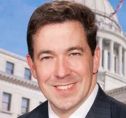
State Senator Chris McDaniel
Calling the Republican Party “untethered,” McDaniel announced his primary run against Wicker before a hometown crowd in Ellisville February 28, triggering what is likely to be a contentious struggle between the GOP’s establishment and Tea Party wings.
“It’s time to reassert who we are. Foundational principles matter,” said McDaniel, who went on to take a shot at politicians who, he said, change once they get to Washington and find themselves surrounded by “all that marble, all that money, and all those lobbyists.”
“Why do you keep sending the same old men to represent you?” McDaniel said, a dig at Wicker, 66, and Cochran, 80, who together have spent almost 70 years in Congress. “They are more concerned about (Senate Majority Leader) Mitch McConnell than they are you.”
“They betray you. They betray you to empower themselves. They forget about the regular people in Mississippi,” he said. “I’m tired of electing people from Mississippi who go to Washington to score points for the other team.”
However, McDaniel will be making his challenge against Wicker without the backing of President Donald Trump, who has tweeted his support for the incumbent:
“@SenatorWicker of Mississippi has been a great supporter and incredible help in getting our massive Tax Cut Bill done and approved. Also big help on cutting regs. I am with him in his re-election all the way!”
But if Trump is not embracing McDaniel, McDaniel made it clear that he would be embracing Trump.
“Donald Trump told us he wanted to drain the swamp. And I’m going to go there and help him drain the swamp,” he said.
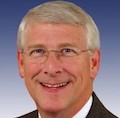
U.S. Senator Roger Wicker
After McDaniel’s announcement, Wicker released a statement saying he was “looking forward to this campaign and sharing my record of successfully fighting to reduce job-killing regulations, confirm conservative judges, enact historic tax cuts, rebuild our military, and honor our veterans.”
“We will work hard to once again earn the votes and support of all Mississippians.”
McDaniel, 45, has served in the Mississippi Senate since 2008. In 2014, he challenged Cochran, who began serving in Congress when McDaniel was in diapers, and narrowly beat him in the first round of voting to force a runoff. However, the Republican establishment roared back in favor of the veteran senator, who took the runoff by 7,700 votes.
McDaniel unsuccessfully challenged the result, alleging that the Cochran campaign had induced Democrats to vote illegally in the Republican primary. Under state law, Democratic voters were free to vote in the runoff if they had not voted during the first round in the Democratic primary, a tactic Cochran’s campaign openly encouraged.
The contentious 2014 campaign left bruised feelings in the Magnolia State, particularly after McDaniel supporter Clayton Kelly sneaked into a nursing home to photograph Cochran’s wife, who was suffering from dementia, in order to collect material for a political video alleging that Cochran was involved in an extramarital affair. McDaniel denied any involvement in the scheme.
Kelly later went to prison, and Rose Cochran died in December 2014. Senator Cochran married Kay Webber, a longtime staffer in his Washington office, in 2015.
In recent months, Cochran has been in ill health, leading to speculation that his seat might open up for McDaniel to try to fill. However, with the filing deadline for Wicker’s seat coming up March 1, McDaniel opted for a primary challenge instead.
McDaniel will be able to rely on support from Tea Party and conservative groups critical of the Senate Republican leadership, who backed him in his campaign against Cochran. He has also reportedly been meeting with Trump’s former chief strategist, Steve Bannon, as part of Bannon’s efforts to recruit challengers to run against incumbent Republican senators.
Wicker was elected to the Senate in 2006 after serving six terms in the U.S. House and won re-election easily in 2012. The winner of the GOP primary would be a prohibitive favorite in Mississippi, which hasn’t elected a Democrat to the U.S. Senate since 1982.
Democratic hopes for an Alabama-style upset in neighboring Mississippi were dashed in January when Public Service Commissioner Brandon Presley, a distant relative of Elvis Presley, decided not to run. The only Democrat to file for the seat is political newcomer Jensen Bohren, a Bernie Sanders supporter.
Federal judges strike down North Carolina’s U.S. House map over gerrymandering
Ruling could have an impact on other Southern states with partisan maps
♦By Rich Shumate, ChickenFriedPolitics.com editor
 RALEIGH (CFP) – In an unprecedented decision, a panel of three federal judges has struck down North Carolina’s U.S. House map, ruling that Republican lawmakers unconstitutionally diluted the voting strength of Democrats by gerrymandering the map for political reasons.
The panel’s majority opinion said partisan gerrymandering – a common political practice in many U.S. states – violates a “core principle of republican government” that “voters should choose their representatives, not the other way around.”
The January 9 ruling gives state lawmakers just 20 days to redraw the map; if they don’t, a new map will be redrawn by a special master appointed by the court. However, GOP legislative leaders are vowing to appeal the ruling to the U.S. Supreme Court, which could leave the current map in place until the appeal can be heard.
If the Supreme Court doesn’t issue a stay, significant chaos will be injected into the Tar Heel State’s 2018 election, with qualifying for candidates supposed to begin Feb. 28 for a May 8 primary.
The ruling marked the first time that a federal court has stuck down a congressional map for being gerrymandered for political, rather than racial, reasons. However, U.S. Supreme Court is currently considering similar cases involving state legislative districts in Wisconsin and Maryland that could set a precedent.
The judicial panel in the North Carolina case found unanimously that the map violated the equal protection clause of the Constitution and ruled 2-1 that it also violated the free speech rights of Democrats.
Should the ruling in North Carolina be upheld on appeal, it could have significant effects in other Southern states where Republican state legislative majorities have gerrymandered maps to their advantage, particularly Florida, Virginia and Texas.
Democrats cheered the ruling, which could help them make a dent in the GOP’s 10-to-3 advantage in North Carolina’s congressional delegation. But Republicans accused the judges of “waging a personal, partisan war” against the state GOP.
Ironically, what may have sunk the North Carolina map was the explicit admission by GOP lawmakers back in 2016 that they were drawing lines to maximize the number of Republican-friendly seats – an admission made to overcome objections to a previous map struck down for improperly using racial considerations.
After the map was redrawn in 2016, several incumbent lawmakers were forced to run in new territory and one, former U.S. Rep. Renee Ellmers, didn’t survive after she was forced to run against another incumbent in a Republican primary. However, the new map did not change the overall party composition in the state’s House delegation.
The 2016 map has allowed Republicans to hold on 77 percent of the state’s congressional seats, even though election results have been closely divided between the parties in recent statewide and presidential elections.
Donald Trump carried North Carolina by just 4 points in 2016, as Democrat Roy Cooper squeaked into the governorship by a margin of less than 1 percent.
The redistricting case was heard by James Wynn, a judge on the 4th U.S. Circuit Court of Appeals; W. Earl Britt, a senior U.S. District Court judge in Raleigh; and William Osteen Jr., a U.S. District Court judge in Greensboro.
Wynn and Britt were appointed by Democratic presidents; Osteen, who dissented from part of the ruling while concurring in striking down the map, is a Republican appointee.
U.S. Rep. Ron DeSantis announces run for Florida governor
DeSantis’s decision follows a favorable Twitter mention from Donald Trump
♦By Rich Shumate, ChickenFriedPolitics.com editor
 TALLAHASSEE (CFP) — Equipped with a favorable mention from President Donald Trump on Twitter, Republican U.S. Rep. Ron DeSantis has announced that he will run for Florida governor in 2018.
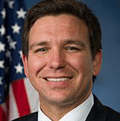
U.S. Rep. Ron DeSantis, R-Florida
DeSantis, who is serving his third term in Congress, made the announcement January 5 on the conservative-friendly confines of the Fox & Friends morning program on the Fox News Channel.
“I’m in a position to exercise the leadership that can build on the great work that Governor Rick Scott has done to advance economic opportunity, reform education and drain the swamp in Tallahassee, which needs to be drained just like Washington,” DeSantis said.
His decision to enter the race sets up a primary battle with Florida Agriculture Commissioner Adam Putnam, a former congressman who has the backing of much of Florida’s GOP establishment.
DeSantis, on the other hand, has the imprimatur of Trump, who offered an almost-endorsement of his candidacy December 22 on Twitter: “Congressman Ron DeSantis is a brilliant young leader, Yale and then Harvard Law, who would make a GREAT Governor of Florida. He loves our Country and is a true FIGHTER!”
Although Trump did not actually use the e-word, DeSantis is playing up the favorable mention, noting on his website that he has been “endorsed by President Trump.”
DeSantis, 39, a Harvard law graduate and former military prosecutor, was elected in 2012 from Florida’s 6th District, which stretches along the Atlantic coast from the Jacksonville suburbs to Daytona Beach. He is a member of the conservative, anti-establishment House Freedom Caucus.
In 2016, DeSantis ran for the GOP nomination for the U.S. Senate but abandoned his campaign when Marco Rubio decided to seek re-election after leaving the presidential campaign.
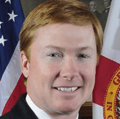
Florida Agriculture Commissioner Adam Putnam
The major obstacle in DeSantis’s way to becoming governor is Putnam, 43, the one-time boy wonder of Florida politics who was the elected to the legislature at age 22 and to Congress when he was just 26.
Putnam served five terms in the U.S. House, rising to chair the House Republican Conference, the No. 3 position in the House GOP hierarchy. before being elected as agriculture commissioner in 2010.
He was re-elected in 2014 with 58 percent of the vote and has already raised more $15 million for the governor’s race.
Also considering the governor’s race on the Republican side is Florida House Speaker Richard Corcoran, who represents a suburban Tampa district in the legislature and was elected speaker in 2016.
The Democratic primary for governor is shaping up as a battle between former U.S. Rep. Gwen Graham of Tallahassee, Tallahassee Mayor Andrew Gillum and Miami Beach Mayor Phillip Levine.
Graham, who served a single term in Congress before leaving after she was redrawn into a politically unfavorable district, is the daughter of former governor and U.S. senator Bob Graham. If elected, Gillum would be Florida’s first African American governor.
Scott, the incumbent Republican, is term-limited and considering a run for the U.S. Senate against Democrat Bill Nelson.
Democrat Doug Jones wins Alabama U.S. Senate seat
Jones defeats Republican Roy Moore amid allegations of Moore’s sexual pursuit of teenage girls
♦By Rich Shumate, ChickenFriedPolitics.com
 BIRMINGHAM (CFP) — Democrat Doug Jones has defeated Republican Roy Moore to win a U.S. Senate contest in Alabama, snatching away a seat in one of the country’s most Republican states and handing a rebuke to President Donald Trump, who went all in for Moore.

U.S. Senator-elect Doug Jones
Jones, 63, a former federal prosecutor from Birmingham making his first bid for elective office, took 50 percent to 48 percent for Moore in the December 12 vote, with the remaining vote going to write-in candidates.
Despite the Yellowhammer State’s strongly conservative tilt, Moore could not survive allegations that he sexually pursued teenage girls decades ago when he was in his 30s, which became public a month before the special election to permanently fill the seat of U.S. Attorney General Jeff Sessions
Moore’s defeat, in a state where a Democrat had not won a Senate race in 25 years, also leaves Senate Republicans with a razor-thin 51-49 majority and increases prospects for Democrats to win control of the chamber in 2018.
Speaking to jubilant supporters in Birmingham, Jones said, “I think that I have been waiting all my life, and now I just don’t know what the hell I’m going to say.”
“We have been at a crossroads in the past, and, unfortunately, we have usually taken the wrong fork. Tonight, you have taken the right road,” he said.
But Moore, addressing supporters in Montgomery, refused to concede defeat, saying that the closeness of the result might raise the possibility of a recount.
“It’s not over,” he said. “We also know God is in control.”
However, Moore’s most prominent supporter, Trump, offered congratulations to Jones on Twitter shortly after television networks called the race for Jones.
“Congratulations to Doug Jones on a hard fought victory,” Trump said. “The people of Alabama are great, and the Republicans will have another shot at this seat in a very short period of time.”
Jones will face voters again in 2020 after winning the race to fill the rest of the term Sessions won in 2014, which he gave up in February to join Trump’s Cabinet as attorney general.

Former Alabama Chief Justice Roy Moore
In November, five women came forward to say that Moore, now 70, made advances toward them when he was in his 30s and they were teenagers. One of the women, Leigh Corfman, said Moore initiated sexual contact with her back in 1979, when she was just 14.
Suggestions of sexual impropriety posed a special problem for Moore because his legal and political careers have been built on unapologetic Christian conservatism, which is frequently on display in most of his speeches.
He was twice elected and twice removed as chief justice of the Alabama Supreme Court after defying federal court orders on displaying the Ten Commandments and issuing marriage licenses to same-sex couples — stands that made him a controversial figure well before the allegations of sexual misbehavior surfaced.
Moore vehemently denied the allegations, but virtually all of the Senate GOP caucus called on him to exit the race, including Alabama’s other U.S. Senator, Republican Richard Shelby.
Trump initially kept some distance from Moore, sending out surrogates to say that if the charges were true, he should leave the race. However, Trump eventually endorsed Moore and made robocalls on his behalf, saying the seat was too important to hand over to a “liberal” like Jones.
Democrats, smelling blood after the allegations against Moore became public, began pouring resources into what had been considered a long-shot race. Toward the end of the campaign, Jones’s campaign was putting up seven TV commercials to every one from Moore.
The Senate seat opened in February after Sessions left to become U.S. attorney general. Former Governor Robert Bentley appointed Republican Luther Strange to the seat, but he was unable to hold it in a September GOP primary where he lost to Moore.
Retired Marine Corps general launches write-in campaign in Alabama U.S. Senate race
Report: Democrat Doug Jones outspending Republican Roy Moore 7-to-1 on TV
♦By Rich Shumate, ChickenFriedPolitics.com editor
BIRMINGHAM (CFP) — Just two weeks before a special election to pick Alabama’s next U.S. Senator, Lee Busby, a retired Marine Corps colonel and one-time aide to White House Chief of Staff John Kelly, has launched a last-minute write-in bid for the seat as an independent.
In another development in the race, Democrat Doug Jones’s campaign has outspent embattled Republican nominee Roy Moore by a whopping 7-to-1 margin on television ads in his quest to become the first Democrat to win a Senate race in Alabama in 25 years, according to a report in Politico.

Alabama U.S. Senate candidate Lee Busby
Busby told MSNBC’s Morning Joe that he got into the race because he was dissatisfied with choosing between Moore, who has been accused of sexually pursuing teenage girls, and Jones, a former federal prosecutor from Birmingham making his first bid for political office.
“I felt like there was a lot of people in Alabama who felt like me,” Busby told the network. “The more I talked to [people], the more sense I got that there was this huge swath in the middle that feels like they’re not represented.”
Since announcing his write-in candidacy on November 27, Busby said he has been the target of a deluge of criticism on social media from Moore supporters angered by his candidacy.
“I’m either a Democratic agent or a lackey of [Senate Majority Leader] Mitch McConnell,” he said.
Busby told MSNBC that he is a registered Republican but did not support Moore during the GOP primary, well before the sexual pursuit allegations surfaced.
“I don’t know Roy Moore. I’ve never met him. But there’s a sense of self-righteousness that comes out of that campaign that bothered me, and I don’t think it represents the majority of Alabama voters,” he said.
Busby, who lives in Tuscaloosa, served 31 years in the Marine Corps and Marine Reserve, reaching the rank of colonel. After leaving the military, he has focused on his work as a sculptor, creating memorial busts of service members killed in Iraq and Afghanistan.
While in the military, Busby served as vice chief of staff to Kelly, the retired Marine general who is now Trump’s chief of staff.
Since allegations against Moore became public on November 9, Trump has refused to condemn him, instead offering pointed criticism of Jones on Twitter. However, the president has so far stopped short of traveling to Alabama to campaign with his party’s nominee.
By contrast, McConnell and most of the Republicans in the Senate have called on Moore to exit the race, even though the deadline had passed to remove his name from the ballot.
Former Alabama Chief Justice Roy Moore
Five women have come forward to say that Moore, now 70, made advances toward them when he was in his 30s and they were teenagers. One of the women, Leigh Corfman, said Moore initiated sexual contact with her back in 1979, when she was just 14.
Moore has denied the allegations and resisted pressure from Republicans to drop out of the race.
The most recent public polls, taken before Busby’s entry, have shown the race between Jones and Moore within the margin of error, which means that the polls can’t offer a conclusion as to which man is ahead. The competitiveness of the race is shocking sight in Alabama, where Republican Richard Shelby won by 28 points in 2016 and Democrats didn’t even run anybody against Republican Jeff Sessions in 2014.
Just as shocking is the disparity on the TV airwaves, with Jones airing more than 10,000 ads since the primary, compared to just 1,000 for Moore, according to figures compiled by Advertising Analytics and reported by Politico.
National Democrats had been wary of putting resources into the long-shot Alabama race, but money began pouring into Jones’s campaign after Moore won the GOP primary and the allegations against him surfaced.
The special election to fill the Senate seat is December 12.
The Alabama seat became vacant in February, when Sessions resigned to become U.S. attorney general. Republican Luther Strange was appointed to fill the seat but failed to hold it when Moore challenged him in the GOP primary to pick a nominee for a special election to elect a permanent replacement.
Moore was a controversial figure even before the allegations about his alleged sexual pursuit of teenage girls surfaced. He was twice elected as chief justice of the Alabama Supreme Court and removed both times, first for defying a federal judge’s order to remove a 10 Commandments display at the state judicial building in Montgomery and then for encouraging local officials to refuse to issue marriage licenses to same-sex couples after the U.S. Supreme Court ruling mandating marriage equality.
In 2006 and 2010, he ran poorly in GOP primaries for governor. But in the special election, he was able to parlay unhappiness with the Republican establishment in Washington into a win over Strange, who was backed by Trump and McConnell.
Watch Busby’s full interview with MSNBC:
 Chicken Fried Politics