
Home » Posts tagged 'Donald Trump' (Page 31)
Tag Archives: Donald Trump

Democrats roll in state elections in Virginia
Northam elected governor; Democrats sweep statewide races and make big gains in legislature
♦By Rich Shumate, ChickenFriedPolitics.com
 RICHMOND (CFP) — In a huge night for Democrats, Lieutenant Governor Ralph Northam easily defeated Republican Ed Gillespie to claim Virginia’s governorship.
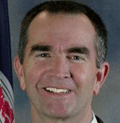
Lieutenant Governor Ralph Northam
Democrats also won two other statewide offices, and the GOP lost its once-comfortable majority in the lower house of the state legislature, a stunning feat that included election of the nation’s first-ever transgender legislator.
Northam’s 54-45 percent victory over Gillespie in the November 7 vote was nearly twice as large as Hillary Clinton’s margin of victory over Donald Trump in 2016 and was built on 20-point victories in the suburbs of Washington, D.C. and Richmond.
Holding the governorship in Virginia is a boon for Democrats frustrated by a string of heartbreaking defeats in special and off-year elections since Trump took the White House. The result, however, was a hold, not a takeaway, and it came in the lone Southern state Clinton carried.
Speaking to jubilant supporters in Fairfax, Northam offered a thinly veiled rebuke to the president’s take-no-prisoners style of politics.
“It was said that the eyes of the nation are on the commonwealth,” Northam said. “Today, Virginians have answered and have spoken. Virginia has told us to end the divisiveness, that we will not condone hatred and bigotry and to end the politics that have torn this country apart.”
After Northam was declared the winner, Trump, visiting South Korea, sent a tweet taking issue with Gillespie’s decision to distance himself from the president: “Ed Gillespie worked hard but did not embrace me or what I stand for.”
The specter of Trump hovered over the governor’s race. Gillespie did not invite the president to cross the Potomac to campaign for him, angering some in his party’s pro-Trump base, but Northam still tried to hang Trump around Gillespie’s neck, accusing the GOP nominee of figuratively “standing right next” to the president, even if literally he had not.

Ed Gillespie
In his concession speech, Gillespie thanked his campaign workers and supporters but did not mention the president.
“I felt called to serve. I hope I’ll discern what (God’s) calling is for me next,” Gillespie said.
Gillespie’s loss is his second statewide defeat in four years. In 2014, he challenged Democratic U.S. Senator Mark Warner, coming to within 18,000 votes of beating him.
In the race for lieutenant governor, Democrat Justin Fairfax, an attorney and former federal prosecutor from the D.C. suburbs, defeated Republican State Senator Jill Vogel. Democratic Attorney General Mark Herring also won his re-election race over Republican John Adams.
Perhaps the most shocking result of the night came in the races for the House of Delegates, the lower house of Virginia’s legislature. Republicans entered election day holding a 66-34 majority; Democrats ousted at least 11 incumbents and picked up three open seats that the GOP had held.
With five races still too close to call, Democrats had 48 seats and Republicans 47. Of the five races left outstanding, Republicans were ahead in three and Democrats in two. If those results hold, the chamber would be evenly divided, 50-50.
In four of the five House races still to be decided, the leads are less than 125 votes, making recounts likely.

Virginia Delegate-Elect Danica Roem
Among the winners was Danica Roem, a transgender woman who won a seat in Prince William County by defeating veteran GOP Delegate Bob Marshall, a 14-term social conservative who had described himself as Virginia’s “chief homophobe” and insisted on referring to Roem with male pronouns.
When Roem takes office, she will be the the first transgender person in the United States to be elected and serve in a state legislature while openly acknowledging her gender identity.
Northam’s win in the South’s lone off-year governor’s election gives Democrats three of the region’s 14 governorships, with Northam joining Louisiana Governor Jon Bell Edwards and North Carolina Governor Roy Cooper. The incumbent Democrat in Virginia, Governor Terry McAuliffe, was barred by state law from seeking re-election.
Northam, 58, comes to the governorship after 10 years in elected office, first as a state senator and then lieutenant governor. A former U.S. Army doctor, he has practiced pediatric neurology at a children’s hospital in Norfolk since 1992.
With his win, Democrats have now won three of the last four governor’s races in Virginia, a once solidly Republican state that has trended Democratic in recent years, primarily due to an influx of new voters into the Washington, D.C. suburbs.
Voters in Virginia set to decide governor’s race
Republican Ed Gillespie and Democrat Ralph Northam battle to lead the only Southern state Hillary Clinton carried
♦By Rich Shumate, ChickenFriedPolitics.com
RICHMOND (CFP) — Virginians decide Tuesday whether to raise their Democratic lieutenant governor to the state’s top job or turn the reins over to a senior operative from George W. Bush’s White House.
The lone off-year governor’s race in the South pits Ed Gillespie, a Bush aide and former head of the Republican National Committee, against Lieutenant Governor Ralph Northam, a pediatrician who has spent the past decade in state politics.
In addition to the marquee governor’s race, statewide races for lieutenant governor and attorney general are on the ballot, and energized Democrats are trying to flip a slew of state House seats to gain bragging rights heading into the 2018 midterms.
Polls across the commonwealth open at 6 a.m. and close at 7 p.m.
Lieutenant Governor Ralph Northam
Of seven non-partisan public polls conducted since October 29 in the governor’s race, six showed results within the margin of error, making the results statistically insignificant. Just one poll, from Quinnipiac University, showed Northam with a lead of at least 1.2 percent outside the margin of error.
However, that Quinniapiac poll showed Gillespie had made up substantial ground against Northam in the final week of the campaign, particularly among independents, among whom the difference between the candidates was statistically insignificant.
Conspicuously absent from the race — President Donald Trump, who was never invited to cross the Potomac to campaign with Gillespie, although Vice President Mike Pence did make an appearance on his behalf. Trump did, however, endorse Gillespie on Twitter.
Ed Gillespie
Virginia was the only Southern state that Hillary Clinton carried in 2016, due in part to her stronger-than-usual showing the Republican-leaning Washington, D.C. suburbs in the northern part of the state. So the Gillespie campaign had to thread a difficult needle of not galvanizing anti-Trump voters by campaigning with the president, while at the same time not antagonizing ardent Trump supporters in more conservative parts of the state.
Indeed, the potency of the Trump brand among the Republican base nearly took Gillespie down in June when, despite being a prohibitive favorite, he almost lost the party’s primary to Corey Stewart, Trump’s one-time state campaign manager.
Stewart, who is running for the U.S. Senate in 2018, told Politico that Trump supporters were “bewildered” and “offended” by Gillespie’s decision to distance himself from Trump, predicting that it would hurt Gillespie by discouraging the president’s supporters from turning out.
Northam, in turn, has tried to hang Trump around Gillespie’s neck, running a TV ad during the final weekend of the campaign accusing the GOP nominee of figuratively “standing right next” to the president, even if literally he had not.
Northam, 58, joined the U.S. Army to complete his medical training after graduating from the Virginia Military Institute and has worked as a pediatric neurologist at a children’s hospital in Norfolk since 1992. He has admitted to voting for George W. Bush in 2000 and 2004 before he became active in state politics, saying that he had been “underinformed” at the time.
In 2007, he was elected as a Democrat to the Virginia Senate, representing a district that included parts of Hampton Roads and the Eastern Shore. In 2013, he became lieutenant governor, running alongside incumbent Governor Terry McAuliffe, who, under state law, can’t run for a second consecutive term.
Northam was challenged in the primary by former U.S. Rep. Tom Perriello, who tried to counter Northam’s establishment support by mobilizing Bernie Sanders supporters. In the end, Northam won by 12 points, though he has continued to face criticism from his left flank during the campaign for supporting two controversial gas pipeline projects and opposing the establishment of sanctuary cities in Virginia.
After working as Bush’s communications director in the 2000 campaign, Gillespie, 56, started a lobbying firm in Washington and was elected chairman of the RNC in 2003. He went back to the White House in 2007 as a counselor to the president and served until the end of Bush’s second term in 2009.
In 2014, Gillespie challenged Democratic U.S. Senator Mark Warner. Though Warner’s seat was considered safe, Gillespie came within 18,000 votes of beating him, in what would have been the biggest upset of the 2014 campaign.
In the lieutenant governor’s race, Republican State Senator Jill Vogel, from Fauquier County west of Washington, is facing Democrat Justin Fairfax, an attorney and former federal prosecutor who lives in surburban Fairfax.
A controversy erupted in the closing days of the campaign when Northam’s campaign dropped Fairfax, who is African-American, from a direct mail piece sent to voters because of his opposition to the two pipeline projects Northam supports.
Critics called his exclusion racist, a charge that Northam’s camp denied. But the flap could have consequences for a race in which Northam will need strong African-American support to win.
In the race for attorney general, the incumbent Democrat, Mark Herring, is being challenged by Republican John Adams, a Richmond lawyer who once clerked for conservative Supreme Court Justice Clarence Thomas.
In addition to the three statewide races, 100 seats in Virginia’s House of Delegates, the lower house of the legislature, are up for grabs. Despite Virginia’s status as a swing state in presidential politics, Republicans currently hold 66 seats, to just 34 for Democrats.
However, Democrats are contesting 88 of those seats in 2017, including challenges in 17 Republican-held seats that Clinton carried in 2016. So the results in Virginia are likely to be viewed as a bellweather for what might happen in 2018, particularly if Democrats make gains in suburban districts near Washington and Richmond.
State Senate seats are not up in Virginia this year; Republicans control the Senate, 21 to 19.
Texas U.S. Rep. Jeb Hensarling won’t seek re-election in 2018
Hensarling’s retirement announcement comes just two weeks before filing begins for 2018 primaries
♦By Rich Shumate, ChickenFriedPolitics.com editor
 DALLAS (CFP) — U.S. Rep. Jeb Hensarling, the Texas Republican who chairs the powerful House Financial Services Committee, has announced he won’t seek re-election in 2018, creating a third open House race in Texas less than two weeks before filing begins for the 2018 primaries.
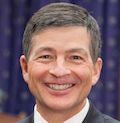
U.S. Rep. Jeb Hensarling, R-Texas
“Although service in Congress remains the greatest privilege of my life, I never intended to make it a lifetime commitment, and I have already stayed far longer than I had originally planned,” said Hensarling, who was first elected to Congress in 2002 to represent Texas’s 5th District. “Although I will not be running for reelection, there are 14 months left in my congressional term to continue the fight for individual liberty, free enterprise, and limited constitutional government — the causes for which I remain passionate.”
Because of GOP term limits for committee chairman, Hensarling would have lost his chairmanship in 2019 had he remained in Congress, even if Republicans held control of the chamber. He said that with the end of his chairmanship, “the time seems right for my departure.”
Hensarling’s 5th District takes in eastern Dallas County and stretches into rural areas to the east and south. Although the district has a majority-minority population, it is solidly Republican, having gone for President Trump with 63 percent of the vote in 2016; Hensarling carried 80 percent.
However, Hensarling’s retirement is likely to set off a mad scramble for his seat, thanks to Texas’s early primary schedule. Filing opens November 11 and closes December 11, and the primary will be held on March 6. The only candidate in the race at the time of Hensarling’s October 31 retirement was Democrat Dan Wood, an attorney and city councilman from Terrell.
Before being electing to Congress, Hensarling, 60, was an aide to former U.S. Senator Phil Gramm, and, like Gramm, cultivated an image as a fiscal hawk and opponent of increased government spending. In 2010, he was elected as chairman of the House Republican Conference, the fourth-ranking position in the House, a post he gave up to take the Financial Services chairmanship.
Hensarling is the third member of the Texas House delegation to forgo a re-election bid in 2016. Democratic U.S. Rep. Beto O’Rourke from El Paso is giving up his seat to challenge U.S. Senator Ted Cruz. GOP U.S. Rep. Sam Johnson from Dallas is retiring after 28 years in Congress.
While all three of these seats are unlikely to change hands, three Democrats are making a play for Johnson’s 3rd District seat, which Trump only carried with 55 percent of the vote.
Tennessee Governor Bill Haslam won’t run for U.S. Senate; U.S. Rep. Marsha Blackburn is in
Haslam’s decision portends wide open, crowded GOP primary race
♦By Rich Shumate, ChickenFriedPolitics.com editor
 NASHVILLE (CNN) — Outgoing Gov. Bill Haslam has decided not to seek Tennessee’s open U.S. Senate seat in 2018, which means the chase for the GOP nomination will likely be fought out among a crowded slate of candidates without his statewide electoral experience.
As Haslam announced he wouldn’t run, a veteran member of the Volunteer State’s U.S. House delegation, Marsha Blackburn from Brentwood, announced that she was would seek the Republican nomination for the seat being vacated after two terms by the retiring U.S. Senator Bob Corker.
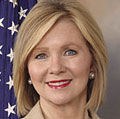
U.S. Rep. Masha Blackburn, R-Tennessee
In her announcement video, Blackburn — describing herself as a “hardcore card-carrying Tennessee conservative” with a gun in her purse — offered a full-throated blast at sitting senators in her own party.
“The fact that our majority in the U.S. Senate can’t overturn Obamacare, or will not overturn Obamacare, it’s a disgrace,” she said. “Too many Senate Republicans act like Democrats or worse, and that’s what we have to change.”
Blackburn, 65, was first elected in 2002 to represent Tennessee’s 7th District, which takes in Nashville’s southern suburbs and the west-central part of the state. She served on President Trump’s transition team after his election in 2016.
After Corker announced his retirement on September 26, the attention in Tennessee political circles turned to Haslam, who is term-limited in 2016 but retains strong approval ratings after eight years in office. The governor is also a billionaire, thanks to his family’s truck stop business, which would have given him considerable personal financial resources to bring to a Senate race.

Tennessee Governor Bill Haslam
But announcing his decision not to run on Twitter, Haslam said a Senate run “would be a distraction” during his last 15 months as governor.
“I want to remain completely focused on my job,” he said. “At the end of my term, I will have been in public office for 15 years. I feel like I can be most helpful in my next service as a private citizen.”
Haslam, 59, was mayor of Knoxville before being elected governor in 2010. He was re-elected in 2014 with 70 percent of the vote.
Corker’s departure creates a wide open field on the Republican side that is likely to become a battle between the party’s establishment and populist factions. Among those considering the race are former State Rep. Joe Carr, who waged an unsuccessful attempt to oust U.S. Senator Lamar Alexander in 2014, and State Senator Mark Green, whom Trump nominated as Secretary of the Army earlier this year.
Green later withdrew his nomination after controversy arose over his past derogatory statements about transgendered people and Muslims.
Blackburn is so far the only member of the House delegation to jump into the Senate race, although former U.S. Rep. Stephen Fincher, who left the House in 2017 after serving three terms, is considering a run.
The only Democrat in the race so far is James Mackler, a Nashville attorney and Iraq war veteran, although Chattanooga Mayor Andy Berke may also be considering a run. Former Gov. Phil Bredesen, the last Democrat to win a statewide race in Tennessee back in 2006, has bowed out.
A Democrat has not won a Senate race in the Volunteer State since 1990, when Al Gore was re-elected. But the unexpected opening created by Corker’s retirement creates a vacancy that could help Democrats as they try to claw their way back into the Senate majority.
Six Southern states will select Senators in 2018, and incumbents are expected to run in all but Tennessee — Texas, Mississippi, Florida, Virginia, and West Virginia. The seats in Florida, Virginia, and West Virginia are held by Democrats; Texas and Mississippi are held by Republicans.
Roy Moore ousts Luther Strange in Alabama U.S. Senate GOP runoff
Victory by insurgent Moore a blow to President Trump and Senate Majority Leader Mitch McConnell
♦By Rich Shumate, ChickenFriedPolitics.com editor
 BIRMINGHAM (CNN) — In a rebuke to Senate Republican leaders and President Donald Trump, Alabama Republicans have chosen former Roy Moore, a man twice removed as chief justice of the state’s highest court, for a U.S. Senate seat over incumbent Luther Strange, who failed to secure by election the post he gained by appointment just seven months ago.

Former Alabama Chief Justice Roy Moore
Moore, 70, who became a darling of Christian conservatives by defying federal court orders on displaying the Ten Commandments and same-sex marriage, took 55 percent of the vote in the September 26 runoff to 45 percent for Strange, who had the backing of both Trump and Senate Majority Leader Mitch McConnell.
“I never prayed to win this campaign. I only prayed that God’s will be done,” Moore told his cheering supporters in Montgomery. “We have to return the knowledge of God and the knowledge of the Constitution of the United States to the United States Congress.”
And despite Trump’s conspicuous support for Strange, Moore said, “Don’t let anybody in the press think that because he supported my opponent that I don’t support him and support his agenda … as long as its constitutional.”
After Strange’s defeat became clear, Trump tweeted, “Congratulations to Roy Moore on his Republican Primary win in Alabama. Luther Strange started way back & ran a good race. Roy, WIN in Dec!”
Strange, who gave up being state attorney general to take the Senate appointment, could not hold his seat despite solid establishment support and a huge financial advantage over Moore. Speaking to supporters in Birmingham, he acknowledged that his campaign failed to navigate the anti-establishment waves now coursing through American politics.
“We’re dealing with a political environment that I’ve never had any experience with,” Strange said. “The political winds in the country right now … are very hard to understand.”
Strange also thanked Trump and said the responsibility for his loss lies with him, not the president.
“If this causes him any trouble, it’s not his fault,” Strange said. “The fault always lies in the candidate or the head coach or the guy holding the ball.”
Moore will now face Democrat Doug Jones, a former federal prosecutor from Birmingham, in a general election on December 12. And although Democrats haven’t won a Senate election in Alabama in 25 years, the nomination of the controversial Moore provides at least a glimmer of hope for an upset.
Jones, speaking to supporters in Birmingham as the results of the GOP race were coming in, predicted that he would win in December once voters began focusing on issues.
“We have the wind at our back,” Jones said. “We believe we have the issues people care about which you have not heard any discussions about. People are concerned about health care and the economy. People want to see this state moving forward. I believe that we can do that.”
Moore’s nomination also means that McConnell faces the unpleasant prospect of having a new member in his caucus who has castigated McConnell on the campaign trail and called for his ouster — no small consideration given that Republicans have a thin majority of just 52 seats in the 100-member Senate.
McConnell went all in for Strange during the primary. The Senate Leadership Fund, a PAC affiliated with the majority leader, poured more than $5 million into the race, the bulk of it for attack ads against Moore.
Both Strange and Moore cast themselves as champions of Trump’s agenda, in a state where he remains popular. But the president put his personal power and prestige on the line for Strange, formally endorsing him just a week before the first round of voting in August and coming to Alabama to campaign with him four days before the runoff.
During Trump’s pre-election appearance in Huntsville, he conceded that his endorsement of Strange might turn out to be a mistake should the senator lose — but that he would campaign “like hell” for Moore if he won.
The battle in Alabama became a proxy war between the Senate GOP leaders and their intra-party critics, who have embraced the Moore candidacy as a way of giving McConnell a black eye. Breitbart News, the website run by Trump’s former chief strategist, Steve Bannon, banged its drum for Moore, and former GOP vice presidential candidate Sarah Palin campaigned by his side.
The twist in the Alabama race was that Trump was on the side of the GOP establishment, rather than Moore, the insurgent outsider who has said he believes God put Trump in the White House.

U.S. Senator Luther Strange
Strange, 64, was appointed to the Senate in February by former Governor Robert Bentley after Jeff Sessions was named as Trump’s attorney general.
At the time, Strange was Alabama’s attorney general, and his office had been involved in investigating the governor’s conduct. Bentley also handed Strange another gift, delaying a special election to permanently fill the Senate seat until November 2018, which would have given Strange nearly two years of incumbency before he had to face voters.
But after a sex scandal forced Bentley from office, new Alabama Governor Kay Ivey reversed course and ordered a special election.
The circumstances of Strange’s appointment, and the perception that it might have been the result of a political deal with the disgraced Bentley, dogged the senator throughout the campaign, even though he has strongly denied any impropriety and no evidence of a corrupt bargain has surfaced.
e
Moore first gained national notoriety as a local judge in 1995 after battling the ACLU over his practice of opening court sessions with a prayer and hanging the Ten Commandments in his courtroom.
He parlayed that prominence into election as chief justice in 2000 but was forced out in 2003 after he had a display of the Ten Commandments installed in the rotunda of the state judicial building and then defied a federal judge’s order to remove it.
Moore was once again elected chief justice in 2012, but in 2016, he was suspended by a judicial disciplinary panel for the rest of his term for ethics violations after urging local officials to defy the U.S. Supreme Court decision legalizing same-sex marriage.
After losing an appeal of his suspension, Moore resigned from the Supreme Court to run for the Senate.

