
Home » Posts tagged 'Donald Trump' (Page 8)
Tag Archives: Donald Trump

Decision 2020: Has Georgia finally arrived at a political tipping point?
Democrats are in contention in presidential, U.S. Senate races, poised to pick up another U.S. House seat
♦By Rich Shumate, ChickenFriedPolitics.com editor
 ATLANTA (CFP) — When the smoke clears from the 2020 election, a whole new political day may have dawned in Georgia.
Democrats appear ready to capture another U.S. House seat, which would give them six out of 14 seats in the state delegation, nearly at parity with Republicans. They also have a shot at both U.S. Senate seats and an outside chance of capturing a majority in the Georgia House.
And, in perhaps the biggest surprise of all, Joe Biden could become the first Democrat to carry the Peach State in 28 years.
That’s a best case, rosy scenario for the Democrats, one which Republicans would no doubt dismiss as wishful thinking. But even if this optimistic scenario doesn’t all pan out, 2020 is likely to go down as the best year state Democrats have had since they suffered a collapse in 2002, losing the governorship and control of the legislature after a decade in which they had lost their grip on the state’s federal offices.
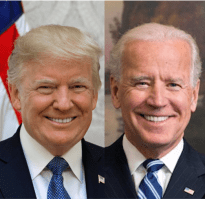
Trump, Biden neck-and-neck in Georgia polls
In 2016, Donald Trump carried Georgia by 5 points–enough to get the state’s 16 electoral votes but the weakest showing by a Republican since Bob Dole in 1996. The biggest shock in that race was Hillary Clinton carried both Cobb and Gwinnett counties, which had for decades been impenetrable Republican redoubts in the Atlanta suburbs.
These suburbs, which continued to swing toward the Democrats in the 2018 midterm elections, are key in the presidential race. Trump should get a sizable win in rural areas and small towns; Biden will easily carry the urban cores of the Atlanta and the state’s other cities; so the suburbs will be where this contest is won or lost.
Polls now show the race between Biden and Trump within the margin of error. The biggest sign the state is truly competitive: Both Trump and Biden are making October campaign stops in Georgia, which rarely gets a glimpse of presidential candidates outside of the primary season.
U.S. Senate
Because of the retirement of Republican Johnny Isakson at the end of last year, both of Georgia’s U.S. Senate seats are up this year. Republican David Perdue is seeking a second term, and Republican while Kelly Loeffler, a wealthy Atlanta businesswoman and political newcomer appointed to fill Isakson’s seat by Governor Brian Kemp, will try to keep it in an all-party special election.
Perdue is facing Democrat Jon Ossoff, who rose to national prominence in an expensive but ultimately unsuccessful U.S. House race shortly after Trump’s election. At the beginning of the race, Perdue wasn’t thought to be in much trouble, but Ossoff has closed the gap, with polls showing the race within the margin of error.
A major source of contention in the race has been the coronavirus epidemic, with Ossoff hitting Perdue for downplaying the severity of the disease during the early days of the pandemic and voting to dismantle Obamacare, which Ossoff says has provided a lifeline to virus victims.
Perdue has hit Ossoff over his fundraising from out-of-state sources, charging that Ossoff’s contributors support a “radical socialist agenda” that he would pursue as a senator.
Ossoff has raised nearly $33 million, much of it in small dollar online contributions from Democratic donors across the country. Perdue has raised about $21 million.
Because of a quirk in Georgia law, if neither Perdue or Ossoff break 50%, they will face each other in a January runoff, which could happen if a Libertarian candidate also in the race draws off enough support.
In the special election, 20 candidates are running, and polls show three are competing for spots in a January runoff: Loeffler; Republican U.S. Rep. Doug Collins from Gainesville, who has been trying to run at Loeffler from the right; and Democrat Raphael Warnock, the senior pastor at Atlanta’s Ebenezer Baptist Church, a pulpit once held by Martin Luther King Jr.
Warnock has surged to the front in the latest polls, consolidating Democratic support with an ad blitz. Loeffler and Collins are running neck-and-neck for the second spot, in a race that has divided state Republicans into two camps.
Collins, one of Trump’s most vocal defenders during last year’s impeachment fight, decided to challenge Loeffler after Kemp passed him over for the Senate appointment. But he has so far not gotten the president’s endorsement, and Loeffler has been battling him for supremacy on the right by firmly embracing Trump and taking conservative stands on social issues.
One key metric to look at on election night will be whether the Republicans in the race collectively attract more votes overall that the Democrats, which could be a sign of things to come in the runoff.
Warnock has raised the most money, at $22 million, but Loeffer has more money to spend, after tapping her considerable personal fortune for $23 million in loans. Collins trails at $6 million.
Depending on results in other states, control of the U.S. Senate could hinge on two runoff elections in Georgia in January — a circumstance that would attract massive amounts of money and national attention to the Peach State.
U.S. House
The focus in the U.S. House races with be the 6th District, in Atlanta’s near northwest suburbs, and the 7th District, in the near northeast suburbs.
Two years ago, Democrat Lucy McBath flipped the 6th District seat, defeating Republican Karen Handel, Handel is back for a rematch, but McBath — like other freshmen Democrats defending seats in districts Trump won in 2016 — has raised a mountain of money, nearly $8 million, to less than $3 million for Handel
Trump won this district by less than 2 points in 2020. Demographic changes, including more minority voters, are also contributing to its shift from red to purple, and most election handicappers are giving McBath the edge.
Handel will need a strong margin from East Cobb and North Fulton counties to offset McBath’s strength in more diverse areas such as Sandy Springs and Doraville.
In the 7th District, Democrat Carolyn Bourdeaux, who lost this race by just 400 voters in 2018, is back for another try, facing Republican Rich McCormick, a physican and retired Marine pilot. (The Republican incumbent, Rob Woodall, retired.) Bourdeaux also enjoys a fundraising advantage, $4.7 million to $2.4 million.
The largest population center in this district is Gwinnett County, where Democrats have been winning legislative seats and county offices in recent years. White voters are also now a minority here, which should help Bourdeaux.
If both McBath and Bourdeaux win, the Georgia delegation will be split 8R and 6D, closer than it has been since 1994.
State Legislature
In the battle for the state House, Democrats need to pick up 15 seats in the 180-member House to gain control, after picking up 11 seats in 2018. The party is targeting seats in the Atlanta suburbs, where Democrats have been making gains in recent years, although it is unclear if enough flippable seats remain to get to 15.
Democrats would need to pick up eight seats in the 56-member Senate to take control, which is considered much less likely.
We tweet @ChkFriPolitics Join us!
Decision 2020: Can Joe Biden break through and make the South matter?
Texas and Georgia join North Carolina and Florida on list of 2020 presidential swing states
♦By Rich Shumate, ChickenFriedPolitics.com editor
 (CFP) — Twenty years ago, George W. Bush became the first Republican to sweep the entire South in a non-landslide election, and in the five presidential elections since, a Democrat has carried Virginia three times, Florida twice, and North Carolina once.
Every other state in the region went for the Republican, every time. If you add it up, that’s 64 state wins for the Republican, to just six for the Democrat.

The candidates for president
But if the pre-election polls are correct, the GOP’s lock on the South — which has been a bedrock of the party’s Electoral College fortunes — appears to be loosening, albeit slightly, in 2020. So election night may not be as much of an afterthought in the South as it has been for the past two decades.
Indeed, the results in three Southern states that report results early could point toward who is going to win the White House, even as the rest of the country finishes casting ballots.
Virginia seems almost certain to go Democratic for the fourth election in a row. North Carolina and Florida are, as expected, toss-ups, as they have been in the last three elections. But in 2020, the races in both Texas and Georgia are within the margin of error, which could complicate–if not end–Donald Trump’s hopes of winning re-election if Joe Biden wins either one.
Polls even show that in South Carolina, which hasn’t gone for a Democrat since Jimmy Carter in 1976, Trump’s lead may be in single digits. And while a win in the Palmetto State still seems like a stretch, a close race between Trump and Biden would be a sign that the president’s political fortunes have dipped even in a region he swept four years ago.
The 2020 race is also unusual in another respect — it is the first presidential race since 1972 where neither party has a Southerner on its ticket.
The list of four Southern swing states in 2020 echoes 2016, when Trump took them by single-digit margins while rolling up double-digit victories everywhere else. He won Florida by 1 point, North Carolina by 4, Georgia by 5, and Texas by 9.
In the 2018 midterm elections, Democrats made gains in the suburbs around major cities in Georgia and Texas, which is the template Democrats are using for 2020. However, they had less success in North Carolina, where Republican candidates held up better.
The Biden campaign has been up with ads in Georgia and has spent a token amount in Texas, although it has yet to commit any substantial resources to either state. Both Biden and Trump have campaigned in Georgia, although they have not yet barnstormed Texas.
These Southern states are much more important to Trump than they are to Biden, who can win the White House without them if he flips Pennsylvania, Wisconsin and Michigan back into the blue column. While Trump could survive losing either Georgia or North Carolina, if he can hold the line in the Upper Midwest, a loss in either Florida or Texas would be catastrophic.
Florida and Georgia have two of the earliest poll closing times in the country, at 7 p.m. Eastern (the Florida Panhandle stays open another hour), and North Carolina closes a half hour later. So those three states could be among the first places where winners can be declared, unless the races are extremely close.
If Trump wins these states, the result won’t tell us much about the eventual outcome. But a Biden win in any of them — particularly Florida — will point to a Democratic victory, and we will likely know the Florida result before the results in Pennsylvania, Michigan and Wisconsin.
No matter what happens in 2020, the results will almost certainly change how the presidential game is played in the South in 2024.
Four years from now, Texas and Georgia will be seriously contested by both sides, particularly if Biden wins or comes close this year. That will add two new large states where campaigns have to add significant resources, particularly in Texas, which has more than 20 TV markets.
For Republicans, who have not had to worry about the South at the presidential level for decades, more competition in the region complicates their path to the White House. For Democrats, the ability to win in the South gives them additional paths to 270 that reduce the number of must-win states elsewhere. So the long-term consequences of this election could be enormous.
That’s why, on Nov. 3, the South will matter as it hasn’t mattered in the last 20 years.
We tweet @ChkFriPolitics Join us!

Florida Primary: U.S. Rep. Ross Spano ousted, as far-right candidate wins GOP nod in Palm Beach
In Pinellas County, conservative TV personality Anna Paulina Luna easily defeats establishment pick in GOP U.S. House primary
♦By Rich Shumate, ChickenFriedPolitics.com editor
 TALLAHASSEE (CFP) — Freshman Republican U.S. Rep. Ross Spano has lost his bid for re-election amid a criminal investigation into his 2018 campaign, while Republicans in Palm Beach County have picked far-right provocateur Laura Loomer — banned from social media for her strident anti-Muslim comments — as their U.S. House nominee, drawing praise from President Donald Trump.
Also in Tuesday’s primary, Kat Cammack won the GOP nomination for the seat being given up by her former boss, U.S. Rep. Ted Yoho, in North-Central Florida, while State Rep. Byron Donalds of Naples appears to have taken a step toward adding a rare African American face to House Republican ranks.
Meanwhile, in Pinellas County, conservative TV personality Anna Paulina Luna defeated the pick of the Republican establishment, Amanda Makki, for the right to take on Democratic U.S. Rep. Charlie Crist in what may be the GOP’s best chance to flip a Florida seat in 2020.

U.S. Rep. Ross Spano, R-Florida
In the 15th District (I-4 Corridor between Tampa and Orlando), with all of the precincts reporting, Spano trailed Lakeland City Commissioner Scott Franklin by less than 1,600 votes.
During the campaign, Franklin hammered Spano over an ongoing federal criminal investigation into illegal loans made to his 2018 campaign. The congressman has admitted his campaign violated campaign finance laws but denies any criminal wrongdoing.
Franklin will now face the Democratic primary winner, Alan Cohn, a former investigative journalist, although Democrats’ hopes of flipping the Republican-learning seat probably dimmed with Spano’s demise.
In the 3rd District (Gainesville and North-Central Florida), where Yoho is retiring, 10 Republicans were competing to fill his seat.
Cammack, former Yoho aide from Gainesville, took 25% to edge out Judson Sapp, a businessman from Green Cove Springs, at 20%.
Because Florida does not have primary runoffs, the first-place finisher in Tuesday’s crowded primary won the nomination with a plurality and will be favored in November in the Republican-leaning district, which is mostly rural but includes the University of Florida.
In the Democratic primary, Adam Christensen, a Gainesville businessman, held a lead of less than 700 votes over Tom Wells, a physicist who has been endorsed by the Democratic Socialists of America and groups affiliated with Vermont U.S. Senator Bernie Sanders
Another Republican free-for-all took place in the 19th District (Fort Myers, Naples and Southwest Florida), where U.S. Rep. Francis Rooney is retiring and nine Republicans were running.
Donalds took 23%, less than 800 votes ahead of the second-place finisher, State House Majority Leader Dane Eagle from Cape Coral. Casey Askar, a Iraqi immigrant businessman from Naples who put $3 million of his own money into the campaign, finished a close third.
The 19th District is heavily Republican, which will make Donalds, who is African American, the prohibitive favorite in November. Currently, there is only one black Republican in the House, U.S. Rep. Will Hurd of Texas, who is not seeking re-election.
In the 13th District (Pinellas County), Luna took 36% to 29% for Makki, a well-connected former congressional aide and Washington lobbyist who had the backing of House Republican leaders and raised $1.2 million for the race.
But Luna, a staunch defender of Trump on TV, excited the Republican grassroots to raise nearly $1 million and surge from behind, with an endorsement from firebrand Florida U.S. Rep. Matt Gaetz.
Crist is one of only two Florida Democrats whose seat is expected to be possibly competitive in 2020, although he won re-election by 15 points in 2018.
The other GOP target is U.S. Rep. Stephanie Murphy in the 7th District (Orlando and its northern suburbs), where Leo Valentin, an Orlando radiologist, held a 700-vote lead over Richard Goble, a mortgage broker from Lake Mary, with all precincts reporting.
In the 21st District (Palm Beach County), Loomer took 42% to beat five other Republicans for the nomination to face Democratic U.S. Rep. Lois Frankel in November after raising more than $1 million, outpacing even the incumbent.
While Loomer appears to have little chance against Frankel in the heavily Democratic district,, she will be yet another fringe nominee for Republican leaders to defend, after victories by adherents of the QAnon conspiracy theory in Georgia and Colorado.
Loomer, who describes herself as a “nationalist” but eschews the “alt-right” label, has been banned from a variety of social media sites — and even Uber and PayPal — for anti-Muslim rhetoric, describing herself on Twitter as a #ProudIslamophobe and calling for a ban on Muslims entering the country.
Among her particular targets are the only two Muslim women in Congress, U.S. Reps. Rashida Tlaib of Michigan and Ilhan Omar of Minnesota.
Loomer has also drawn attention to herself for outlandish publicity stunts, including heckling reporters at the Conservative Political Action conference (which got her banned from the event); asking Chelsea Clinton at a book signing to autograph a book for a woman who alleges that the Clinton’s father, the former president, raped her; and interrupting the assassination scene in a performance of Shakespeare’s “Julius Ceasar” in Central Park, shouting “this is violence against Donald Trump.”
She has also spread conspiracy theories, including that Omar had married her brother and that some school shootings were staged and survivors coached to talk to the media.
Despite that questionable pedigree, Loomer’s campaign has drawn support from Gaetz, Trump confidante Roger Stone, U.S. Rep. Paul Gosar of Arizona, and Fox News personality Jeanine Pirro.
Trump, who had retweeted a fundraising solicitation sent on Loomer’s behalf, praised her win: “Great going Laura. You have a great chance against a Pelosi puppet!”
The president’s Mar-a-Lago estate, which is now his permanent residence, is in the 21st District.
We tweet @ChkFriPolitics Join us!

Florida Primary: GOP U.S. Rep. Ross Spano fights for seat, as bevy of Republicans scramble in open districts
Far-right provocateur Laura Loomer may create another headache for GOP leaders with win in Palm Beach County U.S. House district
♦By Rich Shumate, ChickenFriedPolitics.com editor
TALLAHASSEE (CFP) — Voters across the Sunshine State head to the polls Tuesday for in-person voting in a primary that features a number of competitive races for U.S. House party nominations and an effort by far-right provocateur Laura Loomer to capture a GOP U.S. House nomination in Palm Beach County.
Tuesday’s primary includes races for U.S. House, state legislature and local offices; no U.S. Senate seats or statewide offices are up in this cycle. Polls are open from 7 a.m. to 7 p.m. local time.
The only incumbent in significant danger Tuesday is Republican U.S. Rep. Ross Spano, who is being challenged for his party’s nomination in the 15th District (I-4 Corridor between Tampa and Orlando) by Lakeland City Commissioner Scott Franklin amid a federal criminal investigation into illegal loans made to his 2018 campaign. Spano has admitted his campaign violated campaign finance laws but denies any criminal wrongdoing.
 In the 3rd District (Gainesville and North-Central Florida), where U.S. Rep. Ted Yoho is retiring, 10 Republicans and three Democrats are scrambling for their party’s nominations.
The Republican field includes Kat Cammack, a former Yoho aide from Gainesville; former Gainesville City Commissioner Todd Chase; Clay County Commissioner Gavin Rollins; and two personally wealthy candidates who have largely self-financed their campaigns, James St. George, a physician from Fleming Island, and Judson Sapp, a businessman from Green Cove Springs.
Because Florida does not have primary runoffs, the first-place finisher in Tuesday’s crowded primary will win the nomination with a plurality and will be favored in November in the Republican-leaning district, which is mostly rural but includes the University of Florida.
The Democratic race in the 3rd District is between Adam Christensen, a Gainesville businessman; Phil Dodds, a software designer from Alachua who ran for the seat in 2012; and Tom Wells, a physicist who has been endorsed by the Democratic Socialists of America and groups affiliated with Vermont U.S. Senator Bernie Sanders.
Another Republican free-for-all is taking place in the 19th District (Fort Myers, Naples and Southwest Florida), where U.S. Rep. Francis Rooney is retiring and nine Republicans are running.
The fundraising race in the primary has been led by two wealthy candidates who have dipped into their own funds for their campaigns: Casey Askar, a Iraqi immigrant businessman and former Marine from Naples who has loaned his campaign $3 million, and Wiliiam Figlesthaler, a urologist from Naples who has loaned his campaign nearly $2 million.
But State Rep. Byron Donalds of Naples has raised more then $1 million from donors and snagged endorsements from the National Rifle Association, the conservative Club for Growth, and the campaign arm of the House Freedom Caucus. Two other elected officials are also in the race: State House Majority Leader Dane Eagle from Cape Coral and Fort Myers Mayor Randy Henderson.
The 19th District is heavily Republican, which will make the primary winner the prohibitive favorite in November. However, Democrat David Holden, a Naples financial adviser who was the party’s nominee for the seat in 2018, has raised $230,000 for the race and looks poised to get a chance at a rematch. He lost to Rooney by 25 points in 2018.
In the 13th District (Pinellas County), five Republicans are competing for the right to take on Democratic U.S. Rep. Charlie Crist in what may be the GOP’s best chance to flip a Florida seat in 2020.
The race has become a contest between House Republicans leaders, who are backing Amanda Makki, a well-connected former congressional aide and Washington lobbyist, and Anna Paulina Luna, a conservative television personality and staunch defender of President Donald Trump who has the backing of Florida U.S. Rep. Matt Gaetz and has tapped the conservative grassroots to raise almost $1 million for the race.
Complicating their path is George Buck, a former college professor and emergency response consultant who was the party’s nominee for the seat in 2018, losing to Crist by 15 points. He has raised more than $1 million.
Buck made headlines during the campaign when he said he would push for a constitutional amendment that would prevent foreign-born U.S. citizens from serving in Congress — a restriction that would directly affect Makki, who was born in Iran.
Makki has also come under fire for her work as a policy analyst for Alaska U.S. Senator Lisa Murkowski, who has been one of the few Republican senators to distance herself from Trump. Trump’s son, Donald Jr., also publicly criticized Makki for using a photograph of the two of them together in her promotional materials, even though he has not endorsed her.
Crist is one of only two Florida Democrats whose seat is expected to be possibly competitive in 2020. The other is U.S. Rep. Stephanie Murphy in the 7th District (Orlando and its northern suburbs), where the Republican race is between Richard Goble, a mortgage broker from Lake Mary; Leo Valentin, an Orlando radiologist; and Yukong Zhao, a Chinese immigrant and energy executive from Orlando. Murphy won by 15 points in 2018
In the 21st District (Palm Beach County), Loomer is facing five other Republicans for the nomination to face Democratic U.S. Rep. Lois Frankel in November and has raised more than $1 million, outpacing even Frankel.
While the GOP winner will have little chance against Frankel in the heavily Democratic district, where no Republican even bothered to oppose her in 2018, Loomer would be yet another fringe nominee for Republican leaders to defend, after victories by adherents of the QAnon conspiracy theory in Georgia and Colorado.
Loomer, who describes herself as a “nationalist” but eschews the “alt-right” label, has been banned from a variety of social media sites — and even Uber and PayPal — for anti-Muslim rhetoric, describing herself on Twitter as a #ProudIslamophobe and calling for a ban on Muslims entering the country. Among her particular targets are the only two Muslim women in Congress, U.S. Reps. Rashida Tlaib of Michigan and Ilhan Omar of Minnesota.
Loomer has also drawn attention to herself for outlandish publicity stunts, including heckling reporters at the Conservative Political Action conference (which got her banned from the event); asking Chelsea Clinton at a book signing to autograph a book for a woman who alleges that the Clinton’s father, the former president, raped her; and interrupting the assassination scene in performance of Shakespeare’s Julius Cesear in Central Park, shouting “this is violence against Donald Trump.”
She has also spread conspiracy theories, including that Omar had married her brother and that some school shootings were staged and survivors coached to talk to the media.
Despite that questionable pedigree, Loomer’s campaign has drawn support from Gaetz, Trump confidante Roger Stone, U.S. Rep. Paul Gosar of Arizona, and Fox News personality Jeanine Pirro. Trump retweeted a fundraising solicitation sent on Loomer’s behalf, although he has not endorsed her.
We tweet @ChkFriPolitics Join us!
Establishment pick Bill Hagerty wins Tennessee Republican U.S. Senate primary
Republicans in East Tennessee pick Diana Harshbarger as a successor for retiring GOP U.S. Rep. Phil Roe
♦By Rich Shumate, ChickenFriedPolitics.com editor
 NASHVILLE (CFP) — With the backing of President Donald Trump and the Republican establishment, Bill Hagerty, the former U.S. ambassador to Japan, has won his party’s nomination for an open U.S. Senate seat in Tennessee.
Hagerty took 51% in Thursday’s vote to 39% for Manny Sethi, a Nashville orthopedic trauma surgeon. He will now face Democrat Marquita Bradshaw, a Memphis environmental activist, in November’s general election.
Bradshaw, who spent less than $10,000 on her primary campaign, was the surprise winner of the Democratic primary over Nashville attorney James Mackler, who had raised more than $2 million for the race but could only muster a third-place finish.
Also in Thursday’s primary, Republicans in the 1st U.S. House District in East Tennessee picked Kingsport pharmacist Diana Harshbarger as their nominee to replace retiring Republican U.S. Rep. Phil Roe, making her a prohibitive favorite to win in November in the state’s most Republican district.
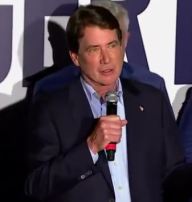
Hagerty speaks at victory rally in Gallatin (WBIR via YouTube)
Hagerty, 60, a former private equity executive and state economic development official, left his post in Tokyo to pursue the Senate seat after incumbent U.S. Senator Lamar Alexander announced his retirement last summer.
He received an immediate endorsement from Trump, despite the fact that Hagerty had backed Trump rival Jeb Bush in the 2016 election and has a long association with 2012 GOP nominee Mitt Romney, the only Republican senator to vote for Trump’s impeachment.
Speaking to supporters at a victory celebration in his hometown of Gallatin, Hagerty thanked Trump, who he said “had my back since before the beginning of this.”
“Thank you for being the inspiration for me, President Trump. I look forward to help you continue moving forward,” he said. “We’ve got to stand up to the radicals in Washington that want to push us off the cliff into socialism.”
Hagerty had put together a collection of disparate supporters that included not only Trump, his son Donald Jr., and Fox News host Sean Hannity, but also support from Bush, Romney and Senate Majority Leader Mitch McConnell.
Sethi countered with endorsements of his own from U.S. Senators Ted Cruz of Texas and Rand Paul of Kentucky, along with conservative groups such as the Family Research Council, Gun Owners of America, and the anti-abortion Tennessee Heartbeat Coalition.
The race grew contentious and both men competed for the Trump mantle. Hagerty’s campaign branded Sethi as a “Never Trumper” and highlighted the fact that he was a finalist for a White House fellowship under former President Barack Obama; Sethi’s returned the favor by highlighting Hagerty’s ties to Romney and Bush.
Given that Tennessee hasn’t elected a Democrat to the Senate in 30 years, Hagerty will be a heavy favorite in November against Bradshaw, who won her primary with 36% of the vote.
In the 1st District, which stretches from the Tri-Cities west toward Knoxville, the Republican primary to replace Roe turned into a 14-candidate free-for-all. Harshbarger won with 19%, followed by State Rep. Timothy Hill from Blountville at 17% and State Senator Rusty Crowe from Johnson City at 16%.
Because Tennessee does not have primary runoffs, Harshberg won with a plurality and will now face Democrat Blair Walsingham, a farmer from Hawkins County, in November.
The Republican nominee will be the prohibitive favorite in the state’s most Republican district, which the party has held continuously for 140 years.
In other races in Thursday’s primary, the two Democrats in the Volunteer State’s congressional delegation — U.S. Reps. Jim Cooper of Nashville and Steve Cohen of Memphis — both easily turned back primary challenges, although Cooper was held to 54%.
Uniquely among states, Tennessee holds its primary elections on Thursdays, rather than Tuesdays, although the general election in November will be held on a Tuesday as it is in the rest of the country.
We tweet at ChkFriPolitics Join us!
The fundraising leader in the race is Diana Harshbarger, a Kingsport pharmacist who has raised nearly $1.5 million. She’s followed by Josh Gapp, a Knoxville pathologist who had initially run in the Senate primary until Roe announced his retirement, and former Kingsport Mayor John Clark.
Also in the race are State Senator Rusty Crowe from Johnson City; State Rep. David Hawk from Greeneville; State Rep. Timothy Hill from Blountville; and former Johnson City Mayor Steve Darden.
 Chicken Fried Politics