
Home » Posts tagged 'Mitch McConnell' (Page 5)
Tag Archives: Mitch McConnell


McBattle 2020: Amy McGrath will run against Mitch McConnell in Kentucky
Race pits retired Marine fighter pilot with fundraising chops against the most powerful Republican in Congress
♦By Rich Shumate, ChickenFriedPolitics.com editor
 LEXINGTON (CFP) — After nearly unseating a sitting Republican congressman in 2018, Democrat Amy McGrath has set her sights on a much bigger target in 2020 — the most powerful Republican in Congress, Senate Majority Leader Mitch McConnell.
The retired Marine fighter pilot announced July 9 that she will challenge McConnell next year, setting the stage for a marquee Senate battle with national implications that will submerge 4.5 million Kentuckians in a sea of negative advertising.
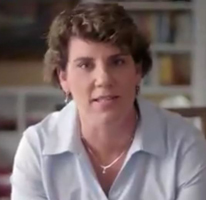
McGrath announces Senate race on Twitter
McGrath pulled no punches in her opening campaign video, saying the senator “was elected a lifetime ago and has, bit by bit, year by year, turned Washington into something we all despise … a place where ideals go to die.”
“There is a path to resetting our country’s moral compass, where each of us is heard,” she said. “But to do that, we have to win this.”
McConnell’s campaign responded in kind, launching a website. “WrongPathMcGrath.com,” and posting a video on Twitter featuring comments McGrath made in her 2018 race, including saying that “I am further left, more progressive than anybody in Kentucky” and comparing her feelings after President Donald Trump’s election in 2016 to how she felt after seeing the towers fall on 9/11.
“Welcome to the race, Amy,” read the McConnell campaign’s tweet atop the video.
McGrath’s decision to take on McConnell was a win for Senate Minority Leader Chuck Schumer and other Senate Democratic leaders who had been recruiting her for the race. But she will face the most formidable force in Kentucky and national politics, who easily swatted away both primary and general election challenges in 2014.
McGrath, 44, who grew up in the Cincinnati suburbs in northern Kentucky, is a Naval Academy graduate who served in both Afghanistan and Iraq as a Marine fighter pilot. After retiring in 2017, she returned to Kentucky to seek the 6th District U.S. House seat against Republican U.S. Rep. Andy Barr.
She raised more than $8.6 million for that race, thanks in part to a video about her life story that went viral, and dispatched a better-known candidate in the Democratic primary before losing to Barr in November by less than 10,000 votes.
Her decision to run for the Senate is good news for Barr, who won’t face a rematch. He has yet to draw another major Democratic challenger.
McConnell, 77, is seeking his seventh term in the Senate; when he was first elected in 1984, McGrath was just 9 years old. He has led Senate Republicans since 2007 and became majority leader in 2015 after the GOP took control.
McConnell, a frequent object of wrath from Trump partisans and some Tea Party groups, has drawn a GOP primary challenge from former State Rep. Wesley Morgan, from Richmond, who has said McConnell “embodies everything that is perverted in Washington D.C.”
However, it is unlikely Morgan — who endorsed a Democrat for his House seat after losing a Republican primary in 2018 — will be able to mount a substantial primary challenge against McConnell, who in 2014 swatted away a much more serious challenge from now-Governor Matt Bevin.
In 2014, Democrats had high hopes of unseating McConnell with Secretary of State Alison Lundergan Grimes. But in the end, McConnell won by 15 points.
Given McConnell’s stature and McGrath’s fundraising prowess, the 2020 race is likely to feature an avalanche of outside advertising in a small state with just two large urban areas and four television markets.
In 2014, McConnell and Grimes spent a combined $50 million, or about $11 for every man, woman and child in the commonwealth. And those figures don’t include spending by outside groups.
We tweet @ChkFriPolitics Join us!
10 takeaways from the first Democratic 2020 debate
Donald Trump draws surprisingly little fire; Texan Julián Castro has breakout performance
♦By Rich Shumate, ChickenFriedPolitics.com editor
 MIAMI (CFP) — The first 10 Democrats took the stage in Miami Wednesday night for the first of two nights of debate among the more than two dozen candidates running for their party’s 2020 presidential nomination. Here’s a recap of some of the key takeaways from the proceedings.
1. Life at the Top: U.S. Senator Elizabeth Warren of Massachusetts was the only one of the candidates in the top five in national polling to take the stage in the first debate, and she got pride of place to both open and close the proceedings. She made the most of her moments and avoided taking shots from the other candidates, although there was long stretches in the second half of two-hour debate where she faded out of the conversation. Her best moment came when she was asked if she had a plan as president to deal with Senate Majority Leader Mitch McConnell, and she responded, “I do” — then made a few fiery comments about energizing Democrats “to make this Congress reflect the will of the people.”

Former San Antonio Mayor Julián Castro has breakout performance at first Democratic debate (From MSNBC)
2. Breakout Performance: Among the candidates further back in the pack, the breakout performance of the night may have come from former San Antonio Mayor Julián Castro, one of two Southerns in the race, who got quite a bit of screen time and dominated the immigration portion of the debate, on a day when the crisis at the U.S.-Mexico border dominated the news cycle. As the only Latino in the 2020 race, Castro spoke with authority that other candidates were hard pressed to match.
3. Private Insurance Fault Line: When the candidates were asked if they supported creating a Medicare-for-all system that would abolish private insurance that employees receive from their employers, only two candidates — Warren and New York Mayor Bill DeBlasio — raised their hands, although both former U.S. Rep. Beto O’Rourke of Texas and U.S. Senator Cory Booker of New Jersey indicated they supported versions of Medicare-for-all that stopped short of ending private insurance. The greatest pushback on the idea came from former U.S. Rep. John Delaney of Maryland: “I think we should be the party that keeps what’s working and fixes what’s broken.”
4. Texas Immigration Tangle: Castro called for repeal of the section of federal law that makes it a crime to illegally cross the U.S. border, which he said had been used by the Trump administration to target migrants. Then he tried repeatedly to get O’Rourke and the other candidates on the stage to follow his lead — and interrupted O’Rourke as he tried to explain his immigration policy without taking a position on repeal, in what proved to be one of the few direct confrontations of the evening.
5. Personal Touch: In discussing issues brought up by the moderators, O’Rouke tried to set himself apart from his competitors by inserting personal stories of Americans whom he has met on the campaign trail and other anecdotes into his responses. This approach perhaps reached its nadir when he was asked if his Justice Department would pursue charges against President Donald Trump once he left office — and he launched into a non sequitur about a painting in the U.S. Capitol that shows George Washington resigning his commission as head of the army.
6. Biggest Threat? When candidates were asked who or what they thought presented the biggest threat to the United States, most said China or climate change. Only one — DeBlasio — said Russia “because they’re trying to undermine our democracy.” But Washington Governor Jay Inslee triggered a cascade of applause with his answer: “Donald Trump.”
7. A Different Kind of Democrat? Three of the candidates mired near the bottom in national polls tried to set themselves apart by portraying themselves as a different kind of Democrat. U.S. Rep. Tim Ryan of Ohio called for the party to pay more attention to blue collar voters in the Midwest, saying its center of gravity needed to shift away from coastal elites. Delaney issued a call for pragmatism, saying Democrats needed to adopt “real solutions, not impossible promises.” And U.S. Rep. Tulsi Gabbard of Hawaii, an Iraq War veteran and major in the Army National Guard, called for a complete U.S. pullout from Afghanistan, saying “we are no better off in Afghanistan today than we were when we began.”
8. Mayor Pushy: DeBlasio did his best to live up to the stereotype of New Yorkers as loud and obnoxious, frequently interrupting the proceedings and interjecting himself at high volume. He gave several lectures on how Democrats need to represent working people and invoked his biracial son to make a point about police reform. True, he got noticed among the flash mob on the stage, but probably not for the right reasons.
9. Where’s The Donald?: With the notable exception of Inslee’s line about Trump being the nation’s biggest existential threat, the Democrats spent surprisingly little time during the debate directly castigating the president — despite the fact that the 2020 election is shaping up as a referendum on the incumbent and the Democratic base sees the president in a slightly less favorable light than Satan.
10. Winners and Losers: Among the evening’s winners were Warren, who needed to get through the debate without stumbling and made a case that she can take on Trump, and Castro, who perhaps put himself back in the national conversation. The losers included DeBlasio, who came off as wild, goofy and unlikable, and O’Rourke, whose vague and often rambling responses couldn’t disguise the fact that he generally wasn’t answering the moderators’ questions. If his ardent supporters were looking for the debate to push him to the front ranks of the race, they’re probably going to be disappointed.
We tweet @ChkFriPolitics Join us!
GOP’s Alabama headache returns: Roy Moore running for U.S. Senate
Former chief justice ignores Donald Trump’s plea not to seek a rematch of 2017 loss
♦By Rich Shumate, ChickenFriedPolitics.com editor
 MONTGOMERY (CFP) — Former Alabama Chief Justice Roy Moore will try again in 2020 to get elected to the U.S. Senate, three years after his campaign for the same office imploded amid sexual misconduct allegations — and despite a Twitter plea from President Donald Trump to stay out of the race.
“Can I win? Yes, I can win. Not only can I, they know I can. That’s why there’s such opposition,” Moore said at his June 20 announcement, referring to Republican leaders who will now face the headache of dealing with Moore in the GOP primary as they try to reclaim the seat from Democratic U.S. Senator Doug Jones.

Roy Moore announces Senate run in Montgomery (WKRG via YouTube)
“Why does the mere mention of my name cause people just to get up in arms in Washington, D.C.?” Moore said. “Is it because I believe in God and marriage and in morality in our country, that I believe in the right of a baby in the womb to have a life? Are these things embarrassing to you?”
Moore’s candidacy is being opposed by the National Republican Senatorial Committee, the campaign arm of GOP senators, as well as Senate Majority Leader Mitch McConnell and Alabama’s Republican U.S. Senator, Richard Shelby.
But it is the opposition of Trump — hugely popular in the Yellowhammer State — that may be the most formidable Republican obstacle in Moore’s path.
In a May 29 tweet, as speculation swirled that Moore might run, Trump said, “If Alabama does not elect a Republican to the Senate in 2020, many of the incredible gains that we have made during my Presidency may be lost, including our Pro-Life victories. Roy Moore cannot win, and the consequences will be devastating.”
Asked about the president’s opposition during his campaign announcement, Moore reiterated his support for Trump’s agenda and said he believed the president was being pressured to come out against him.
“I think President Trump has every right to voice his opinion. I think he’s being pushed by the NRSC,” Moore said.
Moore, 72, once again denied allegations made by five women that he pursued them sexually when they were teenagers in the 1970s — allegations that proved devastating to his 2017 campaign against Jones.
“I’ve taken a lie-detector test. I’ve take a polygraph test. I’ve done everything I could do,” he said.
Moore also said Jones’s win in 2017 — the first by a Democrat in an Alabama Senate race in 25 years — was “fraudulent” because he was the victim of a “false flag operation using Russian tactics.”
In late 2018, several news organizations reported that a group financed by a Democratic operative used Twitter and Facebook to spread disinformation against Moore, who lost to Jones by just 1 percent of the vote.
Jones, who has said he was not aware of what the group was doing, repudiated what he termed “deceptive tactics” and called for a federal investigation.
In his 2020 announcement, Moore said he suspected “Republican collusion” in the Democratic disinformation campaign, although he didn’t offer specifics.
Moore will be running in the Republican primary against a field that already includes U.S. Rep. Bradley Byrne of Mobile, former Auburn University football coach Tommy Tuberville, Secretary of State John Merrill from Tuscaloosa, and State Rep. Arnold Mooney from suburban Birmingham.
The two top vote getters in the March 2020 primary will advance to a runoff.
The challenge for the NRSC and Senate Republican leaders will be finding a way to work against Moore while remaining neutral among the other candidates. In 2017, their open support of Luther Strange backfired when Moore turned his ties with the Washington establishment into a potent campaign issue.
Moore first gained national notoriety as a local judge in 1995 after battling the ACLU over his practice of opening court sessions with a prayer and hanging the Ten Commandments in his courtroom.
He parlayed that prominence into election as Alabama’s chief justice in 2000 but was forced out in 2003 after he had a display of the Ten Commandments installed in the rotunda of the state judicial building and then defied a federal judge’s order to remove it.
Moore was once again elected chief justice in 2012, but in 2016, he was suspended by a judicial disciplinary panel for the rest of his term for ethics violations after telling local officials that they didn’t have to comply with the U.S. Supreme Court decision legalizing same-sex marriage.
After losing an appeal of his suspension, Moore resigned from the Supreme Court to run for the Senate vacancy created when Jeff Sessions resigned to become Trump’s attorney general.
In 2017, Moore was able to use his base of support from his tenure as chief justice to get into the runoff, where he defeated Strange, who had been appointed to the seat temporarily by disgraced former Governor Robert Bentley.
Trump had backed Strange in the runoff but quickly got on board with Moore once he won. But after the sexual misconduct allegations surfaced, McConnell, Shelby and other Republican Senate leaders abandoned their wounded nominee, even announcing that they would expel him from the Senate if he won.
Jones, who now faces the formidable challenge of trying to hang on to his Senate seat in deep red Alabama, is considered to be the most vulnerable Democratic incumbent in the Senate in 2020.
Jones greeted Moore’s announcement with a tweet: “So it looks like my opponent will either be extremist Roy Moore or an extremist handpicked by Mitch McConnell to be part of his legislative graveyard team. Let’s get to work so we can get things done!”
We tweet @ChkFriPolitics Join us!
Insight: Outcome of Kentucky governor’s race could be early indicator for Trump 2020
Can Governor Matt Bevin overcome his unpopularity by casting fall contest as conservative vs. liberal?
 ♦By Rich Shumate, ChickenFriedPolitics.com editor

Consider if you will a leader who is unapologetic, unconventional and unleashed. Who is in office not because of, but in spite of, the political class and cares little for its opinions.
A man whose opponents are reduced to sputtering fits of rage at the mere mention of his name. Who plays happily to his base, unperturbed by tepid approval ratings.
That, of course, describes Donald Trump, but it also describes the central player in the South’s hottest governor’s race in 2019 — which could very well be the first canary in the coal mine telling us how Trump himself might fare in 2020.

Kentucky Governor Matt Bevin
Kentucky Governor Matt Bevin is running for re-election after four turbulent years in Frankfort, in which he sparred with his fellow Republicans in the legislature, accused teachers of endangering students by leaving their classrooms to protest changes in their pensions, and lamented that Americans had become “soft” after school districts canceled classes during a subfreezing cold snap.
He has even endured the worst indignity that can befall a Kentucky politician — being booed lustily by the crowd on Derby Day.
In November, Bevin will face Democratic Attorney General Andy Beshear, the son of his predecessor, who over the past four years has made it his personal mission to sue Bevin — over pension reform, over higher education cuts and, most recently, over subpoenas issued to teachers who called in sick to protest at the Capitol.
The blood here is bad. Bevin went after Beshear’s mother, Kentucky’s former first lady, removing her from a commission that oversees a state horse park and taking her name off of a state-run visitor’s center.
Beshear likes to tell voters that the bombastic Bevin, who grew up in New Hampshire, just wasn’t raised right, a rather serious insult down South.
A preview of both camps’ general election strategies was full display on the night of May’s primary. Beshear called Bevin a bully and said the election would be about “right versus wrong.” Bevin called Beshear a liberal and said the election would be about right versus left.
The governor is betting that a binary choice between himself and a “liberal” candidate will work to his advantage in Kentucky, just as Trump is painting his re-election as a binary choice between him and the “socialists” he says are running amok in the Democratic Party.
The question will be whether, when it comes time for voters to render a verdict, the pull of that binary choice will be stronger than the incumbents’ personal unpopularity (which is, arguably, how Trump became president in the first place).
In a sense, Bevin was Trump before Trump was Trump. His came on the political scene in 2014 with a kamikaze mission to unseat U.S. Senator Mitch McConnell in a Republican primary with Tea Party support. In 2015, he won the GOP primary for governor by less than 100 votes after his two better-known rivals savaged each other. He won the general election by opposing same-sex marriage and tying his Democratic opponent to Barack Obama.
But as controversies have mounted, his fortunes have fallen. When Morning Consult looked at gubernatorial approval ratings in April, Bevin came in dead last, at just 33 percent and nearly 20 points under water.
Being tagged as America’s most unpopular governor is certainly no badge of honor when running for re-election, although Bevin, characteristically, insists he pays no attention to such things.
The governor’s job approval is about 10 points lower than Trump’s, and, while the president retains strong support among Republicans, Bevin could only manage to win 52 percent in May’s GOP primary, against three little-known opponents.
However, if the strategy of presenting a binary choice against a liberal is going to work anywhere, it should work in Kentucky, home to many rural, white, religious voters who propelled Trump to a whopping 40-point win in 2016.
Abortion is likely to be the key fault line in Bevin’s quest to paint Beshear as too liberal. Bevin opposes legal abortion; Beshear supports it and has refused to defend abortion restrictions passed by the legislature in court.
Bevin has also, not surprisingly, wrapped himself firmly in Trump’s aura. The president is featured prominently in his campaign ads and is expected to travel to the Bluegrass this fall to campaign for him.
A Bevin victory, despite weak poll numbers and ceaseless controversy, would be a boon for the binary choice strategy and a testament to Trump’s enduring popularity among his supporters.
A Bevin defeat could show the limits of trying to overcome marked unpopularity through ideological contrast. While that won’t have implications for 2020 in places such as Kentucky where Trump is popular, it could illustrate the limits of a contrast strategy in battleground states he needs to win.
No matter how Bevin vs. Beshear 2019 turns out, it will be loud, expensive and mean — just the thing to get us ready for Trump vs. Democrats 2020.
We tweet @ChkFriPolitics Join us!
Kentucky Attorney General Andy Beshear wins Democratic nomination to face Governor Matt Bevin
Bevin barely clears a majority in GOP gubernatorial primary
♦By Rich Shumate, ChickenFriedPolitics.com
LOUISVILLE (CFP) — Attorney General Andy Beshear narrowly won the Democratic primary for Kentucky governor, setting up a November showdown with Republican Governor Matt Bevin, who turned in a mediocre primary result against weak competition.
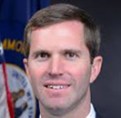
Attorney General Andy Beshear
Beshear turned back a challenge in the May 21 primary from State Rep. Rocky Adkins, who led for most of election night after running up huge margins of victory in Eastern Kentucky, where he lives. His lead faded once more returns from Louisville, Lexington and Western Kentucky rolled in.
Former State Auditor Adam Edelen, who led the race in fundraising and touted himself as a fresh face in Kentucky politics, finished third, unable to beat Beshear in the state’s urban centers and winning just two counties.
Beshear took 38 percent to 32 percent for Adkins and 27 percent for Edelen.
The results from the May 21 primary contained potentially ill portents for Bevin as he fights to hang on to his job.
Despite a significant money advantage and the powers of the governorship at his disposal, he took just 52 percent in the GOP primary against three little-known opponents and received 13,000 fewer votes in his primary than did Beshear, who faced much stouter competition — leading to some gloating by Beshear in his victory speech.
“Tonight we not only won this primary, we did something we’re going to do in November — we got more raw votes than Matt Bevin,” Beshear told supporters in Louisville.
State Rep. Robert Goforth, who has crisscrossed the commonwealth trying to convince his fellow Republicans that Bevin is a sure loser in November, took 39 percent of the vote and beat the governor in 27 of Kentucky’s 120 counties.
In the end, more than 120,000 Republicans voted for someone other than Bevin, who wrapped himself in the mantle of President Donald Trump in his television ads.
Speaking to reporters outside the Governor’s Mansion in Frankfort after the results came in, Bevin said he was not surprised by the result, noting that Goforth had run a substantive campaign.
The governor also said “I think it’s a little concerning for [Beshear] that he couldn’t even hit 40 percent.”
Bevin’s approval ratings have sagged as he sparred with his fellow Republicans in the legislature and criticized public school teachers, who have descended on Frankfort during the past two legislative sessions to protest proposed changes in state pensions.
His November battle with Beshear will be nothing new. The two have clashed repeatedly in court over the last four years, including the attorney general’s successful lawsuit to scuttle a GOP pension reform plan passed in 2018.
In his victory speech, Beshear — whose father, Steve, was Bevin’s predecessor as governor — went directly after Bevin, saying the general election is not about left versus right but “right versus wrong” and hitting the governor for contention in state politics during his term.
“We were raised better than this. We were raised better than the bullying we see in Frankfort,” he said. “Matt Bevin is going to try to make this election about anything other than his record because it is one of total failure.”
But Bevin told reporters at his news conference that the fall election will come down to a “binary” choice between conservative and liberal candidates.
“What you’re going to have … is a very clear contrast on issues that matter significantly to people in Kentucky,” Bevin said, noting in particular Beshear’s support for legal abortion, which he opposes “You have somebody in Andy Beshear who proudly supported Hillary Clinton. That doesn’t play well in Kentucky.”
The governor said he expects Trump to travel to Kentucky to campaign for him during the general election contest.
In other primary races, Miss America 2000 Heather French Henry, the only Kentucky woman to ever win the title, easily won the Democratic nomination for secretary of state to replaced the term-limited Alison Lundergan Grimes.
Henry polled more than 260,000 votes statewide, more than any other candidate on the primary ballot in either party.
Henry will face Republican Michael Adams, a former general counsel for the Republican Governor’s Association whom Bevin appointed to the State Board of Elections.
In the Republican race for attorney general, Daniel Cameron, an attorney and former University of Louisville football player who served as legal counsel to Senate Majority Leader Mitch McConnell, defeated State Senator Wil Schroder, a former prosecutor from suburban Cincinnati.
He will now face Democrat Greg Stumbo, who held the attorney general’s job from 2004 to 2008.
Hanging on to the attorney generalship, which Beshear used with great effect to stymie Bevin, is an important aim for Democrats, who have held the office continuously since 1948.
 Chicken Fried Politics