
Latest Posts
Latest Coverage
-
Symbolic solution in search of an actual problem
Support of 9 Southern Republicans for Respect for Marriage Act shows why Supreme Court isn’t about to ban same-sex marriage ♦By Rich Shumate, ChickenFriedPolitics.com editor…
-

West Virginia stubborn, or playing hard to get
U.S. Senator Joe Manchin pisses off his party yet again … to what end? ♦By Rich Shumate, ChickenFriedPolitics.com editor Also in this report: Atlanta DA…
-

2 Mississippi Republican U.S. House members forced into runoffs after weak primary showings
Michael Guest narrowly trails challenger in 3rd District; Steven Palazzo clears just 32% in 4th District ♦By Rich Shumate, ChickenFriedPolitics.com editor JACKSON, Mississippi (CFP) –…
-
Mississippi Republican U.S. Rep. Steven Palazzo facing Tuesday primary fight amid ethics investigation
6 opponents hitting “No-Show Palazzo” over inattention to district, ethics problems ♦By Rich Shumate, ChickenFriedPolitics.com editor GULFPORT (CFP) — Mississippi U.S. Rep. Steven Palazzo —…
-

Primary Wrap: Kemp, Raffensperger survive Trump’s ire; Brooks makes Alabama U.S. Senate runoff
Texas Democratic U.S. Rep. Henry Cuellar survives challenge from the left; George P. Bush gets blown out by Attorney General Ken Paxton ♦By Rich Shumate,…
-

U.S. House’s last pro-life Democrat, Texas’s Henry Cuellar, fighting to keep seat in Tuesday primary runoff
Challenger Jessica Cisneros wanted House Democratic leaders to rescind Cuellar endorsement; they refused ♦By Rich Shumate, ChickenFriedPolitics.com editor LAREDO, Texas (CFP) — Amid the newly…

North Carolina U.S. Senator Thom Tillis breaks with President Trump on border wall emergency
House approves measure to overturn Trump’s emergency declaration with just 3 Southern GOP votes
♦By Rich Shumate, ChickenFriedPolitics.com editor
 WASHINGTON (CFP) — U.S. Senator Thom Tillis of North Carolina has become the first Southern Republican in the Senate to break ranks to support overturning President Donald Trump’s declaration of a national emergency to find money to construct a wall along the U.S.-Mexico border.

U.S. Senator Thom Tillis
The Democrat-controlled House passed a bill Tuesday to overturn the emergency declaration, which now goes to the Republican-controlled Senate.
Just three Southern Republicans in the House — Thomas Massie of Kentucky, Will Hurd of Texas, and Francis Rooney of Florida — voted for the measure, which passed by a margin of 245-182.
In an op-ed piece in the Washington Post, Tillis said he is concerned that the emergency declaration will set a precedent that “future left-wing presidents will exploit to advance radical policies that will erode economic and individual freedoms.”
“Those on the left and the right who are making Trump’s emergency declaration a simple political litmus test of whether one supports or opposes the president and his policies are missing the mark,” Tillis said. “This is about the separation of powers and whether Congress will support or oppose a new precedent of executive power that will have major consequences.”
Tillis said conservatives “should be thinking about whether they would accept the prospect of a President Bernie Sanders declaring a national emergency to implement parts of the radical Green New Deal; a President Elizabeth Warren declaring a national emergency to shut down banks and take over the nation’s financial institutions; or a President Cory Booker declaring a national emergency to restrict Second Amendment rights.”
He also noted that Republicans “rightfully cried foul” when President Barack Obama used executive action to bypass Congress.
“There is no intellectual honesty in now turning around and arguing that there’s an imaginary asterisk attached to executive overreach — that it’s acceptable for my party but not thy party,” he said.
Trump, frustrated by the unwillingness of the Democrat-controlled House to vote money for the border wall, declared a national emergency on February 15, which will allow him to shift $8 billion from other federal programs and use it for wall construction. Most of the money will come from appropriations for military construction and drug interdiction.
Under the law that governs national emergencies, Congress can overturn an emergency declaration with a majority vote in both houses. However, Trump is certain to veto the measure if it gets through the Senate, and the president has enough support to prevent his veto from being overridden.
Republicans hold a 53-47 majority in the Senate. Three Republicans — Tillis, Susan Collins from Maine, and Lisa Murkowski — have now said they will vote in favor of overturning the declaration; any additional GOP defections will mean it is likely to pass when it comes to the floor.
Senate Majority Leader Mitch McConnell of Kentucky has 18 days to bring the House resolution to a vote.
In the House, almost all of the Southern Republicans stuck with the president.
The dissenters were Rooney, who represents Southwest Florida; Hurd, who represents a West Texas district along the U.S.-Mexico border where much of the proposed wall would be constructed; and Massie, who said he supports construction of the wall but voted for the resolution “in order to be consistent in preserving the constitutional structure of our Republic.”
“There is a crisis at our border, but it’s not an emergency when Congress doesn’t spend money how the President wants,” Massie said on Twitter. “The President’s constitutional remedy is to veto spending bills that aren’t suitable to him, yet he has chosen to sign many bills that did not fund the wall.”
If Congress is unable to override Trump’s veto, the battle over the border wall will likely head to federal court, where opponents plan to challenge the legality of the emergency declaration.
We tweet @ChkFriPolitics Join us!

Virginia House Republicans plan hearings on Justin Fairfax sexual assault allegations
Lieutenant governor calls hearings “partisan,” doesn’t say if he’ll participate
♦By Rich Shumate, ChickenFriedPolitics.com editor
 RICHMOND (CFP) — Republicans in the Virginia House of Delegates have decided to invite Democratic Lieutenant Governor Justin Fairfax and two women who have accused him of sexual assault to air their versions of events in a public hearing.
Delegate Rob Bell, the chair of the House Courts of Justice Committee, announced the planned hearings Friday, in a speech on the House floor.
“This will give all parties a chance to be heard,” he said.
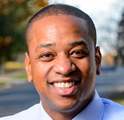
Virginia Lieutenant Governor Justin Fairfax
However, a date for the hearing and details about the format were not announced. And while both women indicated they would participate, Fairfax’s office issued a statement characterizing the hearing as “partisan” and leaving his participation an open question.
“House Republicans want to pursue this historically unprecedented course of action because the accused is a popularly elected Democrat,” said Fairfax spokeswoman Lauren Burke in a statement. “The path to finding truth and justice should be based on due process and the work of law enforcement professionals.”
The legislature’s current session ends on Saturday, although committees can meet between sessions. House Speaker Kirk Cox said the hearing announced by Bell was not an impeachment hearing, leaving it unclear if lawmakers could force Fairfax to testify.
The decision to organize a hearing marks a change in tactics for Republicans, who have been relatively silent over the past two weeks as Democrats have wrestled with how to deal with allegations of rape and sexual assault against a man who had been considered a rising star in their party.
Both the Democratic Party of Virginia and the commonwealth’s Legislative Black Caucus have called on Fairfax to resign, as have many of the party’s 2020 White House contenders.
Vanessa Tyson, a college professor in California, has alleged that Fairfax forced her to perform oral sex in a Boston hotel room during the 2004 Democratic National Convention.
Meredith Watson, who now lives in Maryland, has accused Fairfax of raping her in 2000, when they were classmates at Duke University in North Carolina.
Fairfax, 40, a former federal prosecutor elected lieutenant governor in 2017, has denied both allegations and called on the FBI to investigate.
The age of the allegations and the fact that neither alleged assault took place in Virginia have complicated efforts to investigate, leaving it unclear which law enforcement agency might have the authority to do so.
Cox had proposed a special investigative committee, with an equal number of members from both parties and subpoena power, but the plan stalled when Democrats would not agree.
Bell’s committee has 10 Republicans and eight Democrats.
Watson’s attorney, Nancy Erika Smith, released a statement saying Watson was “gratified” by the decision to schedule a hearing and “looks forward to testifying at this forum.”
Smith also said it was her understanding that the hearing would be televised and that Watson would be able to call witnesses to corroborate her account.
Tyson’s lawyers also indicated she was “prepared to testify,” although she would prefer a bipartisan committee to avoid a “highly charged political environment.”
We tweet @ChkFriPolitics Join us!

Republican U.S. Rep. Bradley Byrne first to take on Democratic U.S. Senator Doug Jones in 2020
Byrne’s past criticism of President Donald Trump could become an issue in the GOP primary
♦By Rich Shumate, ChickenFriedPolitics.com editor
Watch Byrne’s campaign kickoff. Video below story.
 MOBILE (CFP) — U.S. Rep. Bradley Byrne has become the first Republican to enter the 2020 U.S. Senate race in Alabama, drawing a contrast between what he called “bedrock” Alabama values and the priorities of Washington — and between his positions and those of the Democrat now holding the seat, Doug Jones.
“Look at Washington and tell me you don’t see a disconnect between your values and the values you see up there,” Byrne said at his campaign kickoff February 20 at an oyster house in Mobile. “Look at Washington and tell me you don’t see people that have a vision that’s fundamentally at odds with what America is.”

U.S. Rep. Bradley Byrne kicks off Senate campaign in Mobile (From WKRG via YouTube)
Byrne drew a contrast with Jones over his opposition to Brent Kavanaugh’s nomination to the Supreme Court, his stand in favor of legal abortion, and his opposition to the president’s proposed wall along the U.S.-Mexico border.
“When the people we charge with patrolling our Southern border, with protecting you and me, tell us we need to build some more border wall, we build a border wall,” Byrne said, to applause from his supporters.
Byrne also warned his supporters that “the people that presently hold this seat intend to keep it, and they will stop at nothing.”
Byrne, 64, from Baldwin County just across the bay from Mobile, was elected to Alabama’s 1st District U.S. House seat in a 2013 special election and has won re-election easily three times. He had previously served in the State Senate and as chancellor of the Alabama Community College System.
While Byrne offered full-throated support of Trump in his campaign kickoff, his previous comments about the president could come back to haunt him in a Republican primary in a state where the president remains popular.
During the 2016 campaign, after a video surfaced in which Trump was heard describing how he groped women’s genitals, Byrne withdrew his endorsement and called on Trump to exit the race, saying he could not defeat Hillary Clinton. However, he later made it clear that he did not support Clinton and would vote for the Republican ticket.
Byrne was joined by two of his House colleagues from Alabama, Martha Roby and Mo Brooks, in criticizing Trump during the campaign — and both of them discovered, as Byrne might, the political consequences of running afoul of the Trump faithful.
Brooks came in third place in the Republican primary in a 2017 special election to fill the Senate seat Jones now holds against two candidates who criticized him for his comments about Trump. Roby was forced into a primary runoff in 2018 for the same reason, although she survived.
Jones, 64, won a special election to the Senate in 2017 after the Republican nominee, Roy Moore, was accused of pursuing sexual relationships with underage girls, allegations which Moore denied. Jones is considered among the most vulnerable Senate Democrats on the ballot in 2020, in a state Trump carried in 2016 by 28 points.
During his time in the Senate, Jones has not tried to tack to the right to appeal to Alabama’s conservative electorate. He has supported the Democratic leadership on key votes, which included voting against the Republican tax cut plan and the Kavanaugh nomination, and he also supports same-sex marriage and providing a pathway to citizenship for undocumented migrants.
Jones ended 2018 with $2.1 million in cash on hand for the 2020 race, according to reports filed with the Federal Election Commission.
Given Jones perceived vulnerability, the race is expected to draw an number of Republican challengers into the primary with Byrne. State Auditor Jim Zeigler has formed an exploratory committee, and others considering the race are U.S. Rep. Gary Palmer from Hoover and State Senate President Pro Tem Del Marsh from Anniston.
The Senate race in Alabama is one of 13 Southern Senate races in 2020. Only two of those seats are held by Democrats, Jones and Virginia’s Mark Warner.
We tweet @ChkFriPolitics Join us!
Watch Byrne’s campaign kickoff:

North Carolina elections board orders new vote in disputed 9th District U.S. House race
Republican Mark Harris reverses course and calls for new election instead of certifying his unofficial win
♦By Rich Shumate, ChickenFriedPolitics.com editor
RALEIGH (CFP) — The North Carolina State Board of Elections has ordered a new election for the state’s 9th District U.S. House seat, after hearing four days of testimony about allegations of absentee ballot fraud by a operative working for Republican candidate Mark Harris.
The board’s unanimous February 21 decision came shortly after Harris, who had spent the morning answering questions, returned from a lunch break and called for a new election, saying poor health would not allow him to continue testifying.

Republican candidate Mark Harris weeps during his son’s testimony (From WRAL-TV)
“Through the testimony I’ve listened to over the past three days, I believe a new election should be called,” he said. “It’s become clear to me that the public’s confidence in the 9th District seat general election has been undermined to an extent that a new election is warranted.”
However, Harris insisted that “neither I nor any of the leadership in my campaign were aware of or condone the improper activities that have been testified to.”
The board’s decision sets up a possible rematch between Harris and Democrat Dan McCready in the new election to fill the seat, giving Democrats another pickup opportunity.
However, it is not clear if Harris will be a candidate. He told the elections board that he had suffered two strokes while battling an infection in January and said he was not well enough to answer questions, calling into question if he could withstand a contentious campaign in the glare of the national spotlight.
“Though I thought I was ready to undergo the rigors of this hearing and am getting stronger, clearly I am not, and I struggled this morning with both recall and confusion,” he said.
In December, North Carolina’s Republican-controlled legislature changed state law to require a full primary election in the event the 9th District race was rerun, which gives the GOP the option of ditching Harris and nominating another candidate to face McCready.
McCready took to Twitter to welcom the board’s decision, saying “from the moment the first vote was stolen in North Carolina, from the moment the first voice was silenced by election fraud, the people have deserved justice. Today was a great step forward for democracy in North Carolina.”
McCready has raised more than $500,000 for a rematch in the contested race since December; Harris’s campaign had just $19,000 in cash and $86,000 in unpaid debt at the end of December, according to reports filed with the Federal Election Commission.
Harris, 52, a longtime Christian conservative activist and former senior pastor at Charlotte’s First Baptist Church, led McCready by 905 votes in unofficial returns after November’s vote.
But the state elections board refused to certify the results amid allegations that a contractor hired by the Harris campaign, McCrae Dowless, had illegally collected absentee ballots in Bladen County, a rural outpost at the eastern end of the district.
Under state law, voters must mail or deliver completed absentee ballots themselves. The board heard testimony that Dowless and people working for him had collected the ballots and then submitted them. Questions were also raised about improprieties in applications for absentee ballots.
Until reversing course at the hearing, Harris had resisted calls by McCready and Democrats for a new election in the 9th District, which includes the suburbs of Charlotte and rural areas to the east toward Fayetteville.
His lawyers and Republican officials had argued that the results should be certified despite the fraud allegations because the number of absentee ballots in question was not sufficient to change the outcome.
The most dramatic testimony during the four-day hearing came from Harris’s son John, a federal prosecutor. He testified that he had warned his father against using Dowless as an operative in the campaign because he was a “shady character.”
Harris sat crying as he watched his son’s testimony, which contradicted his previous assertions that the allegations of illegal activity by Dowless came as a surprise.
No Republican has yet come forward to launch a challenge to Harris. Two possibilities, former Governor Pat McCrory and former U.S. Rep. Robert Pittenger, who was defeated by Harris in the Republican primary in 2018, have both taken themselves out of the running.
McCready, 34, a former Marine officer and businessman, is not expected to face any challengers on the Democratic side.
If McCready wins the rematch, the 9th District will be the only North Carolina seat to shift from Republican to Democrat and would be the 11th Southern seat to shift in the 2018 cycle. Republicans hold a 101-to-50 advantage in House seats across the 14 Southern states.
We tweet @ChkFriPolitics Join us!

Insight: U.S. House 2020 target lists show Democrats playing defense in the South
Democratic and Republican campaign arms are targeting 25 Southern seats
♦By Rich Shumate, ChickenFriedPolitics.com editor
WASHINGTON (CFP) — The U.S. House campaign arms for both parties have released their first list of targets for 2020, with Southern Democrats playing an unfamiliar role they haven’t enjoyed in recent cycles — on defense, protecting their 2018 gains.

Chicken Fried Politics Editor Rich Shumate
Next year’s congressional battles in the South will take place almost entirely in the suburbs. Nearly all of the 25 districts being targeted by both parties contain suburban areas around large cities, territory where Democrats made major gains last November and hope to make more.
The National Republican Congressional Committee — trying to claw its way back into a majority after a disappointing 2018 — is targeting 12 Democrat-held seats across the South, 10 of which are held by by freshmen who flipped seats, including three seats in Virginia, two each in Texas and Florida, and seats won in breakthroughs in Oklahoma, South Carolina and Georgia.
Among the targets are eight Democratic freshmen who supported Nancy Pelosi’s bid for House speaker — a vote that is sure to be front and center on TV screens when 2020 rolls around.
Only two veteran Democrats, both in Florida, are on the GOP’s target list — Charlie Crist in the Clearwater-based 13th District, and Stephanie Murphy in the 7th District in metro Orlando. Both districts look competitive on paper, although neither Crist nor Murphy had much trouble in 2018.
Meanwhile, the Democratic Congressional Campaign Committee is targeting 13 Republican-held seats across the South, an audacious list that includes nine veteran GOP incumbents, some with decades of experience.

Chip Roy

Ross Spano
And while Democrats will have to defend a bumper crop of incumbents, just two of the Southern Democratic targets are freshman Republicans — Ross Spano in Florida’s 15th District and Chip Roy in Texas’s 21st District.
Defending long-term incumbents is usually easier that defending freshmen seeking a second term, which could give
Republicans an advantage overall in the South in 2020.
The GOP has another advantage — while its targets are nearly evenly split between districts that Donald Trump and Hillary Clinton carried in 2016, 12 of the 13 Democratic targets are in districts Trump carried, which will be more difficult to flip. (The lone exception is Will Hurd in Texas’s 23rd District.)
Democrats are also unlikely to replicate the wave they enjoyed in 2018, which carried them to victory in some rather unlikely places.
Still, Republicans find themselves with the unexpected — and unwelcome — prospect of spending energy and money to reclaim seats in such normally red areas as Oklahoma City, Charleston and the suburbs of Atlanta, Houston and Dallas.
Among the Republican freshman targeted, Spano, whose district stretches inland from the suburbs of Tampa, may be vulnerable in 2020 after admitting that he borrowed money from two friends that he then plowed into his election campaign, which is a violation of federal campaign finance laws.
He blamed bad advice from this then-campaign treasurer; Democrats are pushing for an investigation.
Roy, a former top aide to U.S. Senator Ted Cruz, won by just two points in 2018. His district includes suburbs of Austin and San Antonio and rural areas to the west.
One seat on the Democrats’ list, Georgia’s 7th District in Atlanta’s northwest suburbs, will be open, thanks to the pending departure of Rob Woodall, who decided to retire after winning by just 400 votes in 2018. Another seat, North Carolina’s 9th District, is vacant due to an ongoing dispute over allegations of absentee ballot fraud.
Democrats have decided to forgo, at least for now, targeting two seats that they tried and failed to flip in 2018 — Arkansas’s 2nd District in metro Little Rock, held by French Hill, and West Virginia’s 3rd District, which takes in the southern third of the state, held by Carol Miller.

Andy Barr
However, they are once again trying to flip Kentucky’s 6th District, in and around Lexington, where Andy Barr held off a spirited challenge from Democratic newcomer Amy McGrath, who raised a whopping $8.6 million.
McGrath hasn’t said if she’s running again. Senate Democrats have been encouraging her for forgo a rematch with Barr and instead challenge Senate Majority Leader Mitch McConnell.
The toughest sled for Democrats will be taking out nine veteran Republicans they have targeted, including five in Texas alone.
Among the Texas targets are five men who between them have more than 60 years of seniority: John Carter in the 31st District in the northern Austin suburbs; Kenny Marchant in the 24th District in Dallas-Ft. Worth; Mike McCaul in the 10th District that stretches from Austin toward Houston; and Pete Olson in 22nd District in Houston’s western suburbs.
Until the 2018 cycle, these Texas seats had been thought safely Republican. But Carter and Marchant won by just 3 points in 2018; McCaul won by 4 points and Olson by 5 points.
Democrats are also going after Brian Mast in Florida’s 18th District north of Palm Beach; and, in North Carolina, George Holding, in the 2nd District around Raleigh, and Ted Budd, in 13th District between Charlotte and Greensboro.

Lucy McBath

Joe Cunningham
The freshmen that Democrats will have to defend including two in the Miami area, Donna Shalala in the 27th District, and Debbie Mucarsel-Powell in the 26th District; Lucy McBath in Georgia’s 6th District in Atlanta’s northeast suburbs; Kendra Horn in the Oklahoma City-based 5th District; and Joe Cunningham, who represents the South Carolina Low Country in the 1st District.
Three freshmen Democrats in Virginia are also on the list — Elaine Luria, who represents the 2nd District in Hampton Roads; Abigail Spanberger, who represents the 7th District in the Richmond suburbs, and Jennifer Wexton, whose 10th District includes the Virginia suburbs of Washington, D.C.
The Republican target list also includes two Texas freshman: Colin Allred, who represents the 32nd District in metro Dallas, and Lizzie Pannill Fletcher, who represents the 7th District in metro Houston.
All of these freshmen, except for Spanberger and Cunningham, voted for Pelosi for speaker.
Among the GOP targets, Shalala and Wexton are likely in the least danger, as both represent districts Hillary Clinton carried easily in 2016. Horn, McBath and Cunningham — whose 2018 wins were among the biggest surprises of the election cycle — are likely in the most jeopardy.
Democrats’ success in 2018 was largely the result of raising enough money to be competitive in GOP-held districts, in many cases even outraising incumbents who didn’t take their races seriously enough.
Democratic freshmen being targeted in 2020 should have no problem raising money; neither will challengers to Republican incumbents who had close calls in 2018. Members of the majority party also tend to have easier access to campaign money than the party out of power.
Still, 2020 will no doubt see Republicans loaded for bear, with two years to regroup and build up their treasuries, leaving voters facing loud, expensive and contentious races across the South.
Heading into 2020, Republicans hold 101 seats among delegations in the 14 Southern states; Democrats have 50, with one vacant seat in North Carolina.

 Chicken Fried Politics