
Latest Posts
Latest Coverage
-
Symbolic solution in search of an actual problem
Support of 9 Southern Republicans for Respect for Marriage Act shows why Supreme Court isn’t about to ban same-sex marriage ♦By Rich Shumate, ChickenFriedPolitics.com editor…
-

West Virginia stubborn, or playing hard to get
U.S. Senator Joe Manchin pisses off his party yet again … to what end? ♦By Rich Shumate, ChickenFriedPolitics.com editor Also in this report: Atlanta DA…
-
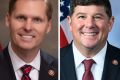
2 Mississippi Republican U.S. House members forced into runoffs after weak primary showings
Michael Guest narrowly trails challenger in 3rd District; Steven Palazzo clears just 32% in 4th District ♦By Rich Shumate, ChickenFriedPolitics.com editor JACKSON, Mississippi (CFP) –…
-
Mississippi Republican U.S. Rep. Steven Palazzo facing Tuesday primary fight amid ethics investigation
6 opponents hitting “No-Show Palazzo” over inattention to district, ethics problems ♦By Rich Shumate, ChickenFriedPolitics.com editor GULFPORT (CFP) — Mississippi U.S. Rep. Steven Palazzo —…
-

Primary Wrap: Kemp, Raffensperger survive Trump’s ire; Brooks makes Alabama U.S. Senate runoff
Texas Democratic U.S. Rep. Henry Cuellar survives challenge from the left; George P. Bush gets blown out by Attorney General Ken Paxton ♦By Rich Shumate,…
-
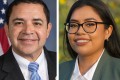
U.S. House’s last pro-life Democrat, Texas’s Henry Cuellar, fighting to keep seat in Tuesday primary runoff
Challenger Jessica Cisneros wanted House Democratic leaders to rescind Cuellar endorsement; they refused ♦By Rich Shumate, ChickenFriedPolitics.com editor LAREDO, Texas (CFP) — Amid the newly…
Recount begins in North Carolina governor’s race
State board sets Monday deadline for recounting ballots in Durham County
♦By Rich Shumate, Chicken Fried Politics.com editor
 RALEIGH (CFP) — The hotly contested North Carolina governor’s race has entered what is likely its final stage, with elections officials in Durham County now recounting ballots to meet a Monday deadline.
Republican Governor Pat McCrory has indicated that he will concede to Democratic Attorney General Roy Cooper if the recount doesn’t overturn Cooper’s slight lead.
With ballots certified in 98 of the state’s 100 counties, Cooper leads McCrory by 10,263 votes, out of more than 4.7 million votes cast.
If that margin holds after the Durham recount, McCrory won’t be entitled to a full statewide recount, which is only triggered if the margin is less than 10,000 votes.
The deadline for finishing the recount is 7 p.m. ET Monday.
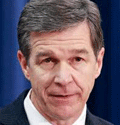
Attorney General Roy Cooper
Cooper beat McCrory by a margin of 91,000 votes in Durham County, taking a whopping 79 percent of the vote, which was his best performance in any county.
The contention over the results in Durham began on election night, when a batch of 90,000 votes came in all at once, propelling Cooper — who had trailed most of the night — into the lead statewide.
McCrory and his campaign found those results suspicious and demanded a recount. However, Durham election officials said the late reporting of results was caused by a technical problem that forced them to enter the results from voting machines by hand.
The Durham County elections board turned down McCrory’s request for a recount, but the State Board of Elections voted along party lines to order one.
In North Carolina, both state and county elections boards are appointed by the governor, and the governor’s party holds a majority.
McCrory’s campaign has indicated that he will concede to Cooper if the Durham results don’t change the outcome. He has already filed the paperwork for a statewide recount, although that request would be moot if Cooper’s margin holds.
Cooper’s campaign has been calling on McCrory to concede and bring to an end the three-week drama over who will lead the Tar Heel State.
“It’s clear there is no path to victory for Governor McCrory,” said Cooper campaign manager Trey Nix in a statement posted on Facebook. “It’s time for Governor McCrory to accept the election results and respect the will of the voters.”
Should Cooper hang on, North Carolina would be the only state where Democrats flipped a governorship in 2016 and would give them a third Southern governorship, compared to 11 for Republicans.
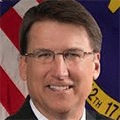
North Carolina Governor Pat McCrory
McCrory rode a GOP wave into office in 2012, but the Republican-controlled legislature’s passage of a controversial voter ID law and measures favored by religious conservatives made the governor a lightning rod.
The issue that dominated the race was McCrory’s decision to sign a law requiring transgendered students to use bathrooms that match their gender of birth, rather than their gender of identity, in public facilities.
McCrory continued to defend the law, even after a number of businesses scuttled expansion plans and the NCAA, NBA and ACC pulled events from the state.
Cooper not only opposed the measure, but he also refused to defend it in court when students and the federal government took legal action to overturn it.
Georgia U.S. Rep. Tom Price nominated to Cabinet post overseeing Obamacare
Price is Donald Trump’s pick to be secretary of the Department of Health and Human Services
♦By Rich Shumate, Chicken Fried Politics.com editor
 WASHINGTON (CFP) — U.S. Rep. Tom Price of Georgia, who has led the charge in Congress to repeal Obamacare, has been nominated by President-elect Donald Trump to head the department that oversees the nation’s health care system.
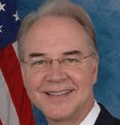
U.S. Rep. Tom Price
Price, 62, an orthopedic surgeon from Roswell in the Atlanta suburbs, is Trump’s pick to run the Department of Health and Human Services, a post that took on vast new powers under the Affordable Care Act passed in 2009.
“I am humbled by the incredible challenges that lay ahead and enthusiastic for the opportunity to be a part of solving them on behalf of the American people,” Price said in a statement announcing the appointment.
“There is much work to be done to ensure we have a health care system that works for patients, families, and doctors; that leads the world in the cure and prevention of illness; and that is based on sensible rules to protect the well-being of the country while embracing its innovative spirit.”
In his own statement, Trump said Price “has earned a reputation for being a tireless problem solver and the go-to expert on healthcare policy, making him the ideal choice to serve in this capacity.”
“He is exceptionally qualified to shepherd our commitment to repeal and replace Obamacare and bring affordable and accessible healthcare to every American.”
Price, chairman of the House Budget Committee, was one of nine Republican chairman to jointly endorse Trump in early May, just before he had secured the party’s presidential nomination.
During the campaign, Trump vowed to repeal and replace Obamacare, something Republicans have tried to do repeatedly while President Obama was in office. Price has been among the leaders of that repeal effort in the House.
The HHS secretary is responsible for overseeing key parts of the Obamacare machinery, including the exchanges that offer subsidized insurance coverage to lower-income Americans and the Medicaid program that allows states to cover the medical costs of the poor.
Price was elected to the U.S. House in 2004, representing Georgia’s heavily Republican 6th District, which takes in upscale suburbs north of the city of Atlanta.
If he is confirmed to the HHS post, a special election will be held to pick his replacement in the House. Given the political leanings of the district, the seat is almost certain to remain in Republican hands.
Texas GOP presidential elector resigns, says voting for Trump would “bring dishonor to God”
Elector Art Sisneros will be replaced when Lone Star electors meet on December 19
♦By Rich Shumate, Chicken Fried Politics.com editor
 HOUSTON (CFP) — A Christian conservative presidential elector in Texas has resigned rather than cast a vote for Donald Trump, dismissing the New York real estate mogul as not “biblically qualified” to be president.

Former Texas elector Art Sisneros (Courtesy Art Sisneros via Texas Monthly)
In a November 26 post on his personal blog announcing his resignation, Art Sisneros said he could neither vote for Trump nor break a pledge he made to the Texas Republican Party to support the winner of the November 8 election.
“If Trump is not qualified and my role, both morally and historically, as an elected official is to vote my conscience, then I cannot and will not vote for Donald Trump for president. I believe voting for Trump would bring dishonor to God,” Sisneros said.
Under state law, the rest of Texas’s electors will select a replacement for Sisneros when they convene in Austin on December 19 to cast their votes for president and vice president.
Sisneros said he had received “hundreds of angry messages” after commenting publicly about his reluctance to vote for Trump, but none of them convinced him to change his mind.
“The people will get their vote. They will get their Skittles for dinner,” he said. “I will sleep well at night knowing I neither gave in to their demands nor caved to my convictions. I will also mourn the loss of our republic.”
Sisneros was picked as one of the Lone Star State’s 38 presidential electors at the state GOP convention in May, about two weeks before Trump won enough delegates to clinch the party’s nomination.
Texas was one of just two Southern states that Trump failed to carry during the primary season, losing to the state’s junior U.S. senator, Ted Cruz.
In the general election, Trump won 52 percent of the vote in Texas and carried 227 of the state’s 254 counties. However, state law does not bind electors to vote for the candidate who won most votes, although the Texas Republican Party requires electors to sign a pledge to do so.
Sisneros said he resigned rather than violate that pledge by voting for someone other than Trump.
“I have sinned in signing that pledge,” Sisneros said in his post. “I humbly confess that it was wrong for me to do so. I am grateful for the forgiveness I have in Christ for all my foolishness.”
South Carolina Governor Nikki Haley to be U.N. ambassador
Haley will be replaced in Columbia by Lieutenant Governor Henry McMaster
♦By Rich Shumate, Chicken Fried Politics.com editor
 WASHINGTON (CFP) — South Carolina Governor Nikki Haley has been nominated by President-elect Donald Trump to be the U.S. ambassador to the United Nations, despite her earlier criticism of him and endorsements of two of his Republican rivals.
If Haley is confirmed, Republican Lieutenant Governor Henry McMaster will take over the Palmetto State’s governorship until a new governor is elected in 2018, keeping the seat in GOP hands.
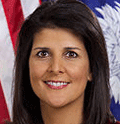
South Carolina Governor Nikki Haley
Although Haley has little foreign policy experience, Trump, in a statement announcing her nomination, said she “has a proven track record of bringing people together regardless of background or party affiliation to move critical policies forward for the betterment of her state and our country.”
“She is also a proven deal maker, and we look to be making plenty of deals,” Trump said.
Haley, 44, the daughter of Sikh immigrants from India, is in her second term, having been elected in 2010 and re-elected in 2014. She is the first woman ever elected as governor in South Carolina.
In a statement, she said the decision to leave the governorhsihp was “difficult” but that she accepted the U.N. ambassadorship out of “a sense of duty.”
“When the president believes you have a major contribution to make to the welfare of our nation, and to our nation’s standing in the world, that is a calling that is important to heed,” she said.
Haley is best known nationally for her handling of the aftermath of a shooting at an African-American church in Charleston in 2015 that left nine people dead. Amid national attention to racial tension in her state, Haley persuaded state legislators to remove the Confederate battle flag from the top of the State House in Columbia.
Haley’s decision to take a spot in the Trump administration marks a turn away from her previously frosty relationship with the incoming president; less than a month ago she called him “irresponsible” for suggesting that the election would be rigged.
Last January, as the presidential race was heating up, Haley delivered the Republican response to President Barack Obama’s State of the Union address and gave what was seen at the time as a thinly veiled shot at Trump: “During anxious times, it can be tempting to follow the siren call of the angriest voices. We must resist that temptation.”
Then, just before the South Carolina presidential primary in February, Haley endorsed one of Trump’s GOP rivals, U.S. Senator Marco Rubio of Florida. When Rubio dropped out in March, she then endorsed U.S. Senator Ted Cruz of Texas. Trump responded with a blast on Twitter in which he called her an embarrassment to the people of her state.
Haley never explicitly endorsed Trump during the campaign, although she did tell reporters at the Republican National Convention in July that she intended to vote for her party’s nominee.

Lieutenant Governor Henry McMaster
McMaster, 69, served as the U.S. attorney in South Carolina from 1981 to 1985 and as state attorney general from 2003 to 2011. After an unsuccessful run for governor against Haley in 2010, he returned to statewide office by being elected lieutenant governor in 2014.
Unlike Haley, McMaster was an early and enthusiastic supporter of Trump, delivering one of his nominating speeches at the convention. After Trump won, he told the Associated Press that he had been contacted by Trump’s transition team as a possible pick for attorney general, a post which eventually went to U.S. Senator Jeff Sessions of Alabama.
McMaster had been expected to run for governor in 2018 to succeed the term-limited Haley. His ascension to the governorship is likely to give him a significant advantage over any GOP rivals.
Under South Carolina’s Constitution, McMaster’s post of lieutenant governor would normally be filled by the state Senate’s president pro tempore, Senator Hugh Leatherman, R-Florence. However, when the lieutenant governorship became open after a resignation in 2014, Leatherman and the rest of the Republicans in the Senate refused to take the job, which has limited powers, and it eventually went to Democrat Yancy McGill.
McGill subsequently switched parties and has announced plans to run for governor in 2018 as a Republican.
Pat McCrory continues to fight election challenge in North Carolina
State Board of Elections refuses to intervene in canvass; Cooper’s lead grows in governor’s race
♦By Rich Shumate, Chicken Fried Politics.com editor
RALEIGH (CFP) — The GOP-controlled North Carolina State Board of Elections has refused to intervene in a canvass of votes in the state’s hotly contested race for governor, a blow to Republican Governor Pat McCrory’s quest to challenge results showing him trailing Democratic Attorney General Roy Cooper.
Attorney General Roy Cooper
Meanwhile, Cooper has appointed a transition team and dismissed claims by McCrory and his campaign of voter fraud as “the same kind of misleading and dishonest rhetoric that they’ve used throughout the campaign, rhetoric meant to cause confusion.”
“Governor McCrory is doing everything he can to undermine the results of this election and the will of the people, but we won’t let him,” Cooper said in a video statement posted on Facebook.
But a spokesman for McCrory, Ricky Diaz, said the campaign was trying to ensure that voter fraud had not tainted the process and that “every legal vote is counted properly.”
“Why is Roy Cooper so insistent on circumventing the electoral process and counting the votes of dead people and felons?” Diaz said in a statement. “It may be because he needs those fraudulent votes to count in order to win. Instead of insulting North Carolina voters, we intende to let the process work as it should.”
Should Cooper hang on, North Carolina would be the only state where Democrats flipped a governorship in 2016 and would give them a third Southern governorship, compared to 11 for Republicans.
The latest unofficial vote total from the State Board of Elections shows Cooper with a lead of 6,500 votes, up from the 4,700 vote total Cooper held on election night. Election boards in all of the state’s 100 counties have been adding provisional and absentee ballots to the total.
North Carolina Governor Pat McCrory
The McCrory campaign has filed protests in 50 counties, alleged fraudulent absentee ballots and votes by felons and dead people. It asked the state elections panel to oversee official county canvasses across the state, the results of which are scheduled to be certified by the state on November 29. But the board voted to let the counties continue the process on their own.
So far, 40 counties have completed their canvasses and certified final results. However, none of those were large metropolitan counties with vote totals large enough to conceivably allow McCrory to make up ground.
If Cooper’s lead is less than 10,000 votes when the final canvasses are completed, McCrory could request a statewide recount.
In North Carolina, the State Board of Elections and all 100 county boards are appointed by the governor, with the governor’s political party holding a majority on all of those panels, regardless of the political leanings of the county.
The McCrory campaign suffered a major blow when the board in Durham County, despite being controlled by members of his own party, turned down a challenge alleging possible fraud.
On election night, 90,000 votes from the heavily Democratic county came in late, propelling Cooper into the lead and prompting McCrory to cry foul. However, elections officials in Durham said the votes were reported all at once because a technical problem forced them to enter the results from voting machines by hand.
A different technical problem with computerized voter roles in Durham County led the State Board of Elections to extend voting by up to an hour in eight precincts on election day.
While turning down McCrory’s request to get involved in canvasses statewide, the state board did agree to look at allegations of voter fraud in Bladen County, in the southeastern party of the state. However, McCrory actually won in Bladen County and less than 16,000 people voted, making any change there unlikely to alter Cooper’s lead.
McCrory rode a GOP wave into office in 2012, but the Republican-controlled legislature’s passage of a controversial voter ID law and measures favored by religious conservatives made the governor a lightning rod.
The issue that dominated the race was McCrory’s decision to sign a law requiring transgendered students to use bathrooms that match their gender of birth, rather than their gender of identity, in public facilities.
McCrory continued to defend the law, even after a number of businesses scuttled expansion plans and the NCAA, NBA and ACC pulled events from the state.
Cooper not only opposed the measure, but he also refused to defend it in court when students and the federal government took legal action to overturn it.

 Chicken Fried Politics